


What solutions can control shrimp diseases under new conditions?
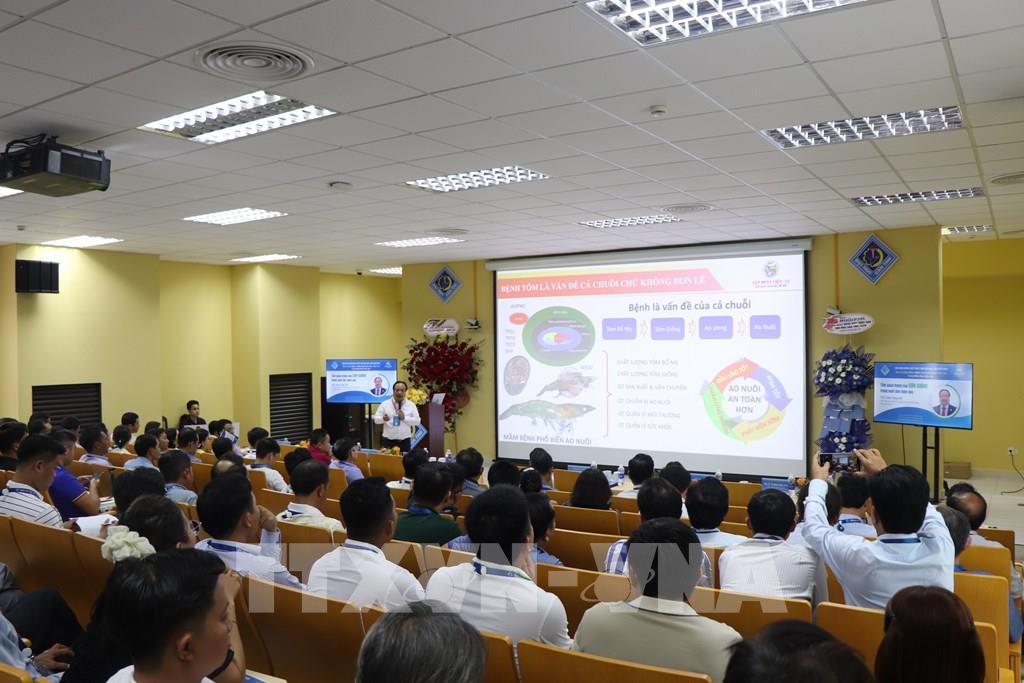
At the event, experts, scientists, and businesses discussed and exchanged solutions to address the disease challenges threatening the livelihoods of millions of shrimp farmers and Vietnam’s shrimp export value.
In recent years, Vietnam’s shrimp farming industry has achieved many remarkable accomplishments, making significant contributions to the national economy. However, production activities are now facing increasingly complex and systemic challenges, especially dangerous shrimp diseases.
Mr. Tạ Văn Hùng, a shrimp farmer with 15 years of experience in Vĩnh Hải Commune, Cần Thơ City, said that the biggest difficulties today are diseases such as EHP (microsporidian parasite), white spot disease, and red body disease. These have been the main causes of severe financial losses for farmers over recent years.
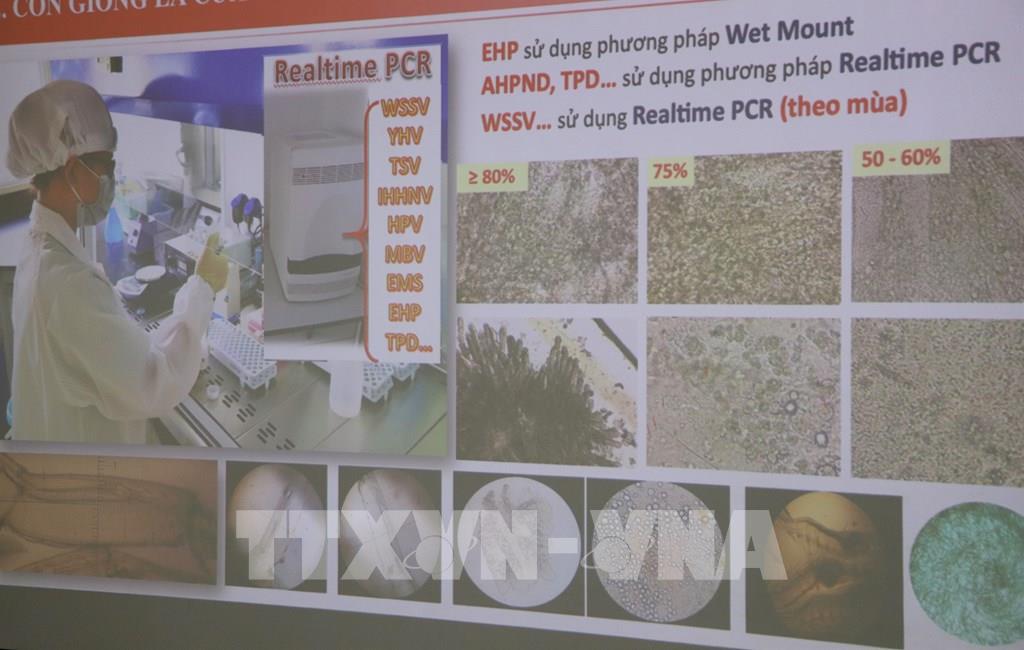
According to Professor Vũ Ngọc Út, Rector of the College of Aquaculture and Fisheries at Cần Thơ University, speaking at the conference, diseases such as Acute Hepatopancreatic Necrosis Disease (AHPND), white spot disease, and especially EHP not only cause immediate economic damage but also silently reduce long-term production efficiency. Notably, disease outbreaks are now closely linked to environmental changes caused by climate change. Variations in temperature, salinity, pH levels, and water quality create favorable conditions for pathogens while weakening the shrimp’s natural resistance.
Facing this reality, experts believe that shrimp farming approaches must undergo a major transformation: from “passive response” to “proactive prevention,” and from “growth at all costs” to “sustainable development based on ecological balance.”
From the perspective of shrimp farming enterprises, Mr. Trịnh Trung Phi, Deputy General Director of Technical and Commercial Shrimp Division at Việt Úc Group, stated that shrimp farming is becoming increasingly difficult. Instead of only reacting after disease outbreaks occur, farmers need to manage risks from the very beginning. This includes properly implementing procedures from broodstock and seed selection to establishing biosecurity systems and early disease detection capabilities.
According to representatives of Việt Úc Group, shrimp farming water sources are no longer as clean as before, with pathogens constantly present. Harmful bacteria can reappear just days after chlorine treatment. Therefore, environmental management standards have been elevated significantly.
Instead of relying solely on traditional chlorine treatment, combined chemical technologies are now being applied for water treatment. This solution improves disinfection efficiency, removes organic matter and heavy metals, and reduces treatment costs from 3,000–4,000 VND/m³ to only 800–900 VND/m³.
One breakthrough strategy adopted by the company is proactively reducing stocking density from super-intensive levels (300–400 shrimp/m²) to 200–250 shrimp/m² to achieve greater stability and efficiency.
According to Mr. Trịnh Trung Phi, shrimp seed quality is considered “the foundation of the house,” determining up to 40% of farming success while accounting for less than 10% of the total investment budget. High-quality, disease-free, and traceable seed helps shrimp grow faster, achieve target sizes, and minimize risks from dangerous diseases such as TPD and EHP.
With quality seed, shrimp can currently reach a size of 60 shrimp/kg after only 60 days of farming, with survival rates above 80% and optimal feed conversion ratios (FCR) of 1.2–1.3. Shortening farming duration is considered the key to reducing production costs and improving the competitiveness of Vietnam’s shrimp industry.
Alongside seed quality, nutrition and biosecurity are also receiving greater attention. According to Dr. Lê Thị Hải Yến, Deputy Director of the R&D Center at Vemedim Company, probiotics play a key role in biosecure shrimp farming by replacing antibiotics and enhancing shrimp immunity. Common probiotic groups include spore-forming bacteria such as Bacillus, known for their heat resistance and ability to function effectively in harsh environments to suppress harmful bacteria.
In addition, lactic acid bacteria support digestion and nutrient absorption in the shrimp gut, while photosynthetic microorganisms play an important role in treating toxic gases in farming ponds.
Experts consider probiotics one of the safest and most effective alternatives to antibiotics for strengthening shrimp resistance. Mr. Lê Thành Cường from Nha Trang University advised farmers to use high-dose probiotics periodically to suppress Vibrio bacteria instead of indiscriminate antibiotic use. In many cases, bacteria have become antibiotic-resistant, causing shrimp mortality despite antibiotic treatment. Therefore, conducting antibiotic sensitivity testing before selecting treatment methods is extremely important.
To ensure the sustainable development of the shrimp farming industry, Professor Trương Quốc Phú from Cần Thơ University proposed an integrated disease prevention approach based on four key factors: clean water, quality seed, adequate nutrition, and scientific management and care. He also emphasized the need to change wastewater management practices. Instead of directly discharging wastewater and spreading pathogens into rivers and canals, farmers should apply biological treatment methods to recycle water or ensure safety before discharge. The use of aquatic plants and beneficial bacteria to decompose waste is considered one of the most environmentally friendly, effective, and economical solutions.
Source: bnews
AQUA MINA CO., LTD
– Address: 685 Le Duc Anh Street, Quarter 39, Binh Hung Hoa Ward, Ho Chi Minh City
– Phone: 1800 6071 (Toll-free hotline)
– Email: sales@aquamina.com.vn or oversea@aquamina.com.vn
– Aqua Mina’s Official Distributor in Japan: REX INDUSTRIES CO., LTD
– Address: 1-9-3 Hishiya-Higashi, Higashi-Osaka 578-0948, JAPAN
– Email: kimakubo@rexind.co.jp
– Phone: +81-(0)72-961-9893
– Website: www.rexind.co.jp/e/

WE WORK FOR THE SUCCESS
Ngày đăng : 15/05/2026
1304 View


Other Articles
Ca Mau, Can Tho and An Giang Play a Leading Role in Vietnam’s Shrimp Industry
Protecting rice-shrimp yields against environmental fluctuations caused by prolonged rain
AQUA MINA Turbo Blower: Quiet, Energy-Efficient Air Supply for Aquaculture Ponds
AQUA MINA has accompanied the experimental tank system project at Can Tho University from its very early days
AQUA MINA AMONG 20 OUTSTANDING PRESENTATIONS AT THE WORKSHOP ON APPLYING SCIENCE AND TECHNOLOGY TO IMPROVE THE QUALITY OF VIETNAM’S AQUATIC PRODUCTS
Vietnam’s Shrimp Farming Industry Enters the High-Tech Race
The U.S. market relies heavily on imported shrimp to bridge its domestic supply gap
The 2028 supply crisis: The shrimp industry is projected to face a 400,000-ton material shortage
High profits from high-tech shrimp farming come with persistent risks
Intensifying El Niño Effect: Climate Change Risks Threaten the Global Shrimp Supply Chain
Evaluating Gaps in the Circular Economy Value Chain of the Shrimp Industry
A Comprehensive Overview of the Vietnamese Shrimp Industry


.jpg)