



Pale Body Disease – PDD: A New Warning for Shrimp Health Management under Low Salinity Conditions
In recent years, the whiteleg shrimp (Litopenaeus vannamei) farming industry has continuously faced numerous challenges regarding disease outbreaks, environmental fluctuations, and production cost pressures. Familiar diseases such as White Spot Disease (WSD), Acute Hepatopancreatic Necrosis Disease (AHPND), or infections caused by Vibrio spp. have been widely recognized and have become the focus of many surveillance programs. However, production realities show that shrimp farming systems can always witness the emergence of new syndromes with initial clinical manifestations of unknown etiology. One of the notable recent phenomena is pale body disease, also known as pale shrimp disease, recorded in whiteleg shrimp farmed in low-salinity areas in Southern Thailand. The concerning aspect of this disease is that while its external signs are quite recognizable, they can easily be confused with various other causes. Affected shrimp exhibit a pale body color, uniform whitening, or generalized depigmentation. In some cases, they display pale hepatopancreases, empty guts, poor growth, and a gradual increase in mortality within the ponds. According to records from the outbreak areas, the disease typically manifests after about 50–60 days of culture, initially accounting for a low percentage in the pond but expanding over time. In severe cases, mortality rates can escalate dramatically, causing significant losses not only due to shrimp mortality but also because the surviving shrimp suffer a reduction in market value due to unappealing coloration.
Clarifying the Causative Agent of Pale Body Disease in Low Salinity Conditions
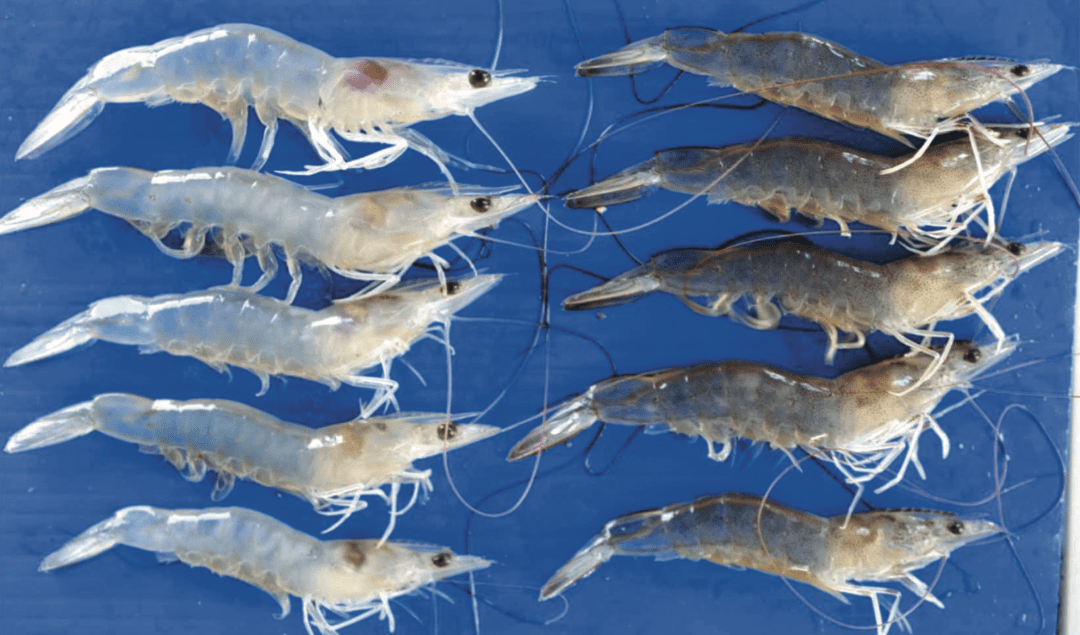
A new study published in Aquaculture Reports has clarified the cause of this syndrome. The research team at Kasetsart University collected healthy and diseased shrimp samples from natural outbreak ponds in Surat Thani Province (Thailand), an area that primarily utilizes low-salinity water sources ranging from 5 to 10‰. Meanwhile, adjacent farming areas with higher salinity levels recorded no such disease, indicating that low salinity may be linked to the occurrence or severity of the disease. To determine the cause, the research team conducted a rigorous series of experiments while simultaneously screening for several common pathogens, such as White Spot Syndrome Virus (WSSV), Infectious Hypodermal and Hematopoietic Necrosis Virus (IHHNV), Yellow Head Virus (YHV), Decapod Iridescent Virus 1 (DIV1), and Vibrio parahaemolyticus (the causative agent of AHPND). The results were all negative, indicating that pale body disease in this case does not belong to the commonly monitored disease groups.
Figure: Pale body coloration of severely diseased shrimp (left) from natural outbreak ponds compared to normal shrimp (right) within the same pond. (Photo: ScienceDirect)
Transmission Routes and Characteristic Lesions in Diseased Shrimp
Next, the research team tested the transmissibility of the disease from infected shrimp to healthy ones. When healthy shrimp were fed tissues from diseased shrimp, approximately half of the challenged shrimp developed pale body signs similar to those observed in natural outbreaks. Conversely, a cohabitation experiment—where healthy and diseased shrimp were reared together but separated by a mesh net to allow water circulation—failed to induce clear symptoms in healthy shrimp. This result suggests that the pathogen is transmissible, but the critical route of infection is more closely linked to the gastrointestinal tract—through cannibalism of diseased tissues, dead shrimp, or organic matter contaminated with the pathogen—rather than transmission solely through water. From the diseased shrimp samples, the research team isolated various bacterial species, including several Vibrio species commonly found in shrimp farming environments. However, when the bacterial strains were challenged individually on healthy shrimp, only Photobacterium damselae subsp. damselae induced the characteristic pale body signs. This bacterium is commonly abbreviated as PDD. It is an opportunistic pathogen previously recorded in various aquatic animals, including fish, crustaceans, and mollusks, but large-scale disease outbreaks in farmed shrimp have not been as prevalent as those caused by the Vibrio group. Therefore, this finding serves as an important warning: a pathogen previously not considered a focal point in shrimp disease management can still become a major cause of economic loss when culture conditions favor its virulence expression.
Clarifying the Causative Agent of Pale Body Disease in Low Salinity Conditions
A new study published in Aquaculture Reports has clarified the cause of this syndrome. The research team at Kasetsart University collected healthy and diseased shrimp samples from natural outbreak ponds in Surat Thani Province (Thailand), an area that primarily utilizes low-salinity water sources ranging from 5 to 10‰. Meanwhile, adjacent farming areas with higher salinity levels recorded no such disease, indicating that low salinity may be linked to the occurrence or severity of the disease. To determine the cause, the research team conducted a rigorous series of experiments while simultaneously screening for several common pathogens, such as White Spot Syndrome Virus (WSSV), Infectious Hypodermal and Hematopoietic Necrosis Virus (IHHNV), Yellow Head Virus (YHV), Decapod Iridescent Virus 1 (DIV1), and Vibrio parahaemolyticus (the causative agent of AHPND). The results were all negative, indicating that pale body disease in this case does not belong to the commonly monitored disease groups.
Figure: Pale body coloration of severely diseased shrimp (left) from natural outbreak ponds compared to normal shrimp (right) within the same pond. (Photo: ScienceDirect)
Transmission Routes and Characteristic Lesions in Diseased Shrimp
Next, the research team tested the transmissibility of the disease from infected shrimp to healthy ones. When healthy shrimp were fed tissues from diseased shrimp, approximately half of the challenged shrimp developed pale body signs similar to those observed in natural outbreaks. Conversely, a cohabitation experiment—where healthy and diseased shrimp were reared together but separated by a mesh net to allow water circulation—failed to induce clear symptoms in healthy shrimp. This result suggests that the pathogen is transmissible, but the critical route of infection is more closely linked to the gastrointestinal tract—through cannibalism of diseased tissues, dead shrimp, or organic matter contaminated with the pathogen—rather than transmission solely through water. From the diseased shrimp samples, the research team isolated various bacterial species, including several Vibrio species commonly found in shrimp farming environments. However, when the bacterial strains were challenged individually on healthy shrimp, only Photobacterium damselae subsp. damselae induced the characteristic pale body signs. This bacterium is commonly abbreviated as PDD. It is an opportunistic pathogen previously recorded in various aquatic animals, including fish, crustaceans, and mollusks, but large-scale disease outbreaks in farmed shrimp have not been as prevalent as those caused by the Vibrio group. Therefore, this finding serves as an important warning: a pathogen previously not considered a focal point in shrimp disease management can still become a major cause of economic loss when culture conditions favor its virulence expression.
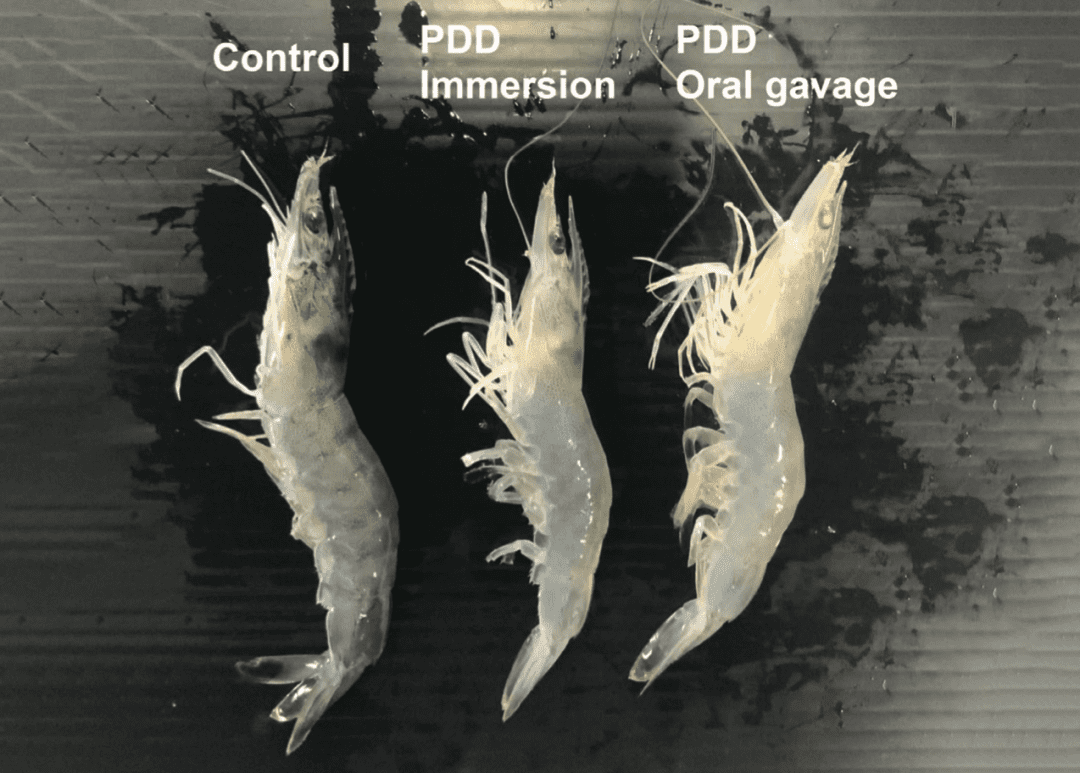
To confirm the pathogenicity of PDD, the research team further challenged healthy shrimp using pure bacterial strains. Two methods were employed: immersion in water containing the bacteria at a density of 10⁵ CFU/mL, and direct oral administration at a dose of 10⁷ CFU/shrimp, under a salinity condition of 10‰. After 7 days, both groups exhibited pale body coloration. The survival rate of the immersion group stood at approximately 53%, while the oral administration group dropped to only about 10%. No mortality was recorded in the control group. This result reinforces the conclusion that PDD is not merely present alongside diseased shrimp but is truly capable of causing disease and high mortality under experimental conditions. Histopathological lesions also helped elucidate the disease's mechanism of action. In both naturally infected and PDD-challenged shrimp, researchers noted lesions in the hepatopancreas, muscle tissue, and lymphoid organs. The hepatopancreas exhibited tubule atrophy, necrosis, or septic granuloma formation in severe cases. Muscle tissue showed necrosis, myopathy, and hemocytic infiltration. The lymphoid organs displayed spheroids, reflecting an immune response or lesions associated with bacterial infection. These lesions correspond with the external manifestations of a pale body, white muscle, or generalized depigmentation.
Figure: Gross signs of shrimp after the per os (feeding) challenge using diseased shrimp tissues (top), showing a pale body compared to the normal control shrimp (bottom). (Photo: ScienceDirect)
Figure: Gross signs of shrimp after being challenged with Photobacterium damselae subsp. damselae (PDD) via immersion and direct oral administration methods. The body color of the shrimp in both the immersion and oral challenge groups is visibly paler compared to the control group. (Photo: ScienceDirect)
Implications for Pond Management and Disease Surveillance in Vietnam
Regarding pond management, the above findings highlight several key points of consideration:
First, the sign of pale body coloration should not be hastily concluded as a mere result of nutritional deficiency, postlarvae quality, pigment changes, or environmental stress alone. This can be a manifestation of an infectious bacterial disease. In reality, the same signs of white muscle or a pale body can be linked to multiple causes, including viruses, bacteria, microsporidians, or environmentally induced physiological disorders. Therefore, diagnosis must combine pond observations, disease history, water quality parameters, PCR testing, bacterial isolation, and histopathology if feasible.
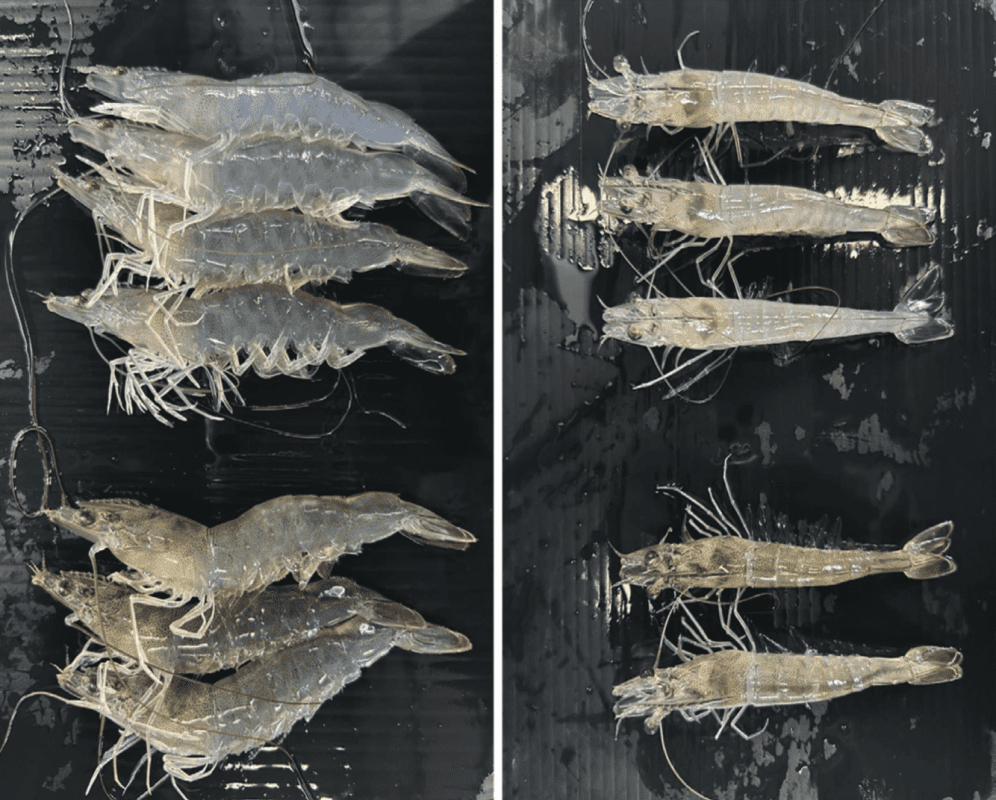
Figure: Gross signs of shrimp after the per os (feeding) challenge using diseased shrimp tissues (top), showing a pale body compared to the normal control shrimp (bottom). (Photo: ScienceDirect)
Figure: Gross signs of shrimp after being challenged with Photobacterium damselae subsp. damselae (PDD) via immersion and direct oral administration methods. The body color of the shrimp in both the immersion and oral challenge groups is visibly paler compared to the control group. (Photo: ScienceDirect)
Implications for Pond Management and Disease Surveillance in Vietnam
Regarding pond management, the above findings highlight several key points of consideration:
First, the sign of pale body coloration should not be hastily concluded as a mere result of nutritional deficiency, postlarvae quality, pigment changes, or environmental stress alone. This can be a manifestation of an infectious bacterial disease. In reality, the same signs of white muscle or a pale body can be linked to multiple causes, including viruses, bacteria, microsporidians, or environmentally induced physiological disorders. Therefore, diagnosis must combine pond observations, disease history, water quality parameters, PCR testing, bacterial isolation, and histopathology if feasible.
Second, low salinity must be regarded as a risk factor requiring closer monitoring. The study showed that the disease appeared in ponds utilizing low-salinity water, and the pathogenicity experiments were also conducted at 10‰. Some molecular biology literature indicates that under low salinity conditions, PDD can activate virulence-related genes, including cytolytic toxins, type II secretion systems, and iron acquisition systems. In other words, low salinity is not necessarily the direct cause of the disease, but it can create conditions that allow the bacterium to express stronger virulence or render the shrimp more susceptible to infection.
Third, the transmission route via cannibalism and ingestion of infected sources must receive special attention in pond management. Shrimp are scavengers by nature, feeding on carcasses and organic debris. When weak shrimp, mortalities, or infected shrimp tissues are not promptly removed from the pond, the pathogen can be transmitted through the digestive tract. This explains why the disease may start at a low prevalence but gradually increase over time. Therefore, in ponds where pale shrimp appear, farmers need to step up feeding tray inspections, scoop out dead shrimp, cull weak ones, minimize organic matter accumulation at the pond bottom, and prevent shrimp carcasses from persisting in the system.
Fourth, biosecurity remains the most critical line of defense. For opportunistic bacterial diseases, the pathogen rarely acts in isolation; instead, it is heavily influenced by stocking density, water quality, shrimp health, organic load, and imbalances in the microbiota. Consequently, controlling inputs, water treatment, feed management, and stabilizing pH, dissolved oxygen, alkalinity, toxic gases, and total suspended solids all play a vital role in reducing disease pressure. When the pond environment fluctuates, causing shrimp stress and a decline in innate immunity, opportunistic bacteria like PDD find ample opportunity to transition from ambient presence to an active pathogenic state.
Fifth, disease surveillance programs need to broaden their scope. Currently, many facilities focus predominantly on well-known diseases such as WSSV, AHPND, EHP, or IMNV. While this approach is necessary, it is no longer sufficient, as emerging syndromes can arise from less-noticed agents. In cases where shrimp exhibit abnormalities such as pale bodies, white muscle, pale hepatopancreases, or slow but chronic mortality, it is essential to incorporate bacterial isolation, 16S rRNA sequencing, specific assays, and histopathology. In the long term, developing rapid detection kits for PDD at farming sites could support early warning efforts and mitigate losses.
For Vietnam, these findings should not yet be interpreted as meaning the disease is already present or will erupt in the exact same manner as in Thailand. However, it serves as a valuable warning because many shrimp farming regions in our country are also developing intensive, super-intensive, or fluctuating-salinity farming models. In the context of climate change, extreme rainfall, saltwater intrusion, pond water dilution, and the increasingly common use of low-salinity water sources, environmental conditions may shift in ways that give rise to new pathological risks. Therefore, the vital lesson is not just identifying a new bacterium, but shifting the mindset of disease management: environment, pathogen, and host health must be viewed as an interacting system.
Pale body disease caused by Photobacterium damselae subsp. damselae demonstrates that emerging diseases in shrimp aquaculture can start with seemingly simple signs. A change in body color, if accompanied by gradual mortality, an abnormal hepatopancreas, and low salinity culture conditions, must be treated as an early warning signal. For farmers, the key is not to wait until mass mortality occurs before taking action, but to proactively monitor coloration, feeding activity, gut status, hepatopancreas condition, dead shrimp in the pond, and environmental parameters on a daily basis. For technical authorities and laboratories, greater attention should be paid to opportunistic pathogens outside the familiar disease groups.
Third, the transmission route via cannibalism and ingestion of infected sources must receive special attention in pond management. Shrimp are scavengers by nature, feeding on carcasses and organic debris. When weak shrimp, mortalities, or infected shrimp tissues are not promptly removed from the pond, the pathogen can be transmitted through the digestive tract. This explains why the disease may start at a low prevalence but gradually increase over time. Therefore, in ponds where pale shrimp appear, farmers need to step up feeding tray inspections, scoop out dead shrimp, cull weak ones, minimize organic matter accumulation at the pond bottom, and prevent shrimp carcasses from persisting in the system.
Fourth, biosecurity remains the most critical line of defense. For opportunistic bacterial diseases, the pathogen rarely acts in isolation; instead, it is heavily influenced by stocking density, water quality, shrimp health, organic load, and imbalances in the microbiota. Consequently, controlling inputs, water treatment, feed management, and stabilizing pH, dissolved oxygen, alkalinity, toxic gases, and total suspended solids all play a vital role in reducing disease pressure. When the pond environment fluctuates, causing shrimp stress and a decline in innate immunity, opportunistic bacteria like PDD find ample opportunity to transition from ambient presence to an active pathogenic state.
Fifth, disease surveillance programs need to broaden their scope. Currently, many facilities focus predominantly on well-known diseases such as WSSV, AHPND, EHP, or IMNV. While this approach is necessary, it is no longer sufficient, as emerging syndromes can arise from less-noticed agents. In cases where shrimp exhibit abnormalities such as pale bodies, white muscle, pale hepatopancreases, or slow but chronic mortality, it is essential to incorporate bacterial isolation, 16S rRNA sequencing, specific assays, and histopathology. In the long term, developing rapid detection kits for PDD at farming sites could support early warning efforts and mitigate losses.
For Vietnam, these findings should not yet be interpreted as meaning the disease is already present or will erupt in the exact same manner as in Thailand. However, it serves as a valuable warning because many shrimp farming regions in our country are also developing intensive, super-intensive, or fluctuating-salinity farming models. In the context of climate change, extreme rainfall, saltwater intrusion, pond water dilution, and the increasingly common use of low-salinity water sources, environmental conditions may shift in ways that give rise to new pathological risks. Therefore, the vital lesson is not just identifying a new bacterium, but shifting the mindset of disease management: environment, pathogen, and host health must be viewed as an interacting system.
Pale body disease caused by Photobacterium damselae subsp. damselae demonstrates that emerging diseases in shrimp aquaculture can start with seemingly simple signs. A change in body color, if accompanied by gradual mortality, an abnormal hepatopancreas, and low salinity culture conditions, must be treated as an early warning signal. For farmers, the key is not to wait until mass mortality occurs before taking action, but to proactively monitor coloration, feeding activity, gut status, hepatopancreas condition, dead shrimp in the pond, and environmental parameters on a daily basis. For technical authorities and laboratories, greater attention should be paid to opportunistic pathogens outside the familiar disease groups.
Broadly speaking, this discovery reaffirms that developing a sustainable shrimp industry cannot rely solely on increasing density, boosting yields, or expanding farming areas. Disease resilience must be placed at the core of aquaculture system design. A secure pond is not just one with clear water, fast-growing shrimp, or a low FCR, but one capable of restricting pathogen entry, detecting abnormal fluctuations early, and maintaining an environmental equilibrium against biological shocks. At a time when the shrimp industry is under intense pressure from diseases, climate change, and market volatility, studies of this nature hold immense practical value: they help farmers and managers see risks before those risks turn into crises.
Source: nguoinuoitom
AQUA MINA CO., LTD
– Address: 685 Le Duc Anh Street, Quarter 39, Binh Hung Hoa Ward, Ho Chi Minh City
– Phone: 1800 6071 (Toll-free hotline)
– Email: sales@aquamina.com.vn or oversea@aquamina.com.vn
– Aqua Mina’s Official Distributor in Japan: REX INDUSTRIES CO., LTD
– Address: 1-9-3 Hishiya-Higashi, Higashi-Osaka 578-0948, JAPAN
– Email: kimakubo@rexind.co.jp
– Phone: +81-(0)72-961-9893
– Website: www.rexind.co.jp/e/

WE WORK FOR THE SUCCESS
Ngày đăng : 27/05/2026
1510 View


Other Articles
Ca Mau, Can Tho and An Giang Play a Leading Role in Vietnam’s Shrimp Industry
Protecting rice-shrimp yields against environmental fluctuations caused by prolonged rain
AQUA MINA Turbo Blower: Quiet, Energy-Efficient Air Supply for Aquaculture Ponds
AQUA MINA has accompanied the experimental tank system project at Can Tho University from its very early days
AQUA MINA AMONG 20 OUTSTANDING PRESENTATIONS AT THE WORKSHOP ON APPLYING SCIENCE AND TECHNOLOGY TO IMPROVE THE QUALITY OF VIETNAM’S AQUATIC PRODUCTS
Vietnam’s Shrimp Farming Industry Enters the High-Tech Race
The U.S. market relies heavily on imported shrimp to bridge its domestic supply gap
The 2028 supply crisis: The shrimp industry is projected to face a 400,000-ton material shortage
High profits from high-tech shrimp farming come with persistent risks
Intensifying El Niño Effect: Climate Change Risks Threaten the Global Shrimp Supply Chain
Evaluating Gaps in the Circular Economy Value Chain of the Shrimp Industry
A Comprehensive Overview of the Vietnamese Shrimp Industry








.jpg)