


Fish, shrimp, crabs… still have to bear the heavy burden of logistics costs.
Rising Freight Costs Put Pressure on Vietnam’s Seafood Exports
The Vietnam Association of Seafood Exporters and Producers (VASEP) has urged the government to address rising logistics costs, warning that expensive sea freight is putting increasing pressure on the competitiveness of Vietnamese seafood exports.
According to VASEP Secretary General Nguyen Hoai Nam, international shipping lines began raising freight rates across several routes from mid-June 2026. Industry reports indicate increases of around 20–30%, with shipments to the U.S. East Coast rising by approximately US$2,000–3,000 per container, while rates to the U.S. West Coast and Europe also climbed significantly.
Although freight rates have recently shown signs of slowing, they remain high. On the Asia–Europe route, for example, spot rates reached about US$5,135 per 40-foot container, up 7.25% from the previous month. Additional peak-season surcharges announced by some shipping lines are expected to add further pressure.
For seafood exporters, particularly those handling frozen and fresh products, logistics costs directly affect selling prices, delivery schedules, profit margins and product quality. Higher freight rates can also increase storage and port-related expenses when shipping schedules are disrupted.
VASEP noted that Vietnam’s overall logistics costs remain relatively high, accounting for an estimated 16–20% of GDP, compared with around 8–10% in the EU and the U.S. Businesses also face hidden logistics expenses, including empty-container returns and losses incurred during the transportation of raw materials.
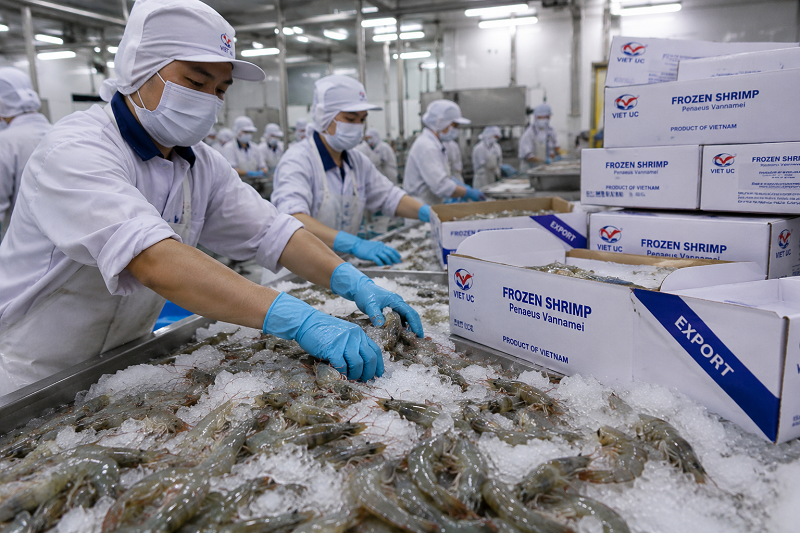
The association warned that a sharp increase in transportation costs could weaken the ability of Vietnamese exporters to maintain competitive prices, expand orders and gain market share, particularly against countries with larger production scales or more favorable logistics infrastructure.
To address the issue, VASEP has proposed a national program to reduce logistics costs for agricultural, forestry and seafood products, with priority given to major export commodities. It also called for greater transparency and oversight of shipping fees and surcharges, along with stronger development of Vietnam’s container and refrigerated-container fleets.
Investment in cold-storage facilities, logistics centers and port connectivity is also needed to improve domestic transportation capacity and reduce reliance on foreign shipping lines.
VASEP believes that lowering logistics costs should be considered part of Vietnam’s broader strategy to strengthen national export competitiveness, particularly as the country targets double-digit export growth.
AQUA MINA CO., LTD
WE WORK FOR THE SUCCESS


Ca Mau, Can Tho and An Giang Play a Leading Role in Vietnam’s Shrimp Industry
Protecting rice-shrimp yields against environmental fluctuations caused by prolonged rain
AQUA MINA Turbo Blower: Quiet, Energy-Efficient Air Supply for Aquaculture Ponds
AQUA MINA has accompanied the experimental tank system project at Can Tho University from its very early days
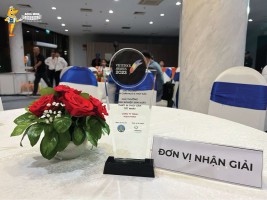
AQUA MINA AMONG 20 OUTSTANDING PRESENTATIONS AT THE WORKSHOP ON APPLYING SCIENCE AND TECHNOLOGY TO IMPROVE THE QUALITY OF VIETNAM’S AQUATIC PRODUCTS
Vietnam’s Shrimp Farming Industry Enters the High-Tech Race
The U.S. market relies heavily on imported shrimp to bridge its domestic supply gap
The 2028 supply crisis: The shrimp industry is projected to face a 400,000-ton material shortage
High profits from high-tech shrimp farming come with persistent risks
Intensifying El Niño Effect: Climate Change Risks Threaten the Global Shrimp Supply Chain
Evaluating Gaps in the Circular Economy Value Chain of the Shrimp Industry
A Comprehensive Overview of the Vietnamese Shrimp Industry



.jpg)