


A Comprehensive Overview of the Vietnamese Shrimp Industry
I. Production Scale and Capacity
Vietnam boasts over 700,000 hectares of aquaculture area primarily dedicated to two key species: whiteleg shrimp (Litopenaeus vannamei) and black tiger shrimp (Penaeus monodon).
The country maintains its position as the global leader in black tiger shrimp—a traditional indigenous species—with a stable output of approximately 300,000 metric tons per year. Meanwhile, whiteleg shrimp farming has been widely expanded across numerous provinces nationwide since 2008.
The Mekong Delta region serves as the country's primary shrimp farming hub. The five provinces with the largest farming areas include Ca Mau, Bac Lieu, Soc Trang, Ben Tre, and Kien Giang.
II. Processing and Export Performance
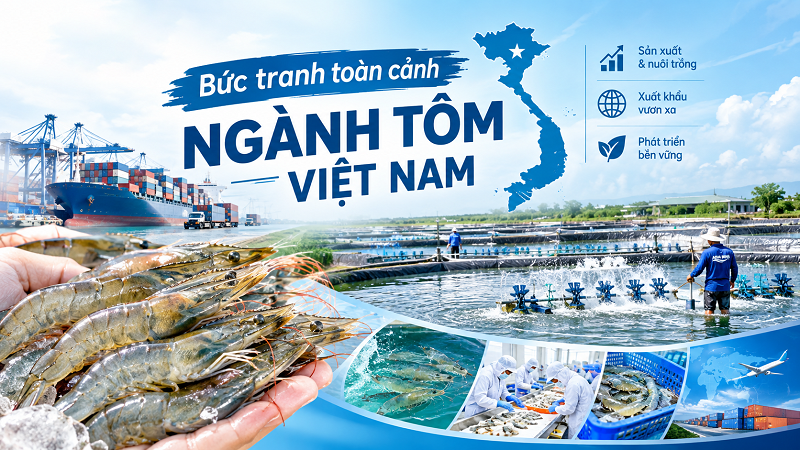
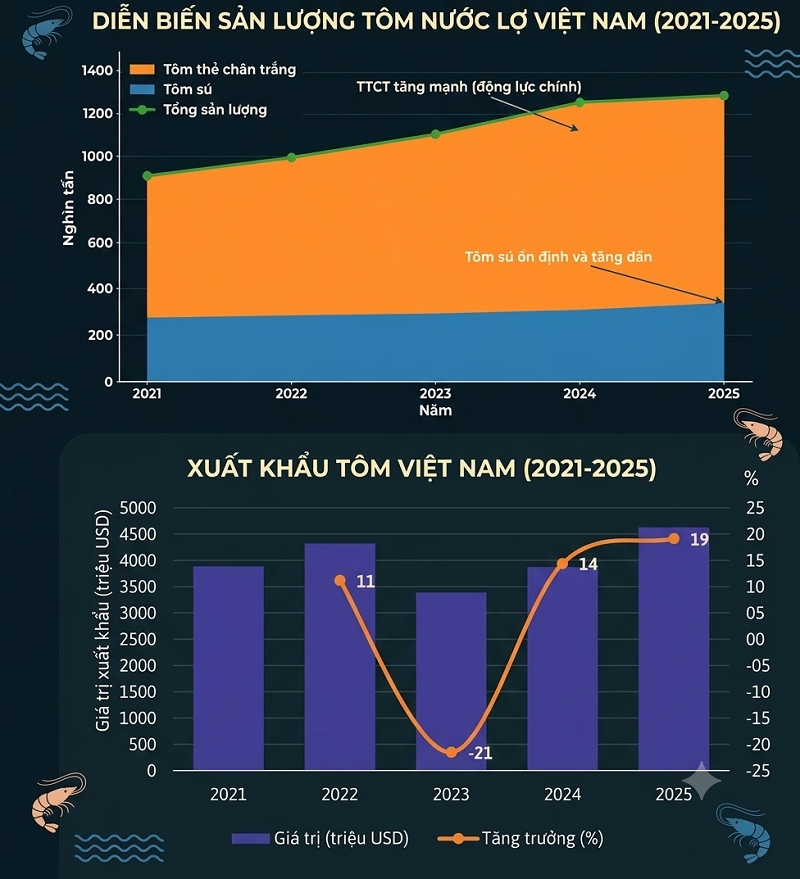
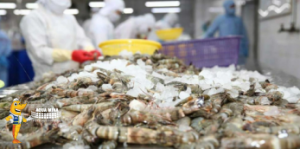
Over the past two decades, shrimp has remained a cornerstone of Vietnam's seafood exports. Annually, the shrimp sector accounts for 40% to 45% of the total seafood export value, generating revenue ranging from $3.5 billion to $4.6 billion. Vietnamese shrimp products are currently present in over 100 countries and territories, with the top five major consumer markets being the United States, the European Union, Japan, China, and South Korea. Driven by relentless efforts, Vietnam has emerged as the world's third-largest shrimp exporter, behind only Ecuador and India.
Vietnam's competitive advantage in the shrimp industry is heavily concentrated in the Mekong Delta—a region that accounts for 95% of total production and houses the majority of large-scale processing facilities.
The domestic shrimp industry has undergone a comprehensive transformation in both scale and technical management capabilities. Quality control, traceability, and environmental impact management are standardized throughout the entire supply chain: from hatcheries and feed mills to grow-out farms, processing plants, and modern cold storage logistics systems for export. The strongest testament to Vietnam's safe and sustainable shrimp farming is the steadily growing number of farms certified by international good aquaculture practices standards, notably BAP (Best Aquaculture Practices), GlobalGAP, and ASC (Aquaculture Stewardship Council).
Notably in 2025, Vietnam's shrimp export turnover reached an all-time high of $4.6 billion, representing a 19% year-on-year increase compared to 2024.
WE WORK FOR THE SUCCESS!


Ca Mau, Can Tho and An Giang Play a Leading Role in Vietnam’s Shrimp Industry
Protecting rice-shrimp yields against environmental fluctuations caused by prolonged rain
AQUA MINA Turbo Blower: Quiet, Energy-Efficient Air Supply for Aquaculture Ponds
AQUA MINA has accompanied the experimental tank system project at Can Tho University from its very early days
AQUA MINA AMONG 20 OUTSTANDING PRESENTATIONS AT THE WORKSHOP ON APPLYING SCIENCE AND TECHNOLOGY TO IMPROVE THE QUALITY OF VIETNAM’S AQUATIC PRODUCTS
Vietnam’s Shrimp Farming Industry Enters the High-Tech Race
The U.S. market relies heavily on imported shrimp to bridge its domestic supply gap
The 2028 supply crisis: The shrimp industry is projected to face a 400,000-ton material shortage
High profits from high-tech shrimp farming come with persistent risks
Intensifying El Niño Effect: Climate Change Risks Threaten the Global Shrimp Supply Chain
Evaluating Gaps in the Circular Economy Value Chain of the Shrimp Industry
CA MAU ACCELERATES MARINE AQUACULTURE DEVELOPMENT FROM 2026 TO 2030, WITH A VISION TO 2045



.jpg)