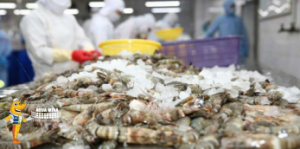



Key Strengths Helping Vietnam Withstand Export Pressures, According to Minh Phu
1. Entering the first week of November, farm-gate prices for raw whiteleg shrimp in the Mekong Delta recorded a slight uptick compared to the previous week.
Specifically, whiteleg shrimp at 25 count/kg edged up by VND 5,000 to reach VND 180,000/kg, while 30 count/kg stood at VND 162,000/kg (up VND 2,000/kg). The 40 count/kg size was purchased by traders around VND 136,000 – 138,000/kg, marking an increase of VND 4,000 – 5,000/kg. For smaller sizes, shrimp at 60 – 70 count/kg ranged from VND 110,000 – 115,000/kg, and 80 – 100 count/kg was priced at VND 100,000 – 108,000/kg, rising by a few thousand dong per kilogram depending on the size.
In contrast to the recovery of whiteleg shrimp, pond-side prices for black tiger shrimp are facing downward pressure. Currently, black tiger shrimp at 20 count/kg are traded around VND 200,000/kg, while 30 count/kg dropped to VND 160,000/kg, about VND 60,000/kg lower than a month ago.
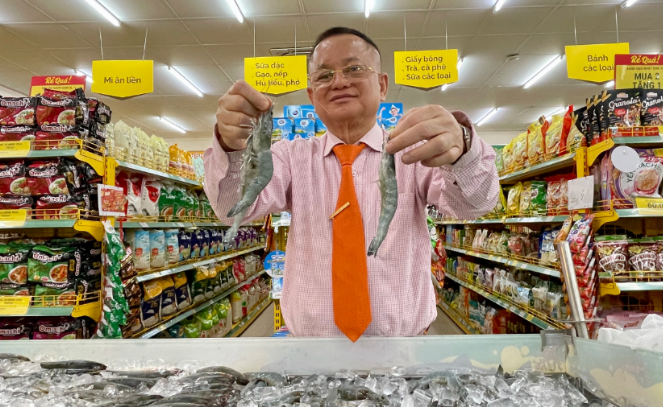
This divergence in domestic raw shrimp prices is occurring amidst fierce competition faced by Vietnam's shrimp industry in the international market. According to data from the Vietnam Association of Seafood Exporters and Producers (VASEP), cumulative shrimp exports in the first 10 months of 2026 reached $4.22 billion, up 9% year-on-year. However, growth was primarily driven by scalloped spiny lobster, which reached nearly $915 million (up 31%, contributing roughly 62% of the sector's total growth), whereas the flagship commodity—whiteleg shrimp—grew by a modest 4% to $2.62 billion. Notably, market share in the US recorded a 19.1% decline over the past 10 months.
Analyzing this pressure, Mr. Le Van Quang, General Director of Minh Phu Seafood Corporation, stated that Vietnamese whiteleg shrimp is facing intense price competition from Ecuadorian and Indian supplies. More concerningly, factories in Ecuador have invested in Chinese shrimp-peeling machinery to expand into value-added processing segments—such as peeled tail-on (PTO) and peeled deveined (PD) shrimp—which have traditionally been Vietnam's strengths. Ecuador's aggressive export of low-priced, semi-processed, easy-peel shrimp has created significant obstacles for Vietnamese enterprises' small- and medium-sized shrimp orders in North America.
Beyond the US, pressure has also spread across the European Union (EU)—a market where value-added products account for over 50% of Vietnam's shrimp export turnover. Statistics for the first 8 months of 2025 indicate that Ecuadorian shrimp exports to the EU surpassed 160,000 tons, far outstripping Vietnam's figure of approximately 35,000 tons. Given this reality, Minh Phu's leadership noted that Vietnam should not compete head-to-head on price with Ecuador in the whiteleg shrimp segment, but rather pivot toward leveraging its distinctive competitive advantages—with black tiger shrimp serving as a strategic spearhead thanks to Vietnam's vast extensive and ecological farming areas and the fact that Ecuador does not farm this species.
2. Black tiger shrimp accounts for nearly 80% of farming area but contributes only about a quarter of output
Citing 2025 figures from Minh Phu, total brackish water shrimp farming area reached 704,650 hectares with an output of nearly 1.19 million tons. Within this structure, black tiger shrimp occupied up to 559,150 hectares (equivalent to 79.4% of the area), yet production stopped at 312,938 tons (accounting for 26.3%). Conversely, whiteleg shrimp utilized only 20.6% of the area but generated up to 73.7% of total output. The average yield of black tiger shrimp currently stands at just 0.56 tons/hectare, a stark gap compared to the 6.03 tons/hectare of whiteleg shrimp. (These figures are lower than statistics from the Directorate of Fisheries and Fisheries Surveillance, which put the nationwide area at roughly 750,000 hectares and output at 1.29 million tons, with the Mekong Delta alone accounting for 93.2% at 704,400 hectares).
According to Minh Phu's assessment, this yield gap represents immense headroom to boost black tiger shrimp production without expanding land use. Furthermore, the commercial value of black tiger shrimp is far superior. Based on US market data from Expana on October 13, for the same specification of peeled, deveined, tail-on (PTO) shrimp, black tiger shrimp commands prices 27 – 49% higher than Asian whiteleg shrimp and 26 – 48% higher than Ecuadorian whiteleg shrimp, depending on size. Specifically, in the jumbo black tiger shrimp segment of 6 – 8 count/pound (equivalent to 13 – 18 count/kg), asking prices reached $17.3/pound—a segment in which whiteleg shrimp has virtually no competing products.
Alongside advantages in ecological farming regions, cultivation experience, and brand-building potential, global advancements in black tiger shrimp broodstock domestication are opening up opportunities to increase stocking densities, moving beyond the limits of traditional extensive, shrimp-rice, or shrimp-forest models.
To realize this potential, Minh Phu proposed scaling up a two-phase shrimp farming process: post-larvae are nursed intensively in a controlled pond system until reaching approximately 1g/shrimp before being transferred to grow-out ponds. This solution helps minimize mortality rates caused by predatory fish and natural pests, thereby improving survival rates and stocking density.
According to the company's calculations, if yields across 578,650 hectares of ecological and extensive shrimp farms are doubled, output in this sector would approach 596,000 tons. Combined with stable output from industrial farming zones, total nationwide brackish water shrimp production would reach nearly 1.49 million tons (up 25% compared to the 1.19 million tons in 2025). If yields triple, total industry output could surge to nearly 1.79 million tons, representing a 50% increase.

Based on these analyses, Minh Phu recommended that regulatory authorities designate black tiger shrimp as a priority species in the shrimp industry's development strategy, accompanied by specific yield targets for shrimp-forest, shrimp-rice, and improved-extensive models. The company also proposed policies to support the upgrading of farming infrastructure, investment in nursery ponds and irrigation canals, and the promotion of supply chain linkages among enterprises, cooperatives, and farmers in seed supply and off-take agreements. Simultaneously, efforts must be intensified in researching and breeding disease-free, fast-growing black tiger shrimp broodstock, alongside brand-building and trade promotion strategies to position Vietnamese ecological black tiger shrimp in high-end global markets.
AQUA MINA CO., LTD
WE WORK FOR THE SUCCESS


Agriculture, Forestry, and Fishery Exports Surpass $63 Billion in the Past 10 Months
Controlling disease transmission between shrimp ponds
How will new US tariffs change Vietnam's shrimp industry?
Ecuador's shrimp farming model: Low density, large scale, full integration — Which path for Southeast Asia?
New regulation on the scientific name of octopus for traceability documentation
Expanding in Scale with 350 Booths Gathering at the 2nd Ca Mau Shrimp Festival 2026
Science and Technology: The New Growth Lever for the Shrimp Industry
AQUA MINA TAKES PART IN LIVESTOCK & AQUACULTURE PHILIPPINES EXPO 2026
Spotlighting 7 industry giants owning Vietnam's leading high-tech shrimp farming models
Proper Cleaning and Maintenance Guide for AQUA MINA Turbo Air Blowers
Sharing the benefits of shrimp farming between ponds
Ca Mau Prepares to Launch a 5.3 Trillion VND High-Tech Aquaculture Project