

Ecuador's shrimp farming model: Low density, large scale, full integration — Which path for Southeast Asia?
Through a study tour of Ecuador by a delegation of shrimp farmers and aquafeed producers from Southeast Asia, the region's successful model became clear: farms spanning hundreds of hectares stock at densities below 20 post-larvae/m², operating on a profit margin of 5–15 US cents/kg while ensuring consistent year-round harvests, with 10 vertically integrated companies accounting for up to 60% of total production. The most important takeaway lies not in copying the model verbatim, but in finding an approach best adapted to one's own farming region.

-
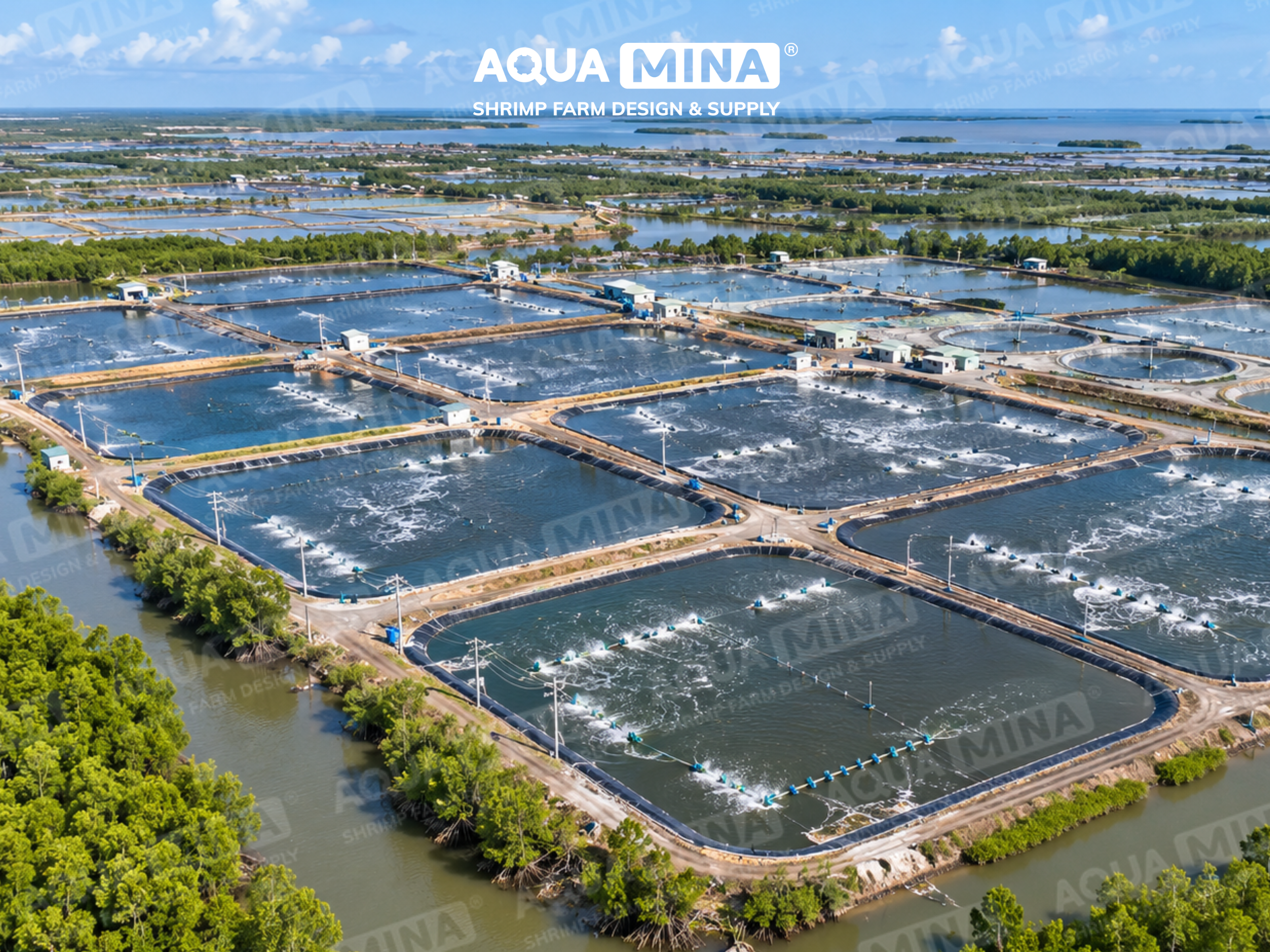
Expansive farms, low stocking density: Ecuadorian farms span hundreds of hectares but stock below 20 post-larvae/m², contrasting sharply with the 100–200 post-larvae/m² density common in Southeast Asia.
-
Slim yet steady margins: A profit margin of just 5–15 US cents/kg is offset by massive production volumes and consistent year-round harvests.
-
Synchronized integration: 10 major corporations (many owning processing plants) account for 60% of total output, tightly integrating everything from hatcheries and feed to farming and processing.
-
Core pillars behind Ecuador's success:
-
Tight vertical integration: Unlike the fragmented supply chain in Southeast Asia, the 10 leading conglomerates holding 60% of Ecuador's shrimp output fully integrate hatcheries, aquafeed, grow-out farms, and processing plants. Additionally, the producers' association (CNA) plays a vital role in industry coordination and promoting the national brand.
-
Large scale, thin but steady profits: Leveraging vast coastal land resources, farms typically cover hundreds of hectares. Although farm-gate margins are only 5–15 US cents/kg, overall profitability remains attractive thanks to huge production volumes and regular year-round harvests.
-
Low-density stocking to mitigate risks: Ecuadorian farms stock under 20 post-larvae/m² (compared to 100–200 post-larvae/m² in Southeast Asia), reducing shrimp stress, boosting survival rates, and lowering production costs. They run 5–6 cycles per year with stable, predictable outcomes rather than gambling on high-risk intensive farming.
-
Practical, results-driven technology: Despite low stocking densities, mechanization is highly advanced, featuring automatic feeders, acoustic sensors (monitoring shrimp feeding sounds), AI pond monitoring, and mechanized harvesting to minimize labor. Extruded feed is also widely used for better digestibility, water stability, and optimized FCR.
-
Self-reliant broodstock adapted to real ponds: Rather than relying on imported broodstock or Specific Pathogen-Free (SPF) lines, Ecuador conducts community-based selective breeding directly inside commercial ponds exposed to pathogens, strengthening natural disease resilience.
2. What lessons can Southeast Asia take away?
-
Avoid blind imitation: Limited land availability prevents Southeast Asia from replicating hundred-hectare farms. What matters is adopting the right mindset: select genetics suited to local conditions, farm within environmental carrying capacity, and only then introduce technology.
-
Focus on value and sustainability: Instead of competing purely on low prices against Ecuador, Southeast Asia should leverage its value-added processing strengths to target premium markets, while moderating stocking densities to improve waste management and reduce disease risks.
-
Recommendations for farmers: Evaluate profitability annually rather than per single crop; stock within the pond's carrying capacity; source traceable post-larvae to maintain high survival rates; test technologies suited to your specific ponds; and join cooperatives to strengthen collective bargaining power.
AQUA MINA CO., LTD
WE WORK FOR THE SUCCESS


How will new US tariffs change Vietnam's shrimp industry?
New regulation on the scientific name of octopus for traceability documentation
Expanding in Scale with 350 Booths Gathering at the 2nd Ca Mau Shrimp Festival 2026
Science and Technology: The New Growth Lever for the Shrimp Industry
AQUA MINA TAKES PART IN LIVESTOCK & AQUACULTURE PHILIPPINES EXPO 2026
Spotlighting 7 industry giants owning Vietnam's leading high-tech shrimp farming models
Proper Cleaning and Maintenance Guide for AQUA MINA Turbo Air Blowers
Sharing the benefits of shrimp farming between ponds
Ca Mau Prepares to Launch a 5.3 Trillion VND High-Tech Aquaculture Project
AQUA MINA Welcomes International Delegation: Expanding Opportunities for Cooperation in the Aquaculture Industry
Secrets to Maintaining Optimal Water Color in Intensive Vannamei Shrimp Ponds During Hot Weather
Comparing Handheld vs. 24/7 Fixed Oxygen Meters for Aquaculture: Which Option Suits Your Pond Best?