

Secrets to Maintaining Optimal Water Color in Intensive Vannamei Shrimp Ponds During Hot Weather
1. Nature & Importance of Water Color
-
Nature: Water color is an indicator of the pond ecosystem's health (comprising algae, beneficial microorganisms, organic matter, and self-cleaning capacity).
-
Importance: Directly affects dissolved oxygen, pH fluctuation amplitude, shrimp gut health/immunity, toxic gas generation, and pond water temperature.
-
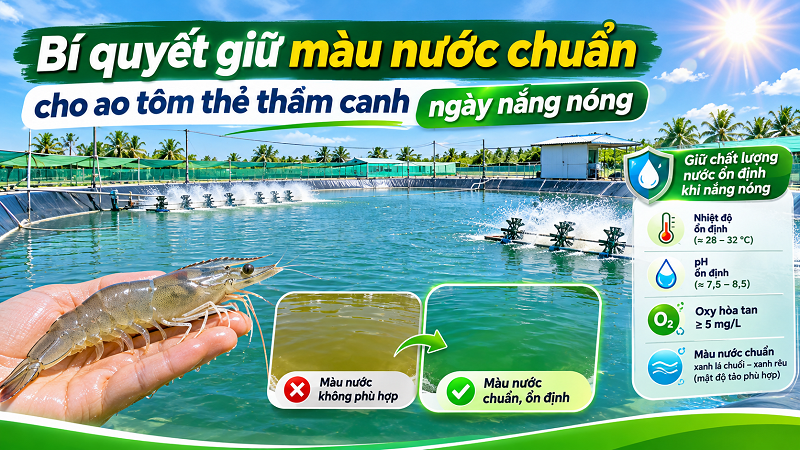
Hot Weather Principle: Managing water color essentially means managing and stabilizing the algal population, not destroying algae.
The essence of controlling water color is maintaining stability for the pond ecosystem. In intensive models with massive excess organic loading and rapid environmental fluctuations, water color serves as an early warning indicator to detect disease risks in shrimp. Especially during the hot, dry season, the key to mastering water color and the pond environment is the ability to proactively control algal density.
2. Meaning of Common Water Color Types
-
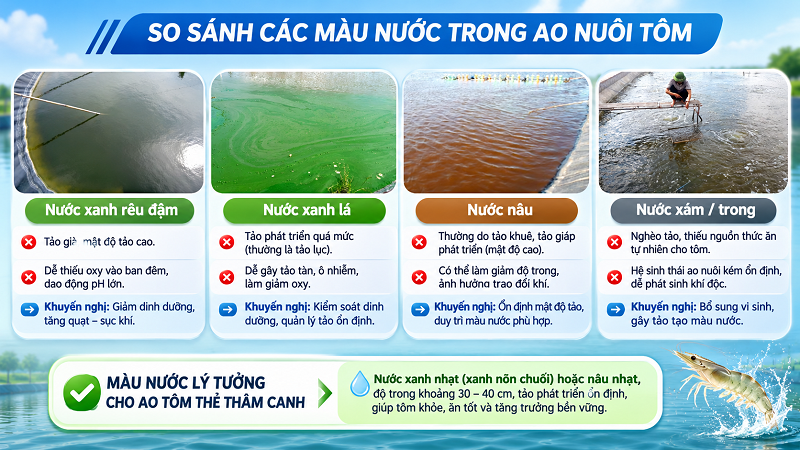
Light Brown / Golden Brown (Diatoms): Clean water, low organic load, safe and highly stable color, excellent for shrimp.
-
Light Green to Dark Green (Green Algae): Good photosynthesis, fast shrimp growth. If it turns dark green, there is a risk of an algae bloom and pond crash.
-
Reddish Brown / Dark Brown (Dinoflagellates / Golden Algae): Polluted environment, sharp pH and oxygen fluctuations. Easily generates toxins causing hepatopancreatic necrosis and gut diseases.
-
Turquoise, Green Surface Film (Cyanobacteria / Blue-Green Algae): High pollution level, poor microbial quality. Shrimp easily suffer from gill obstruction and gut diseases.
-
Blackish Brown / Grayish Black (Euglenoids): Severely polluted pond, anaerobic bottom producing hydrogen sulfide ($H_2S$), extremely high risk of oxygen depletion and massive algae crash.
During the day, algae photosynthesize to supply oxygen to shrimp, feed aerobic microorganisms, and inhibit harmful bacteria. Conversely, at night, algae and microorganisms respire heavily; the darker the water color, the higher the risk of nighttime oxygen crashes.
High algal density causes pH to spike in the afternoon and drop deeply at dawn. Wide pH swings stress shrimp, hinder molting, and convert un-ionized ammonia ($NH_3$, at high pH) and hydrogen sulfide ($H_2S$, at low pH) into highly dangerous toxins.
A stable algal and microbial system helps outcompete Vibrio bacteria, protecting the shrimp gut. Water color imbalance in hot weather is the primary cause of harmful bacteria proliferation, causing white feces syndrome and intestinal infections. Healthy algae help absorb waste and reduce pollution. Conversely, when the algal system collapses or spins out of control, dead algal debris and suspended organics transform into a massive pollution load, triggering toxic gases.
Water color determines the level of solar radiation absorption. Warm colors (reddish brown, dark yellow) absorb more heat, driving water temperatures above 33°C, which lowers oxygen, paralyzes toxic gas-processing microorganisms, and stimulates harmful algae (dinoflagellates, euglenoids) to develop.
3. Causes Affecting Water Color
-
Nutrition: Excess feed, shrimp feces, and accumulated algal debris generate toxic gases and stimulate harmful algae blooms.
-
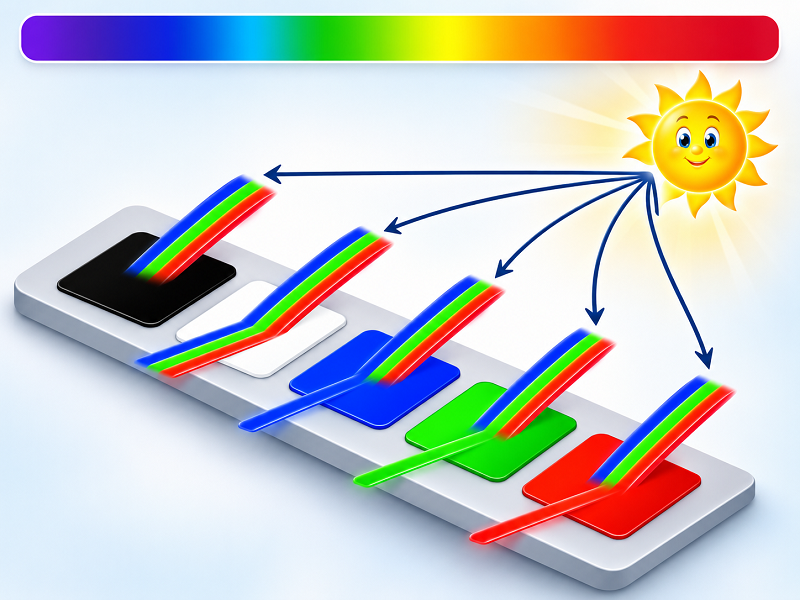
Light & Artificial Color: Light intensity determines which algae develop. Using artificial color (such as blue) helps block appropriate light wavelengths, limiting algae blooms and reducing heat absorption.
-
Alkalinity: Acts as a buffering system. Low alkalinity causes algal instability and sharp pH swings; excessive alkalinity easily causes algae blooms.
-
Temperature Differences: A sudden temperature rise combined with excess nutrients will cause uncontrolled algae growth.
4. Signs of Algal Die-Off (Algal Crash)
-
Morning and afternoon pH show little difference despite dark water color.
-
Midday oxygen drops to low levels (< 4 ppm).
-
Viscous, gelatinous water, hard-to-dissolve foam, appearance of green/black algal scum on the leeward side.
-
Toxic gases ($NH_3, NO_2$) increase significantly; shrimp reduce feeding, cling to gills, and exhibit yellow feet/mouths.
Leftover feed, shrimp feces, organic waste, and inorganic minerals are primary nutrient sources for algae. The higher the Nitrogen (N) and Phosphorus (P) load, the easier harmful algae bloom.
Algal succession pattern during the farming cycle: Clean water early in the cycle with beneficial diatoms $\rightarrow$ moderate organic accumulation mid-cycle with green algae $\rightarrow$ severe pollution late in the cycle with harmful algae blooms (dinoflagellates, cyanobacteria, euglenoids).
Role of Microorganisms: Well-functioning microbes thoroughly decompose waste into safe inorganic matter that beneficial algae can use. Conversely, poor microbial activity leaves organic waste partially decomposed and accumulated, creating viscous water and stimulating harmful algae blooms.
Control Mechanisms: Avoid feeding shrimp when water temperature exceeds 32°C and split feeding into multiple small rations per day to limit water pollution. Each type of alga absorbs different light wavelengths to grow; pond water reflects the matching band color and absorbs the rest. Artificial color solutions (e.g., blue) help reflect and block blue light from penetrating deep into the water (the band best absorbed by algal chlorophyll), thereby curbing algae bloom momentum and reducing heat absorption during scorching days.
5. Effective Solutions & Management Tools
-
Feed Management: Reduce or suspend feeding when water temperature > 32°C, split rations, or shift some feeding to nighttime.
-
Bottom Siphoning: Periodically vacuum waste (every 3–4 hours or after feeding) to eliminate organic accumulation.
-
Maintaining Alkalinity & Minerals: Helps stabilize water color and supports natural shrimp molting.
-
Using Probiotics: Apply probiotics at night or late evening to compete for nutrients and inhibit algae multiplication.
-
Artificial Color: Used as a green sunshade to reduce light, limit water temperature increases, and stabilize the algal community.
In modern intensive shrimp farming, the benefits provided by algal systems no longer outweigh the risks they cause when uncontrolled. The wide gap between benefits and harms requires farmers to shift their mindset: moving from relying on algae to actively curbing its growth and keeping algal density to an absolute minimum.
6. Mistakes to Avoid
-
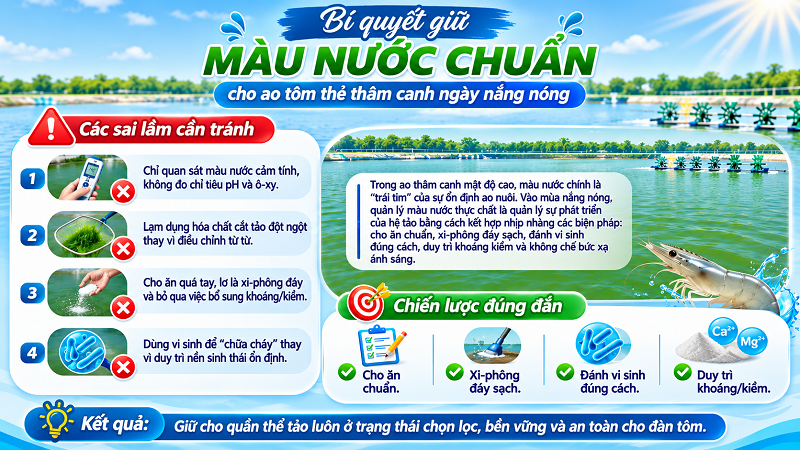
Observing water color purely subjectively, without measuring pH and oxygen parameters.
-
Abusing chemicals to suddenly kill algae instead of adjusting gradually.
-
Overfeeding, neglecting bottom siphoning, and ignoring mineral/alkalinity supplementation.
-
Using probiotics as an emergency fix instead of maintaining a stable baseline ecology.
In high-density intensive ponds, water color is the heart of pond stability. In hot weather, managing water color is actually managing algal growth by harmoniously combining measures: precise feeding, clean bottom siphoning, correct probiotic application, maintaining mineral alkalinity, and controlling light radiation. The correct strategy is not to wipe out all algae, but to keep the algal population in a selective, sustainable, and safe state for the shrimp.


Comparing Handheld vs. 24/7 Fixed Oxygen Meters for Aquaculture: Which Option Suits Your Pond Best?
AQUA MINA Oxygen Meter and Warning System for Shrimp and Fish: A Reliable Helper for Aquaculture Pond Monitoring
Portable Dissolved Oxygen, pH, and Temperature Meter: 3 Essential Parameters Integrated into One Device
AQUA MINA at the Japan Seafood Expo 2026: Vietnamese Equipment Makes Its Mark on the International Stage
Innovating Sturgeon Farming Models to Unlock New Economic Development Opportunities in Nậm Chày
Enhancing Adaptability Towards a Sustainable Shrimp Industry
VASEP and ABRAPES join forces to boost seafood trade between Vietnam and Brazil
How strictly is the chlorine gas management process controlled?
Building 48 Value Chains: Ca Mau Strives for Sustainable Shrimp Farming
Vietnam's shrimp industry is still struggling to achieve self-sufficiency in breeding stock.
EVFTA paves the way for Vietnamese seafood to conquer high-end markets
Russian importers are paying increasing attention to seafood supplies from Pakistan
-
Support online
-
Email : oversea@aquamina.com.vn