

Why Are So Many Families Choosing HDPE Liners for Rainwater Storage?
While in the past, most people only used small stainless steel tanks holding a few hundred liters to 1 cubic meter of water, today’s water storage needs have changed significantly. Users are now shifting their focus toward solutions capable of holding:
-
10 cubic meters
-
20 cubic meters
-
50 cubic meters
-
Or even hundreds of cubic meters to serve daily household needs or long-term irrigation.
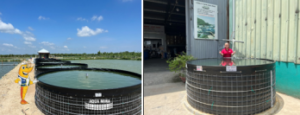
Among current solutions, HDPE liner ponds are becoming a popular choice thanks to their excellent waterproofing, high durability, and reasonable investment costs.
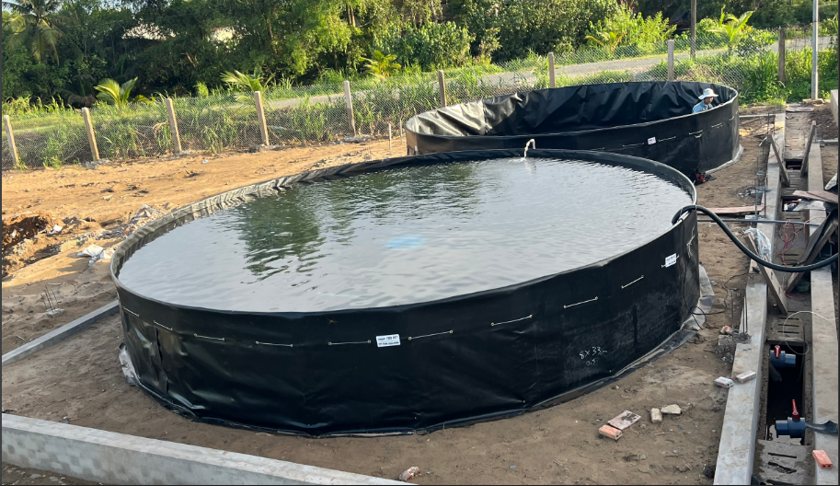
Traditional Earthen Ponds Are Revealing Many Limitations
Previously, many families chose to dig earthen ponds for water storage due to low initial costs and easy implementation. However, after a period of use, various issues begin to arise, causing water storage efficiency to fall short of expectations.
Some common problems include:
-
Water seeping down into the ground
-
Ponds drying up quickly during the sunny season
-
Pond banks being prone to erosion
-
Turbid, muddy water that is difficult to clean
-
Rapid algae growth
Many people think they are storing around 20 cubic meters of water, but in reality, a significant amount of water is lost after just a few weeks of use.
This is exactly why more and more customers are switching to HDPE liners for their storage ponds to minimize loss and maintain a more stable water supply.
How Do HDPE Liners Make Water Storage More Efficient?
The biggest difference with HDPE liners is their near-absolute waterproofing capability. When installed with the proper technique, water loss is drastically reduced compared to traditional earthen ponds.
In addition to excellent water retention, this type of liner offers high durability when used outdoors for extended periods.
Key outstanding advantages include:
-
Excellent heat and sun resistance
-
UV protection
-
Low risk of rotting or becoming brittle
-
Algae growth restriction
-
Easy to clean
Notably, lined ponds can be flexibly designed according to the actual needs of each household or farm.
Currently, many customers are choosing:
-
5-cubic-meter ponds for basic needs
-
10-cubic-meter ponds for large families
-
80 – 100 cubic meter ponds for companies or construction sites
-
Large-scale ponds of 600 - 1,000 cubic meters for agriculture and irrigation
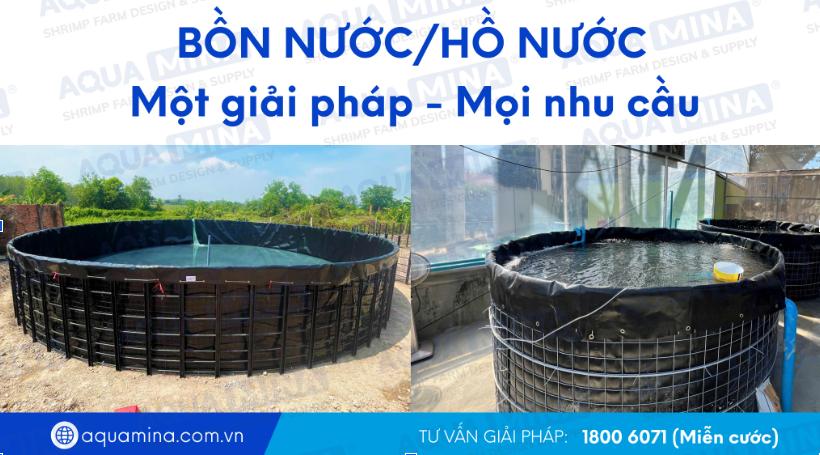
Why Are Many Families Switching from Stainless Steel Tanks to Lined Ponds?
A 1,000-liter stainless steel tank only holds about 1 cubic meter of water. Meanwhile, many families nowadays require a much larger volume of water to ensure a stable daily supply during the dry season.
This is why HDPE liner pond systems are gaining increasing attention.
Compared to installing multiple small tanks, an HDPE liner pond helps to:
-
Significantly increase storage capacity
-
Save installation space
-
Proactively secure a long-term water supply
-
Relieve the pressure of water scarcity during the sunny season
Furthermore, users can easily expand the capacity in the future without having to modify the entire system—an advantage that many traditional water storage solutions struggle to match.
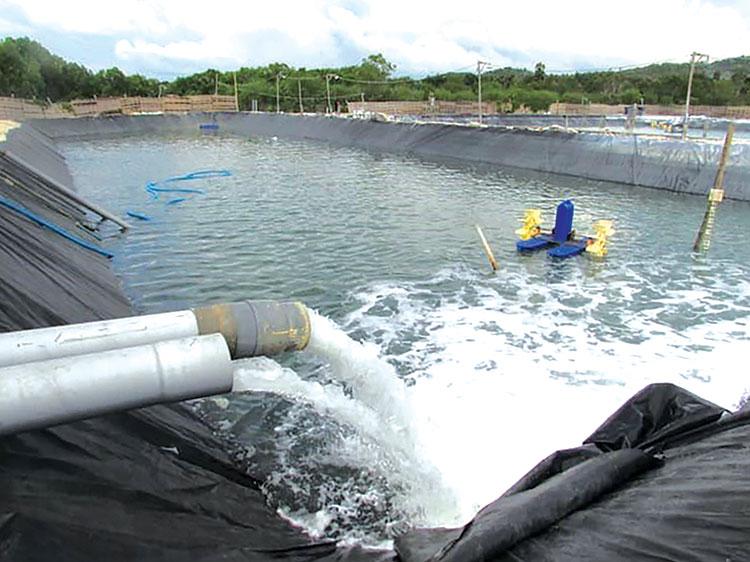
Are HDPE Liners Suitable for Agriculture?
Not only used for residential purposes, agricultural HDPE liners are now widely applied in large-scale production models.
Some common applications include:
-
Irrigation ponds
-
Drought-relief ponds
-
Aquaculture ponds
-
Production water storage ponds
The greatest advantage is the ability to store massive volumes of water for long periods while still ensuring minimal loss.
Many current systems can store:
-
Tens of cubic meters
-
Hundreds of cubic meters
-
Even thousands of cubic meters of water
This is the solution that helps farms and orchards proactively manage their watering schedules and reduce dependence on weather conditions.
Is Installing an HDPE Pond Expensive?
This is a question that many customers care about when looking into lined pond solutions.
In reality, installation costs will depend on:
-
Pond capacity
-
Liner thickness
-
Ground conditions
-
Purpose of use
However, compared to many traditional concrete solutions, HDPE ponds typically offer the following advantages:
-
Faster installation
-
Easier expansion
-
More reasonable costs
-
Minimal maintenance costs
To ensure the system operates stably in the long run, attention must be paid to:
-
Thorough ground preparation
-
Choosing the right type of liner
-
Proper technical installation
-
Selecting an experienced contractor
These are the factors that directly affect the lifespan and efficiency of the water storage system.
In the context of an increasingly unstable water supply, HDPE liner ponds are becoming the most effective water storage solution for both households and farms.
The capacity to store from tens to hundreds of cubic meters helps users become more proactive during the dry season, while significantly reducing water loss compared to traditional earthen ponds.
Most importantly, customers should choose the exact capacity that fits their actual needs to optimize long-term investment efficiency.
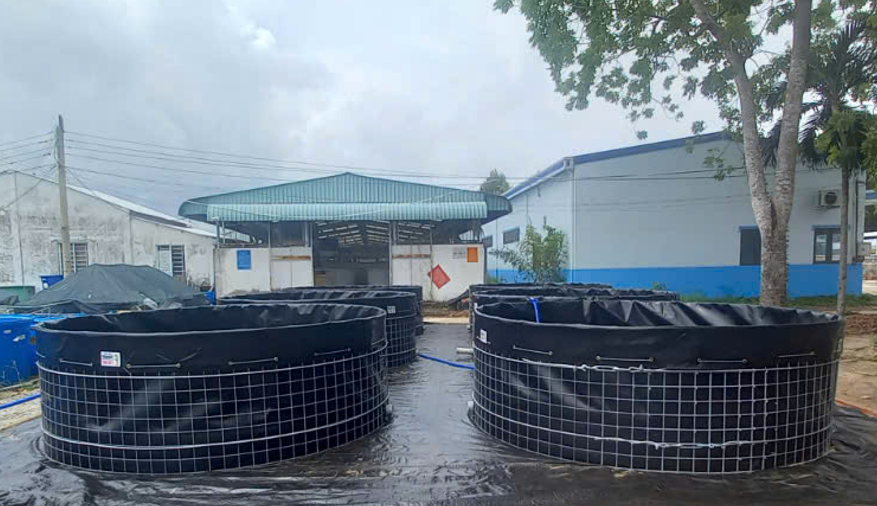
Choose a water storage solution – Choose AQUA MINA “Store in the rainy season – Prevail through the dry season”
From residential modular water tanks to HDPE lined reservoir solutions, Aqua Mina is ready to advise you on the most suitable solution based on your actual needs.
Commitment to quality – Optimized capacity – Tailored to real water storage needs.

WE WORK FOR THE SUCCESS


Ca Mau, Can Tho and An Giang Play a Leading Role in Vietnam’s Shrimp Industry
Protecting rice-shrimp yields against environmental fluctuations caused by prolonged rain
AQUA MINA Turbo Blower: Quiet, Energy-Efficient Air Supply for Aquaculture Ponds
AQUA MINA has accompanied the experimental tank system project at Can Tho University from its very early days
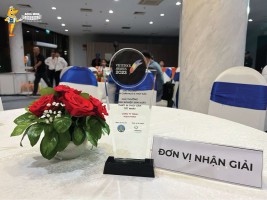
AQUA MINA AMONG 20 OUTSTANDING PRESENTATIONS AT THE WORKSHOP ON APPLYING SCIENCE AND TECHNOLOGY TO IMPROVE THE QUALITY OF VIETNAM’S AQUATIC PRODUCTS
Vietnam’s Shrimp Farming Industry Enters the High-Tech Race
The U.S. market relies heavily on imported shrimp to bridge its domestic supply gap
The 2028 supply crisis: The shrimp industry is projected to face a 400,000-ton material shortage
High profits from high-tech shrimp farming come with persistent risks
Intensifying El Niño Effect: Climate Change Risks Threaten the Global Shrimp Supply Chain
Evaluating Gaps in the Circular Economy Value Chain of the Shrimp Industry
A Comprehensive Overview of the Vietnamese Shrimp Industry


.jpg)