

Enhancing Adaptability Towards a Sustainable Shrimp Industry
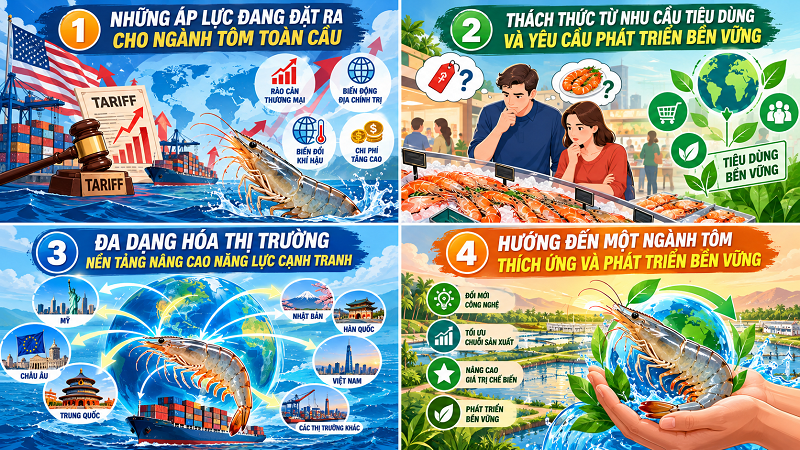
1. Pressures Facing the Global Shrimp Industry
Just days after the Global Shrimp Forum 2026 (GSF 2026) concluded, India's shrimp industry once again faced the risk of increasing trade barriers. Two U.S. Senators, Bill Cassidy and Cindy Hyde-Smith, reintroduced legislation proposing additional tariffs on shrimp imports from India, particularly warmwater shrimp.
Although the bill was initially introduced in 2023 but failed to pass, it has once again attracted attention as the Louisiana Shrimp Association continues its petition campaign, urging the administration of President Donald Trump to issue an executive order restricting shrimp imports into the United States.
The United States' continued reliance on tariffs as a means of protecting domestic production is placing considerable pressure on shrimp-exporting countries. Beyond India, other major global suppliers must also proactively develop strategies to respond to unpredictable shifts in international trade.
As one of the world's two largest shrimp import markets, any significant policy changes in the United States could affect global supply chains. When export opportunities become restricted, producing countries may face intense price competition as they attempt to secure market share in alternative destinations.
Meanwhile, rising costs of feed, transportation, and logistics continue to squeeze profitability. If price-based competition intensifies, businesses with already narrow profit margins will face even greater financial pressure.
Against this backdrop, increasing production volumes or reducing costs is no longer sufficient. Diversifying export markets, improving product quality, and meeting increasingly stringent international technical standards are becoming essential factors in maintaining competitive advantages.
2. Challenges Arising from Consumer Demand and Sustainability Requirements
Beyond trade uncertainties, changing consumer behavior was another key topic discussed at GSF 2026. One of the central questions was how to encourage European consumers to purchase and consume shrimp more frequently as part of their everyday diets.
According to data from Circana, although shrimp is purchased by a significant proportion of consumers, consumption frequency remains relatively low. In France and Germany, 88% and 66% of consumers, respectively, purchase shrimp at least once a year. However, only 19% of shrimp buyers in France and 20% in Germany consume shrimp at home at least once a week.
Price remains one of the biggest barriers influencing purchasing decisions. Nevertheless, experts suggest that the shrimp industry should avoid excessive reliance on discounts and continuous promotions to stimulate demand, as these strategies may undermine product value and long-term profitability.
Alongside pricing considerations, sustainability is playing an increasingly important role in seafood procurement and distribution.
Circana's survey revealed that:
-
98% of surveyed retailers consider sustainability an important factor when selecting suppliers.
-
96.5% are implementing procurement strategies that incorporate environmental and social responsibility.
-
92% expect sales of sustainable products to grow at a faster rate.
These findings indicate that the shift toward responsible consumption is creating new expectations for the shrimp industry. Businesses must not only ensure product quality but also prioritize traceability, production practices, and compliance with sustainability standards.
3. Market Diversification – A Foundation for Stronger Competitiveness
Despite numerous challenges, the global shrimp trade continues to show signs of growth. However, producing countries are adjusting their development strategies to adapt to an increasingly volatile business environment.
India: Expanding Markets to Reduce Dependence
Under pressure from U.S. tariff policies, India has accelerated efforts to access alternative export markets. In 2025, shrimp exports to Europe, China, and Vietnam increased, while South Korea, Japan, and Russia continued to play important roles in expanding market opportunities.
Supported by this strategy, India's total shrimp exports reached nearly 800,000 metric tons in 2025, representing an increase of approximately 9% compared with 2024.
Beyond market expansion, India's shrimp industry is also focusing on developing feed supply chains suitable for different shrimp species. This approach provides farmers with greater flexibility in production choices while strengthening their resilience against market fluctuations.
Vietnam: Leveraging Processing Capabilities and Domestic Market Potential
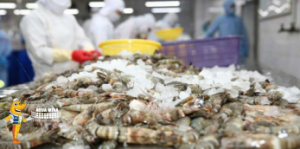
For Vietnam, seafood processing capabilities remain a major competitive advantage. Value-added shrimp products account for a significant share of the country's export portfolio, enabling businesses to enhance product value rather than compete solely on raw material prices.
In addition to domestic supplies, Vietnamese companies import raw shrimp from India and Ecuador for processing before re-exporting the finished products to international markets.
Beyond exports, the domestic market is also considered a promising growth opportunity. According to an estimate presented at the forum, domestic shrimp consumption in Vietnam could exceed 200,000 metric tons.
Effectively developing this market would help expand sales channels, reduce dependence on exports, and strengthen the resilience of Vietnam's shrimp industry against external disruptions.
Ecuador: Production Growth Alongside Product Diversification
Ecuador's shrimp industry continues to maintain positive growth momentum. From approximately 1.2 million metric tons exported in 2024, the country's export volume increased to 1.39 million metric tons in 2025.
During the first six months of 2026 alone, Ecuador exported approximately 822,000 metric tons of shrimp, moving toward its full-year export target of 1.6 million metric tons.
Although China continues to account for approximately half of Ecuador's shrimp exports, the country is actively expanding into other markets. The United States has surpassed the European Union to become the second-largest destination for Ecuadorian shrimp, while several Asian countries, including Vietnam, are playing increasingly important roles in its trade network.
Notably, Ecuador is focusing not only on market expansion but also on diversifying its product portfolio, allowing processors and exporters to respond more flexibly to changing requirements from international buyers.
4. Towards an Adaptable and Sustainable Shrimp Industry
Recent developments in the global shrimp industry demonstrate that long-term growth can no longer depend solely on production volumes or cost advantages.
The ability to adapt to trade policies, diversify markets, increase processing value, and meet sustainability standards will increasingly determine the competitive position of individual producing countries.
For Vietnam's shrimp industry, these developments present both challenges and opportunities to accelerate technological innovation, optimize production chains, and progressively enhance product value in international markets.
Proactive adaptation today lays the foundation for building an efficient, responsible, and sustainable shrimp industry for the future.
WE WORK FOR THE SUCCESS!


Innovating Sturgeon Farming Models to Unlock New Economic Development Opportunities in Nậm Chày
VASEP and ABRAPES join forces to boost seafood trade between Vietnam and Brazil
How strictly is the chlorine gas management process controlled?
Building 48 Value Chains: Ca Mau Strives for Sustainable Shrimp Farming
Vietnam's shrimp industry is still struggling to achieve self-sufficiency in breeding stock.
EVFTA paves the way for Vietnamese seafood to conquer high-end markets
Russian importers are paying increasing attention to seafood supplies from Pakistan
Ca Mau, Can Tho and An Giang Play a Leading Role in Vietnam’s Shrimp Industry
Protecting rice-shrimp yields against environmental fluctuations caused by prolonged rain
AQUA MINA Turbo Blower: Quiet, Energy-Efficient Air Supply for Aquaculture Ponds
AQUA MINA has accompanied the experimental tank system project at Can Tho University from its very early days
AQUA MINA AMONG 20 OUTSTANDING PRESENTATIONS AT THE WORKSHOP ON APPLYING SCIENCE AND TECHNOLOGY TO IMPROVE THE QUALITY OF VIETNAM’S AQUATIC PRODUCTS