

Green "rebirths"
Green Rebirths at the Southernmost Tip
In the southernmost land of the Fatherland, there are people quietly creating green rebirths. From coastal plastic waste and seaweed growing in shrimp ponds to shrimp heads and shells at seafood processing plants... everything is being re-evaluated with a new mindset: no longer seen as waste, but as resources for the circular economy, green economy, and sustainable development.
The common point of these models is that they not only help reduce environmental pressure but also create new products, new livelihoods, and new values for Ca Mau's key industries.
Changing the Fate of Waste
Every morning, Song Doc is bustling with boats docking after long days at sea. However, along with holds full of fish and shrimp comes a large amount of plastic bags, bottles, and plastic items discarded into the river and sea. These short-lived items persist in the environment for a very long time.
Born and raised in the coastal town of Song Doc, Mr. Nguyen Trung Tinh (residing in Hamlet 12, Song Doc Commune) understands better than anyone the pressure of plastic waste on his hometown's marine environment. After finishing 9th grade, he joined his family in the mechanical trade serving fishing logistics, witnessing daily the massive amount of plastic waste discarded after fishing trips.
Sometimes looking at the garbage floating along the river and the coast, I thought, if we keep throwing trash away like this, what will happen to the rivers and seas? Mr. Nguyen Trung Tinh pondered.
From that thought, he boldly convinced his family to invest nearly 5 billion VND to build a plastic recycling workshop. Without formal specialized training, he figured out the recycling process himself, utilizing his mechanical experience to improve various equipment to reduce operating costs.
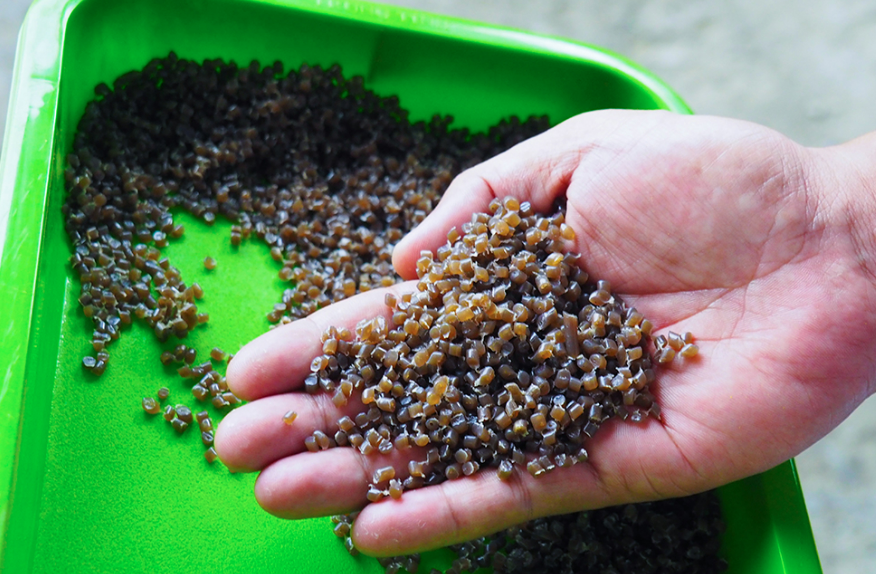
He also connected with scrap collectors, seafood processing factories, and scrap yards inside and outside the locality to buy plastic and nylon bags for his recycling workshop. Through many stages of sorting, grinding, and processing, plastic packaging once considered trash becomes raw plastic pellets for production.
Every year, Mr. Tinh's facility collects about 200-300 tons of plastic waste, recycling it into more than 100 tons of raw plastic to produce items such as plastic bags, crates, baskets, trays, and crab nets. The crab net product alone is currently exported to China at an average of 20-30 tons/month. The recycling workshop not only brings an income of more than 60 million VND/month for Mr. Tinh's family but also creates regular jobs for 13 local workers.
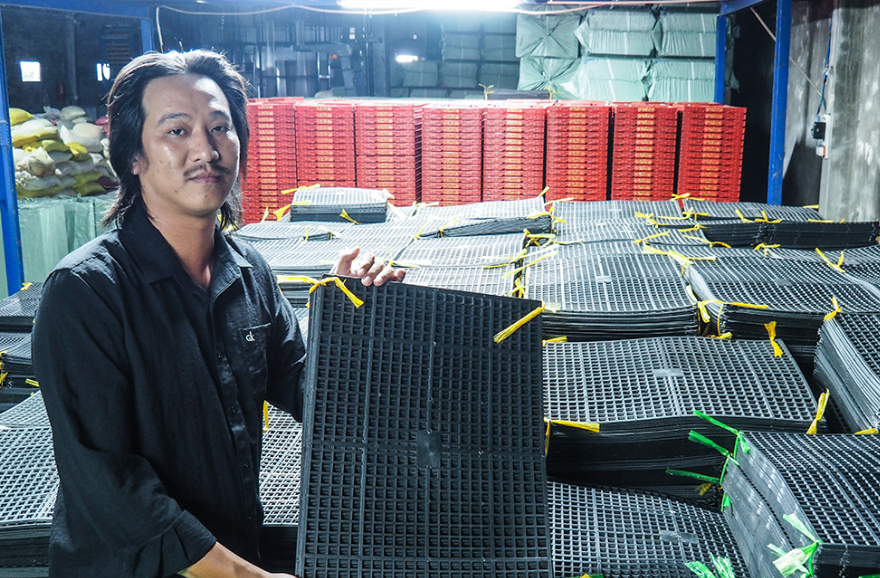
Note: Mr. Nguyen Trung Tinh's facility has expanded its connections, exporting crab net products to China, averaging 20-30 tons/month. After being sorted and recycled into plastic pellets, plastic waste is further processed into many products for production and daily life.
From a small recycling workshop in the coastal area of Song Doc, Mr. Nguyen Trung Tinh's model is helping to form a link in the local circular economy chain. There, garbage is not only treated but reborn into new raw materials, new products, and new values for life. His startup journey from plastic waste is a testament to innovative thinking drawn from reality, turning the risk of environmental pollution into a driving force for green economic development.
Awakening Green Gold in Shrimp Ponds
In the Dam Doi region—where shrimp ponds stretch along the salty waters—locals affectionately call Mr. Le Thanh Dang, Deputy Head of the Economic Department of Dam Doi district, by the familiar name: Dang rong (Seaweed Dang).
That nickname is tied to his years-long journey to find a new direction for his hometown's shrimp farming industry, starting with a species once considered useless: seaweed.
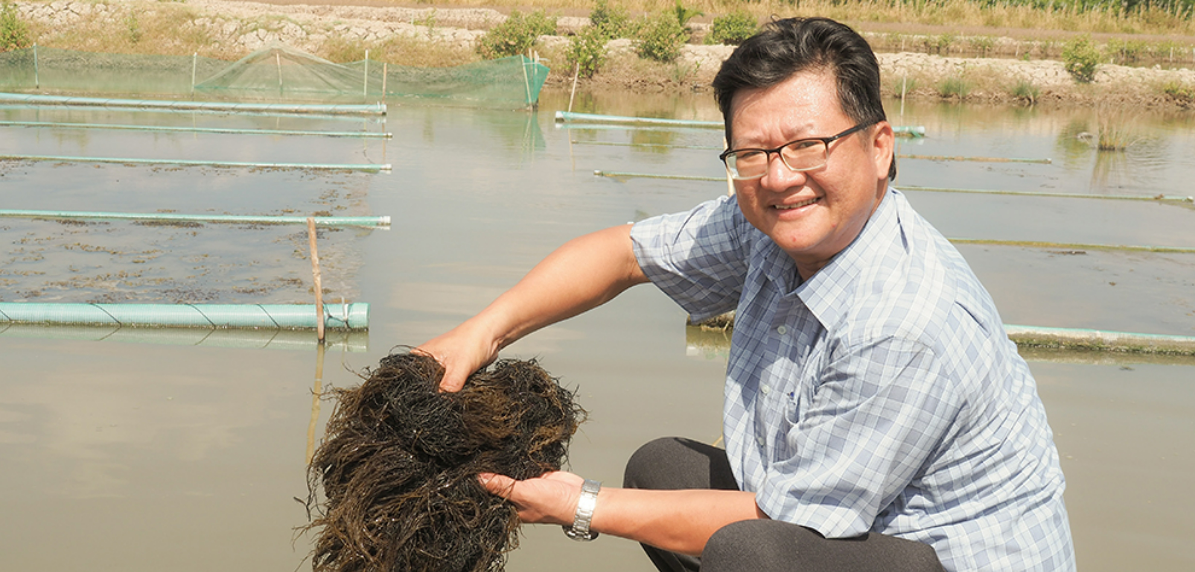
Note: Mr. Le Thanh Dang is the pioneer of the seaweed farming model in shrimp ponds.
Previously, seaweed grew thickly in shrimp ponds and was always considered an enemy by farmers. People tried to remove it, even using chemicals to destroy it, believing that seaweed negatively affected the water environment and shrimp growth.
However, during his studies and research at Can Tho University, Mr. Dang realized that seaweed not only helps balance the ecosystem but can also become an economic resource if exploited properly. He brought that idea back to his hometown and began with quiet experiments amidst the shrimp ponds in Dam Doi.
From 2021 to 2022, he implemented an improved extensive black tiger shrimp farming project combined with Gracilaria tenuistipitata (a type of red seaweed) locally. The results exceeded expectations: the pond environment became more stable, water treatment costs decreased, the shrimp thrived, and economic efficiency increased by about 20% compared to traditional models.
What makes many households appreciate the model is that harvested seaweed can be dried and sold to traders, creating an additional source of income amidst a volatile shrimp farming industry. From there, what was once considered a harmful weed gradually became heaven's gift in the shrimp ponds of many households.
Mr. Ngo Van Mol, residing in Tan Phong B Hamlet, Dam Doi Commune, shared: Growing seaweed in shrimp ponds brings double benefits: it helps filter the water and provides a natural food source for the shrimp, while also creating a shelter for them during the hot season.
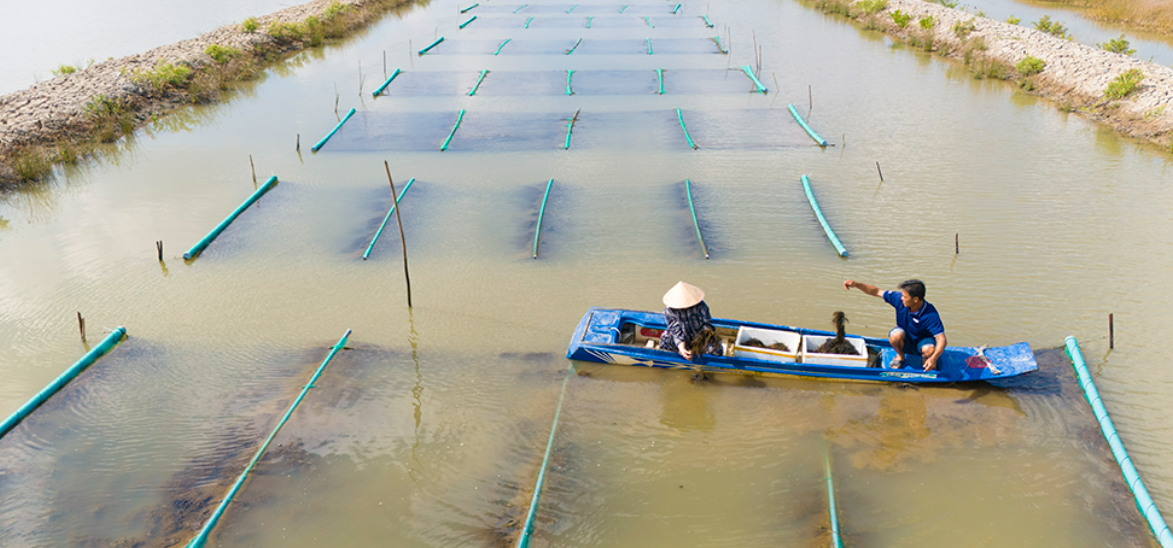
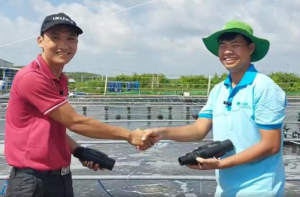
Note: The Thai seaweed farming model of Mr. Ngo Van Mol, Tan Phong B Hamlet, Dam Doi Commune.
Not stopping there, Mr. Dang continued to coordinate with universities and businesses to research and expand the improved seaweed farming model. He also advocated for the establishment of cooperatives, providing locals with floating rafts, seaweed seeds, and farming techniques to build a sustainable supply chain.
Besides balancing the ecosystem, this type of seaweed brings significant commercial value. Dried seaweed is currently purchased by the Dam Doi Seaweed Agricultural Service Cooperative, in collaboration with buying companies, at prices ranging from 7,000 to 8,000 VND/kg, opening up additional livelihoods for aquaculture farmers in Ca Mau.
Behind the green seaweed rafts gradually covering the shrimp ponds is the image of an official quietly starting from small things to open up a more nature-aligned path for Ca Mau's shrimp farming. The seaweed, once considered worthless, has now become green gold in high-tech shrimp ponds, contributing to greener, cleaner ponds and providing new livelihoods for the people of Ca Mau.
When Shrimp Heads and Shells Open Up the Circular Economy
If seaweed is a gift from nature, seafood by-products are a problem created by humans during the development of the seafood processing industry.
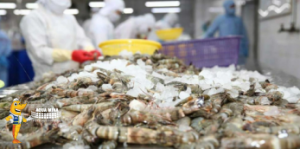
At seafood processing plants in Ca Mau, tons of shrimp heads and shells are separated from the production line every day. Previously, they were viewed as waste that pressured the environment. Now, these by-products are opening a new path for the circular economy in the seafood sector.
Since 2019, Vietnam Food Joint Stock Company, located in Hoa Trung Industrial Park, Luong The Tran Commune, has been one of the pioneering enterprises in implementing a deep processing procedure for shrimp by-products.
Using technology, the enterprise extracts chitin from shrimp heads and shells—a crucial raw material for producing chitosan. Chitosan is then applied in various fields such as agriculture (organic fertilizer for crops), industry (hydrolyzed liquid for water treatment), and even medicine (Gelatin for medicinal capsules).
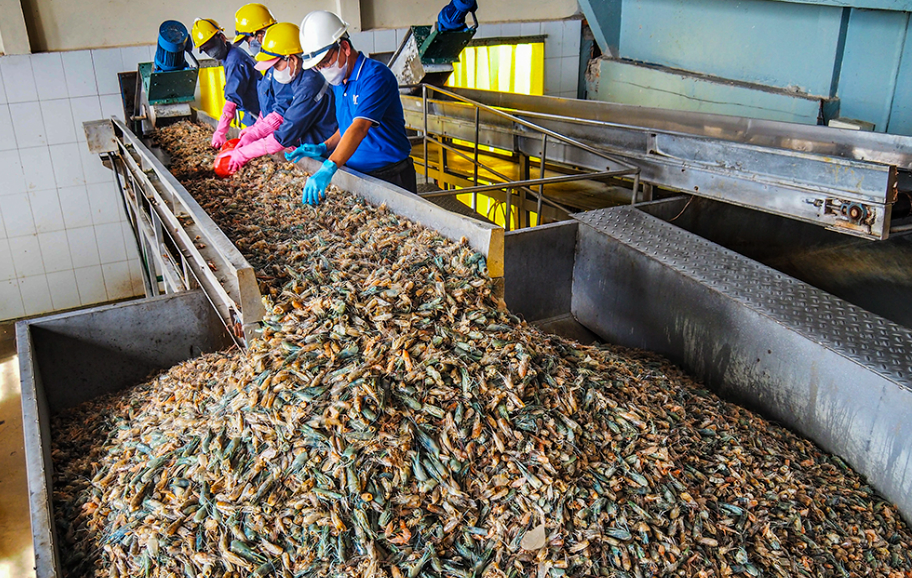
Note: Mr. Quan Hong Thin, Deputy Director of Vietnam Food JSC, inspecting the input processing workshop for shrimp heads at the company.
Mr. Quan Hong Thin, Deputy Director of Vietnam Food JSC, stated that shrimp heads and shells usually account for about 45% of the raw shrimp's weight. Every year, the company collects about 30,000-40,000 tons of shrimp shell by-products from within and outside the province to process into organic products for agriculture, aquaculture, and daily life.
Utilizing by-products not only helps businesses reduce waste treatment costs but also creates products with higher economic value, simultaneously contributing to reducing environmental pressure on the seafood processing industry.
With a humane business concept contributing to environmental protection, Vietnam Food JSC's projects on processing and extracting shrimp heads and shells have won many prestigious domestic and international awards and certifications.
Notable achievements include the European Award in the Future of Nutrition category for the model of creating value from shrimp by-products; and the 2024 outstanding regional rural industrial product certification awarded by the Agency for Regional Industry and Trade for their hydrolyzed protein, hydrolyzed squid liquid, hydrolyzed shrimp powder, and Astaxanthin.
Note: One of the products extracted from shrimp heads and shells into pet food and aquaculture feed at Vietnam Food JSC.
These results demonstrate that the innovative direction associated with deep processing technology is unlocking new values for the seafood industry. It not only enhances the value of by-products but also promotes green growth and sustainable development locally.
The valuable aspect is that these models stem from highly practical needs: treating waste, utilizing by-products, reducing costs, creating new products, increasing income, and protecting the environment. This is exactly the spirit of the circular economy, green economy, and innovation that Ca Mau is striving for.
According to Dr. Quach Van An, Deputy Director of the Department of Science and Technology (S&T), the role of the S&T sector is to identify, support, standardize, and replicate effective models. For models with potential, continued support is needed for quality testing, technical process refinement, trademark protection, traceability, market connection, and access to programs supporting technological innovation, innovative startups, and circular economy development.
When perspectives change, the circular economy is no longer a distant concept but is present in every factory and production model in Ca Mau. There, S&T does not just begin in large laboratories but starts from very everyday things: how to make waste more useful, utilize by-products more efficiently, produce cleaner, sell better, and make the environment less vulnerable... bringing great value and contributing to the green development of the Fatherland's southernmost region.
Source: baocamau

WE WORK FOR THE SUCCESS


Ca Mau, Can Tho and An Giang Play a Leading Role in Vietnam’s Shrimp Industry
Protecting rice-shrimp yields against environmental fluctuations caused by prolonged rain
AQUA MINA Turbo Blower: Quiet, Energy-Efficient Air Supply for Aquaculture Ponds
AQUA MINA has accompanied the experimental tank system project at Can Tho University from its very early days
AQUA MINA AMONG 20 OUTSTANDING PRESENTATIONS AT THE WORKSHOP ON APPLYING SCIENCE AND TECHNOLOGY TO IMPROVE THE QUALITY OF VIETNAM’S AQUATIC PRODUCTS
Vietnam’s Shrimp Farming Industry Enters the High-Tech Race
The U.S. market relies heavily on imported shrimp to bridge its domestic supply gap
The 2028 supply crisis: The shrimp industry is projected to face a 400,000-ton material shortage
High profits from high-tech shrimp farming come with persistent risks
Intensifying El Niño Effect: Climate Change Risks Threaten the Global Shrimp Supply Chain
Evaluating Gaps in the Circular Economy Value Chain of the Shrimp Industry
A Comprehensive Overview of the Vietnamese Shrimp Industry

.jpg)