

Message for the Vietnamese shrimp industry
These are strategic messages for Vietnam to “win” in the competition against the world’s shrimp industry giants.
The shrimp industry is one of Vietnam’s key export sectors, contributing significantly to the country’s seafood export value. However, the industry is currently facing increasing competitive pressure from Ecuador and India. In this context, Vietnam cannot compete through low prices or massive production volumes, but instead must shift toward a strategy based on value, technology, and system integration.
Competing with the world’s shrimp industry giants
At the 2026 National Fisheries Science, Technology and Fisheries Surveillance Conference, Nguyen Duy Hoa analyzed the competitive position of Vietnam’s shrimp industry compared with other rapidly growing shrimp-producing countries. He also proposed short-, medium-, and long-term development roadmaps to help Vietnam’s shrimp industry transition from a raw material supplier to a provider of high-value products through brand building.
According to the analysis, in recent years, besides Vietnam, Ecuador and India have emerged strongly in the global shrimp industry. Ecuador leads in low-cost production (“cost leader”), while India continues to maintain its position as the “scale leader,” despite a temporary slowdown, and is now recovering strongly. Vietnam, meanwhile, operates on a smaller scale but applies intensive farming technologies. This raises an important strategic question: How will Vietnam compete in the next decade?
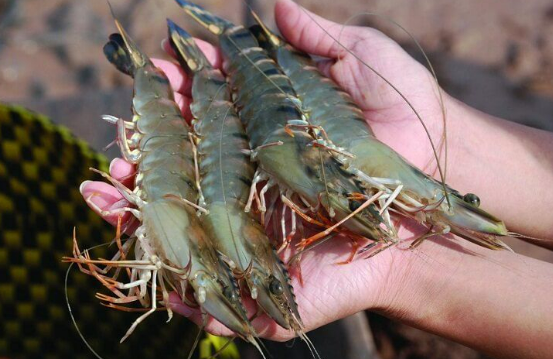
According to Dr. Hoa, Vietnam practices high-density intensive farming at 100–300 shrimp per square meter, achieving yields of 15–25 tons per hectare. India farms at medium density with 20–60 shrimp per square meter (semi-intensive), yielding 6–10 tons per hectare. Ecuador has the lowest density at 5–15 shrimp per square meter (extensive farming), with yields of 4–8 tons per hectare.
Applying science and technology in shrimp farming processes is one of the core factors for Vietnam’s shrimp industry to develop sustainably and compete with global shrimp giants.
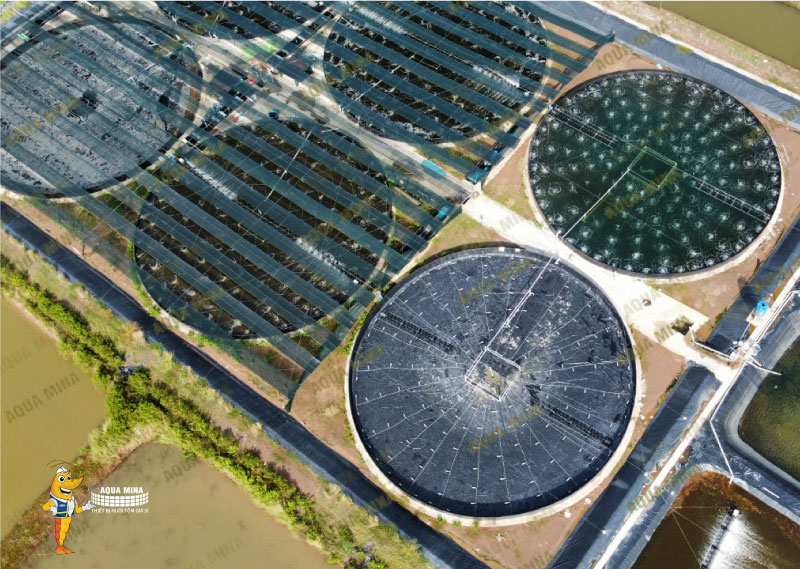
Vietnam has the highest productivity, but also the highest risk due to high-density farming and greater vulnerability to disease outbreaks. India faces medium-level risks, while Ecuador has the lowest risk level.
Regarding production scale, Vietnam’s farms are mostly small, with pond sizes ranging from 0.1–1 hectare, making standardization difficult. India’s ponds average 1–5 hectares, while Ecuador operates the largest ponds, averaging 5–50 hectares.
In terms of quality, Vietnamese shrimp sizes are inconsistent, and the shrimp tend to become soft due to stress. Indian shrimp quality is unstable, while Ecuadorian shrimp are considered superior thanks to synchronized systems, firm texture, and attractive color.
Regarding genetics, Ecuador has a closed-loop breeding system, while Vietnam’s system remains fragmented. India has controlled breeding systems but still relies heavily on external factors.
“In practical competition, Vietnam cannot beat Ecuador on cost, nor India on scale. Therefore, we should not follow the ‘cost curve’ strategy, but instead move along the ‘value curve,’” Dr. Hoa emphasized.
Strategic orientation
According to Dr. Hoa, one major challenge for Vietnam’s shrimp industry is high feed costs, which account for 50–60% of production expenses. To address this, plant-based aquaculture feed ingredients can be utilized, including Soy Protein Concentrates, fermented soy, purified corn protein (Empyreal 75), and fermented corn protein (MOTIV), all of which offer high nutritional value.
“These soybean-based feed products meet key requirements, including high nutritional quality, especially amino acid content, ensuring effective replacement of fishmeal while maintaining shrimp performance such as growth rate, survival rate, and feed conversion ratio. They also provide stable quality and reliable supply sources,” he explained.
Another weakness of Vietnam’s shrimp industry is its fragmented small-scale production model.
Beyond feed-related improvements, Vietnam still faces additional barriers in competing with India and Ecuador. The industry lacks synchronization, relies on small-scale farming models, uses high stocking densities that are difficult to control for disease and quality, and lacks strong integration among breeding, feed, farming, processing, and market systems.
Based on these analyses, Dr. Hoa proposed six strategic directions for Vietnam’s shrimp industry:
1. Genetics Strategy
Develop disease-free and disease-resistant shrimp breeds to create long-term competitive advantages.
Key message:
“Survival rate is more important than productivity.”
2. Feed Strategy
Key message:
“Premium feed is not a cost, but a profit-generating tool.”
The goal is to optimize Feed Conversion Ratio (FCR) to the lowest possible level in order to increase profitability and reduce production costs. The strategy also includes using domestic raw materials to reduce import dependence and applying functional feeds, especially during hatchery and early grow-out stages.
3. Technology Strategy
Accelerate the application of IoT and AI technologies in shrimp farming.
This includes:
Biofloc technology with optimal stocking densities of 80–120 shrimp per square meter
Larger and deeper ponds to reduce environmental fluctuations and stress, improving shrimp survival and growth
Eco-RAS sustainable recirculating aquaculture systems
4. Value-Added Processing & Branding Strategy
Key message:
“Real profits lie in processing and branding.”
Vietnam should invest in value-added supply chains and diversify shrimp products such as cooked shrimp, peeled shrimp, and ready-to-eat products. Traceability systems must meet export market standards. Most importantly, Vietnam should build a premium national shrimp brand under the identity:
“Vietnam Premium Shrimp.”
5. Market Strategy
Each market requires a different product segment:
The U.S. and EU markets demand premium-quality shrimp
Japan requires ultra-premium quality products
China prefers high-volume, competitively priced products such as whole shrimp and headless shell-on shrimp
Middle Eastern and Asian markets favor frozen products with flexible pricing
6. Integration Strategy
According to Dr. Hoa, Ecuador outperforms Vietnam in terms of integrated systems across genetics, feed, farming models, processing, and market development.
“For example, Vietnam’s breeding and feed systems remain fragmented, farming models are small-scale, processing is inconsistent, and markets are mainly OEM-based. Meanwhile, Ecuador has centralized breeding systems, optimized internal feed production, large-scale concentrated farms, integrated processing linked directly with farms, and strong brand-building strategies. Ecuador succeeds not because it is cheaper, but because of its integrated system.”
He stressed that if Vietnam wants to compete successfully with Ecuador and India, it must build a connected ecosystem that links farmers, standardizes production, forecasts output, and enhances value creation.
Development roadmap
Short-term: Optimize costs and improve FCR
Medium-term: Invest in shrimp genetics and technological applications
Long-term: Build national brands and expand integrated production systems
“Do not compete on price. Do not chase production volume. Instead, focus on elevating value and building the Vietnamese shrimp brand,” concluded Nguyen Duy Hoa.
Source: nongnghiepmoitruong
CÔNG TY TNHH AQUA MINA
AQUA MINA CO., LTD
– Address: 685 Le Duc Anh Street, Quarter 39, Binh Hung Hoa Ward, Ho Chi Minh City
– Phone: 1800 6071 (Toll-free hotline)
– Email: sales@aquamina.com.vn or oversea@aquamina.com.vn
– Aqua Mina’s Official Distributor in Japan: REX INDUSTRIES CO., LTD
– Address: 1-9-3 Hishiya-Higashi, Higashi-Osaka 578-0948, JAPAN
– Email: kimakubo@rexind.co.jp
– Phone: +81-(0)72-961-9893
– Website: www.rexind.co.jp/e/

WE WORK FOR THE SUCCESS
Ngày đăng : 09/05/2026
1340 View


Other Articles
Ca Mau, Can Tho and An Giang Play a Leading Role in Vietnam’s Shrimp Industry
Protecting rice-shrimp yields against environmental fluctuations caused by prolonged rain
AQUA MINA Turbo Blower: Quiet, Energy-Efficient Air Supply for Aquaculture Ponds
AQUA MINA has accompanied the experimental tank system project at Can Tho University from its very early days
AQUA MINA AMONG 20 OUTSTANDING PRESENTATIONS AT THE WORKSHOP ON APPLYING SCIENCE AND TECHNOLOGY TO IMPROVE THE QUALITY OF VIETNAM’S AQUATIC PRODUCTS
Vietnam’s Shrimp Farming Industry Enters the High-Tech Race
The U.S. market relies heavily on imported shrimp to bridge its domestic supply gap
The 2028 supply crisis: The shrimp industry is projected to face a 400,000-ton material shortage
High profits from high-tech shrimp farming come with persistent risks
Intensifying El Niño Effect: Climate Change Risks Threaten the Global Shrimp Supply Chain
Evaluating Gaps in the Circular Economy Value Chain of the Shrimp Industry
A Comprehensive Overview of the Vietnamese Shrimp Industry

.jpg)