


Preserve shrimp farming areas to develop the billion-dollar shrimp industry
Speaking at the “Conference on Promoting Agricultural, Forestry, and Fishery Exports to Achieve the 2026 Export Growth Target” on May 8, Mr. Mai Văn Hoàng, Chairman of the Vietnam Shrimp Association, stated that Vietnam’s shrimp industry generates nearly USD 5 billion in export turnover annually. Vietnam currently ranks third in global shrimp exports, after India and Ecuador.
To achieve such export value and international standing, the development of shrimp farming over many years has played a key role.
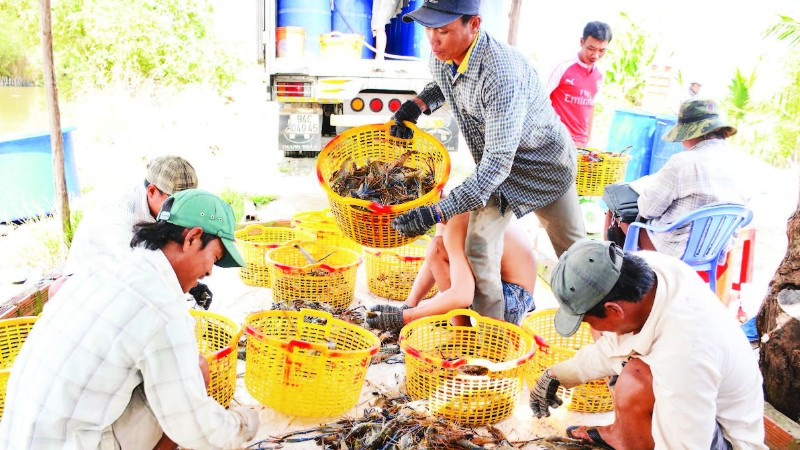
Mr. Mai Văn Hoàng noted that 20 years ago, Vietnamese shrimp farmers still had to travel to Thailand and Taiwan to learn shrimp farming techniques. Ten years ago, Thailand produced more than 1 million tons of shrimp annually, but over the past three years, production has fallen to only around 240,000 tons per year. Meanwhile, Vietnam’s shrimp production has grown strongly during the same period and is now maintained at over 1 million tons annually.
However, according to Mr. Hoàng, Vietnam’s shrimp industry is still facing a shortage of raw shrimp supply compared to export processing demand.
At the same time, falling domestic shrimp prices in many periods have discouraged many farmers from continuing shrimp farming, creating an even greater risk of raw material shortages for processing and exports in the future.
To address the shortage of raw shrimp, the Chairman of the Vietnam Shrimp Association emphasized that the first priority is to protect and develop shrimp farming areas.
In recent years, many shrimp farming zones have been rezoned for real estate and tourism development, causing shrimp farming areas in many localities to shrink steadily.
“The reduction of shrimp farming areas is extremely dangerous for Vietnam’s shrimp industry,” Mr. Mai Văn Hoàng stressed.
At the same time, the shrimp industry needs to shift strongly from extensive farming to intensive farming with high technology applications. According to Mr. Mai Văn Hoàng, one hectare of high-tech shrimp farming can produce 6–10 times more output than traditional farming methods.
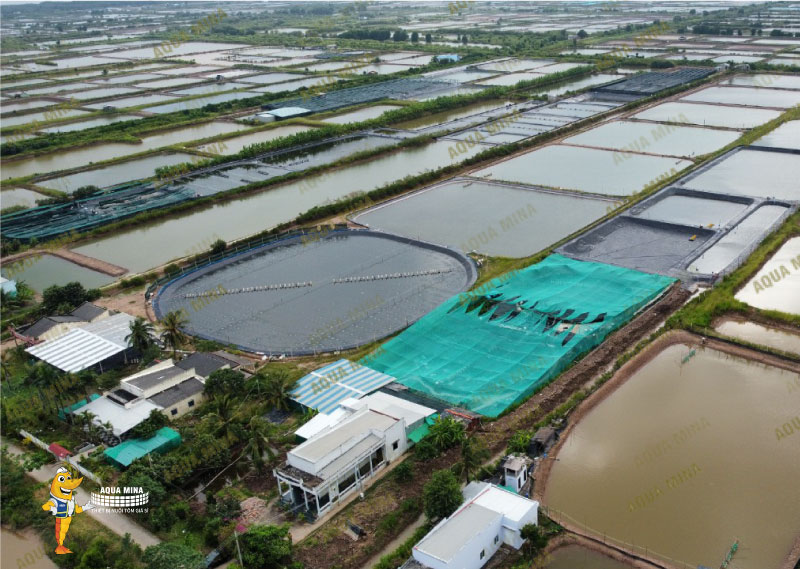
Mr. Mai Văn Hoàng also proposed that the State invest heavily in shrimp farming infrastructure, especially water supply and drainage systems, to minimize disease outbreaks and support sustainable development.
Currently, many shrimp farming regions are still relying on irrigation systems originally designed for rice cultivation. This results in situations where water discharged from one shrimp pond into canals is later pumped into another pond, increasing the risk of disease transmission.
Mr. Hoàng affirmed: “If we fail to preserve the farming environment and invest systematically in infrastructure, the risk of declining shrimp output in the coming years will be very high.”
The third issue raised by Mr. Mai Văn Hoàng concerns shrimp seed stock. Vietnam needs to soon establish broodstock centers, breeding and genetic selection centers, and gene banks in order to proactively secure seed supply for long-term aquaculture and export development.
In addition, Mr. Mai Văn Hoàng also recommended strengthening management of the shrimp feed market. He added that there are currently 23 foreign corporations operating in shrimp feed production and supply in Vietnam.
According to reports from businesses and shrimp farmers, some shrimp feed manufacturers have inaccurately declared protein content on product packaging, misleading farmers into believing the feed has high protein levels. However, after using such products, shrimp grow slowly, causing financial losses for farmers, pond abandonment, and increasing shortages of raw shrimp supply.
From this reality, the Vietnam Shrimp Association proposed that authorities require shrimp feed manufacturers to provide transparent labeling, clearly stating whether the protein content is “crude protein” or “digestible protein” so shrimp farmers are not misled. This would help protect shrimp farmers and create a fair competitive environment for domestic businesses.
Cà Mau is considered a locality with strong potential and advantages for agricultural development, especially in the fisheries economy. Within the fisheries sector, shrimp continues to play the leading role, not only providing livelihoods for hundreds of thousands of households but also contributing significantly to agricultural economic growth and export turnover.
To ensure sustainable development and maintain shrimp as a key export industry, Cà Mau Province has set a target of reaching approximately USD 2.8 billion in export turnover by 2026.
To achieve this goal, Mr. Lê Văn Sử, Vice Chairman of the People’s Committee of Cà Mau Province, proposed that the Government and central ministries support several key priorities.
First, investment methods need to be reformed while supporting enterprises in developing infrastructure for major aquaculture zones. Priority should be given to irrigation systems, electricity for shrimp farming, and logistics infrastructure for the Mekong Delta region.
In addition, the province proposed stronger support mechanisms for green transformation models and low-emission production development projects. At the same time, businesses, cooperatives, and farmers should receive support in accessing and implementing international certifications to enhance the competitiveness of Vietnam’s shrimp industry in export markets.
Source: nongnghiepmoitruong
AQUA MINA CO., LTD
– Address: 685 Le Duc Anh Street, Quarter 39, Binh Hung Hoa Ward, Ho Chi Minh City
– Phone: 1800 6071 (Toll-free hotline)
– Email: sales@aquamina.com.vn or oversea@aquamina.com.vn
– Aqua Mina’s Official Distributor in Japan: REX INDUSTRIES CO., LTD
– Address: 1-9-3 Hishiya-Higashi, Higashi-Osaka 578-0948, JAPAN
– Email: kimakubo@rexind.co.jp
– Phone: +81-(0)72-961-9893
– Website: www.rexind.co.jp/e/

WE WORK FOR THE SUCCESS
Ngày đăng : 11/05/2026
1377 View


Other Articles
Ca Mau, Can Tho and An Giang Play a Leading Role in Vietnam’s Shrimp Industry
Protecting rice-shrimp yields against environmental fluctuations caused by prolonged rain
AQUA MINA Turbo Blower: Quiet, Energy-Efficient Air Supply for Aquaculture Ponds
AQUA MINA has accompanied the experimental tank system project at Can Tho University from its very early days
AQUA MINA AMONG 20 OUTSTANDING PRESENTATIONS AT THE WORKSHOP ON APPLYING SCIENCE AND TECHNOLOGY TO IMPROVE THE QUALITY OF VIETNAM’S AQUATIC PRODUCTS
Vietnam’s Shrimp Farming Industry Enters the High-Tech Race
The U.S. market relies heavily on imported shrimp to bridge its domestic supply gap
The 2028 supply crisis: The shrimp industry is projected to face a 400,000-ton material shortage
High profits from high-tech shrimp farming come with persistent risks
Intensifying El Niño Effect: Climate Change Risks Threaten the Global Shrimp Supply Chain
Evaluating Gaps in the Circular Economy Value Chain of the Shrimp Industry
A Comprehensive Overview of the Vietnamese Shrimp Industry


.jpg)