


The Middle East Erupts in Tension, Import–Export Department Issues a Series of Urgent Recommendations
Recently, the Import–Export Department issued a series of recommendations aimed at minimizing the impact of the conflict involving the United States, Israel, and Iran in the Middle East on Vietnamese import–export industry associations and logistics associations. According to the Import–Export Department, since February 28, the United States and Israel have conducted large-scale military airstrikes targeting Iran, marking a serious escalation in tensions in the Middle East. Within 24–48 hours after the airstrikes, all parties stated that they were preparing for the possibility of a war that could last for several days. Notably, the waves of military attacks and counterattacks have created severe instability, generating a high-risk environment for transportation activities, international trade, and global supply chains. Forecasts indicate that prices of consumer goods, fuel, and global oil are likely to increase in the near future, indirectly and multidimensionally affecting Vietnam’s production, import–export activities, and trade relations with the Middle East in particular. In the logistics sector, rising fuel prices are pushing maritime and air freight costs even higher, directly affecting cargo transport routes to the Gulf region. In the Middle East, many countries have restricted or closed their airspace due to security concerns, forcing cargo flights to reroute. This situation is prolonging transportation times and increasing logistics costs. Meanwhile, shipping activities through the Strait of Hormuz have nearly come to a standstill following the airstrikes by the United States and Israel on Iran. Iran has also warned vessels about potential safety risks when passing through this area.
In light of the situation, the Import–Export Department has urged import–export industry associations and logistics associations to closely monitor market developments. These organizations should regularly communicate with relevant government authorities to promptly update their members with necessary information.Based on this, businesses are advised to proactively develop production plans, organize import–export operations and cargo transportation more carefully in order to avoid congestion and minimize negative impacts from the tensions between Israel, the United States, and Iran.Proactive responses will also enhance the flexibility and resilience of Vietnamese enterprises in the face of fluctuations in the international business environment, especially when unexpected incidents arise in the future.The Import–Export Department recommends that enterprises diversify their sources of supply and seek alternative markets with similar demand in order to reduce potential disruptions when exports to Israel, Iran, and the Middle East encounter difficulties. In the long term, businesses should develop contingency plans to respond to similar incidents in the future.At the same time, during contract negotiations and signing of sales agreements, companies should pay special attention to clauses related to logistics, transportation, delivery, and insurance to limit potential risks.Transport contracts should clearly stipulate force majeure clauses, compensation responsibilities, and cost-sharing mechanisms in the event that goods encounter unexpected incidents.

In addition, companies should purchase adequate insurance for their cargo in order to proactively prevent risks and minimize losses if problems arise in import markets.
Enterprises are also encouraged to proactively analyze and exchange information with relevant ministries and agencies regarding import–export data, geopolitical developments affecting production, trade, and transportation activities, as well as freight conditions, shipping rates, costs, and surcharges. This coordination will help authorities and businesses promptly agree on response measures for similar situations in the future.
Moreover, businesses should develop preventive and adaptive plans to minimize risks, losses, and disruptions arising from incidents in international trade and transport, while preparing timely response measures to reduce impacts on supply chains.
Enterprises should also maintain regular communication with the Import–Export Department, the Trade Promotion Agency, the Foreign Market Development Department, and Vietnamese trade offices and branches abroad in order to seek new orders and explore potential new markets. This will help businesses develop alternative strategies and fully capitalize on emerging opportunities.
Vietnam’s 11-billion-dollar strength may be seriously affected
Seafood exports are currently one of Vietnam’s key industries, with export turnover in 2025 reaching nearly 11.3 billion USD. According to Ms. Le Hang, Deputy Secretary General of the Vietnam Association of Seafood Exporters and Producers (VASEP), the escalation of conflicts in the Middle East will certainly affect domestic seafood export businesses.
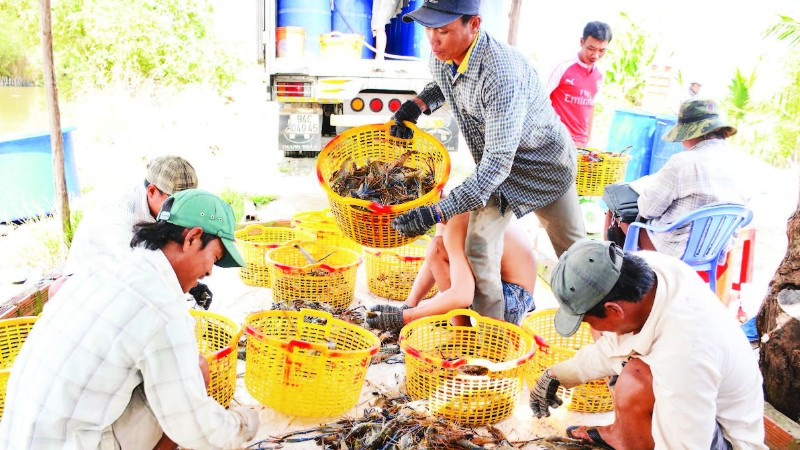
Notably, the Middle East brings Vietnam export revenues of approximately 250–300 million USD each year. Therefore, when conflicts erupt, export activities to this region face the risk of disruption.
At the same time, fluctuations in oil prices will increase operating costs for businesses. Shipping through the Strait of Hormuz could become congested, forcing companies to divert shipments to alternative routes, which would lead to longer transportation times and higher logistics costs.
Past conflicts in Israel had already created similar impacts on export activities; however, the current situation is considered more severe, meaning the seafood industry could face significant challenges, Ms. Hang noted.
Source: Vietnamnet

WE WORK FOR THE SUCCESS


Ca Mau, Can Tho and An Giang Play a Leading Role in Vietnam’s Shrimp Industry
Protecting rice-shrimp yields against environmental fluctuations caused by prolonged rain
AQUA MINA Turbo Blower: Quiet, Energy-Efficient Air Supply for Aquaculture Ponds
AQUA MINA has accompanied the experimental tank system project at Can Tho University from its very early days
AQUA MINA AMONG 20 OUTSTANDING PRESENTATIONS AT THE WORKSHOP ON APPLYING SCIENCE AND TECHNOLOGY TO IMPROVE THE QUALITY OF VIETNAM’S AQUATIC PRODUCTS
Vietnam’s Shrimp Farming Industry Enters the High-Tech Race
The U.S. market relies heavily on imported shrimp to bridge its domestic supply gap
The 2028 supply crisis: The shrimp industry is projected to face a 400,000-ton material shortage
High profits from high-tech shrimp farming come with persistent risks
Intensifying El Niño Effect: Climate Change Risks Threaten the Global Shrimp Supply Chain
Evaluating Gaps in the Circular Economy Value Chain of the Shrimp Industry
A Comprehensive Overview of the Vietnamese Shrimp Industry



.jpg)