

Thanh Hoa, Vietnam: Consequences of Spontaneous Shrimp Farming
Mr. Le The Manh (Thang Hai street, Hai Binh ward) shared: Previously, his family leased land from the local authorities and dug ponds to raise fish. However, due to low effectiveness, the family switched to shrimp farming. To do this, four years ago, they borrowed 2 billion VND from the bank to build tanks and purchase shrimp seed. Yet to this day, the family has not recovered their capital. “Although we know shrimp farming is not permitted on this land, we’ve invested a lot and it’s not easy to give up. Right now, we only hope the local government allows us to continue farming to recover the investment and pay off our debts,” Mr. Manh said.
Mr. Nguyen Van Hoi (Nam Hai hamlet, Hai Binh ward) also shared: Due to the lack of a stable job, two years ago, his family decided to borrow 5 billion VND to build 10 shrimp tanks on 4,200 m² of agricultural land. However, because the shrimp farming was spontaneous, fragmented, small-scale, and lacked experience, the economic efficiency was low, pushing his family into debt. “Since we haven’t recovered the investment yet, even though we know spontaneous farming is against regulations, we still have to continue just to minimize our losses,” Mr. Hoi said.
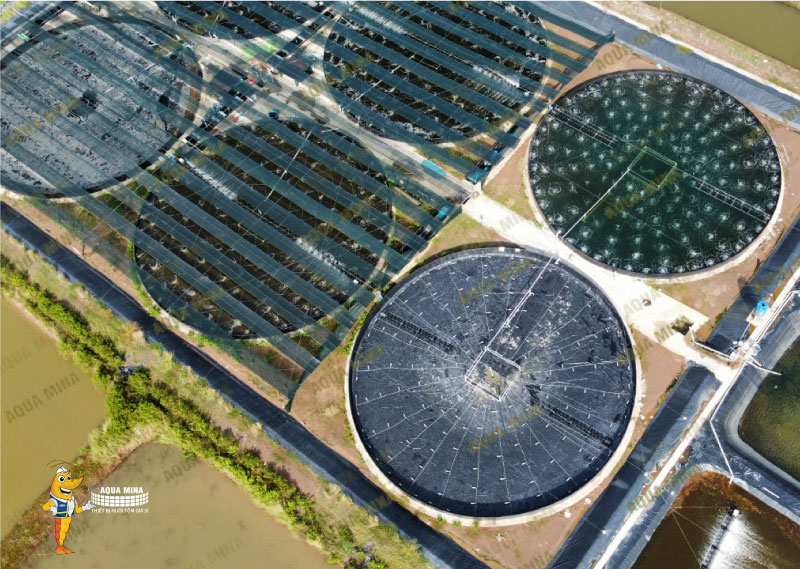
Currently, across eight coastal wards in Nghi Son, there are still 62 cases of illegal spontaneous shrimp farming on agricultural and project-designated land. Specifically, Tinh Gia ward has 48 households, while Ngoc Son and Hai Linh wards have 14 more. The main reason for the lack of resolution is that many of these violations began years ago. With large-scale construction, including companies leasing land for projects and investing heavily in tanks, machinery, and materials, forced dismantlement has been difficult.
To address this issue, the former Nghi Son town Construction Order Inspection Team coordinated with relevant units and ward-level authorities to implement awareness campaigns. They encouraged violators to voluntarily dismantle illegal shrimp farming structures, cease new stocking, and halt further unauthorized shrimp farming activities.
Mr. Le Duy Nhan, Deputy Head of the Construction Order Inspection Team of Nghi Son ward, stated: Spontaneous shrimp farming has led to violations in zoning and construction order. Therefore, local authorities had previously directed enforcement to rectify the situation.
“In the coming period, once the two-level administrative structure is stabilized in relevant wards, we will advise the ward-level People’s Committee to establish task forces to inspect, educate, and encourage violators to dismantle illegal shrimp farming facilities and restore the land to its original condition. If households do not comply, we will propose that the ward-level People’s Committee complete legal documents and enforce dismantlement according to regulations,” Mr. Nhan added.
Source: nguoinuoitom
Aqua Mina's distributor in Japan: REX INDUSTRIES CO., LTD
- Address: 1-9-3 Hishiya-Higashi, Higashi-Osaka 578-0948 JAPAN
- Email: kimakubo@rexind.co.jp
- Phone: +81-(0)72-961-9893
- Website: http://www.rexind.co.jp/e/
WE WORK FOR YOUR SUCCESS!
Ngày đăng : 04/08/2025
1921 View


Other Articles
Ca Mau, Can Tho and An Giang Play a Leading Role in Vietnam’s Shrimp Industry
Protecting rice-shrimp yields against environmental fluctuations caused by prolonged rain
AQUA MINA Turbo Blower: Quiet, Energy-Efficient Air Supply for Aquaculture Ponds
AQUA MINA has accompanied the experimental tank system project at Can Tho University from its very early days
AQUA MINA AMONG 20 OUTSTANDING PRESENTATIONS AT THE WORKSHOP ON APPLYING SCIENCE AND TECHNOLOGY TO IMPROVE THE QUALITY OF VIETNAM’S AQUATIC PRODUCTS
Vietnam’s Shrimp Farming Industry Enters the High-Tech Race
The U.S. market relies heavily on imported shrimp to bridge its domestic supply gap
The 2028 supply crisis: The shrimp industry is projected to face a 400,000-ton material shortage
High profits from high-tech shrimp farming come with persistent risks
Intensifying El Niño Effect: Climate Change Risks Threaten the Global Shrimp Supply Chain
Evaluating Gaps in the Circular Economy Value Chain of the Shrimp Industry
A Comprehensive Overview of the Vietnamese Shrimp Industry



.jpg)