

Partial Harvest or Total Harvest? You Might Want to Consider These
There are two harvest methods that farmers usually implement, namely partial harvest and total harvest:
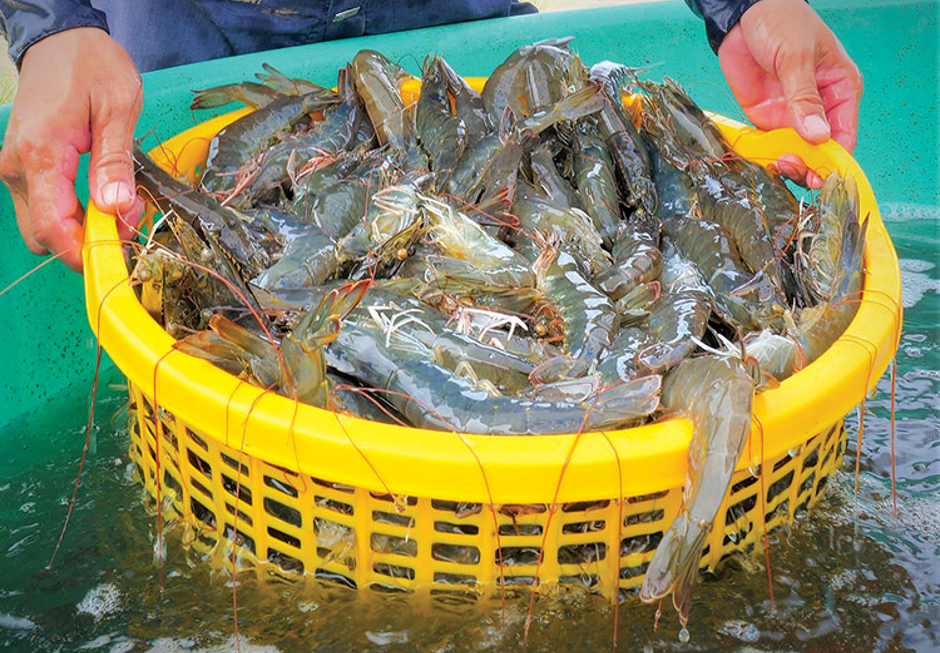
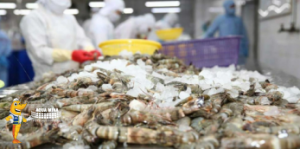
Partial harvest is the activity of taking only a part of the shrimp population from the pond and leaving the rest to be cultivated until a certain age. Partial harvest aims to reduce stocking density in ponds, lowering the risk of disease transmission and maintain the environmental carrying capacity. Stocking density is the number of shrimp stocked in a certain unit area (PL/m2). In addition, partial harvest can also increase productivity and profits because the size of the shrimp obtained at the end of cultivation will be larger.
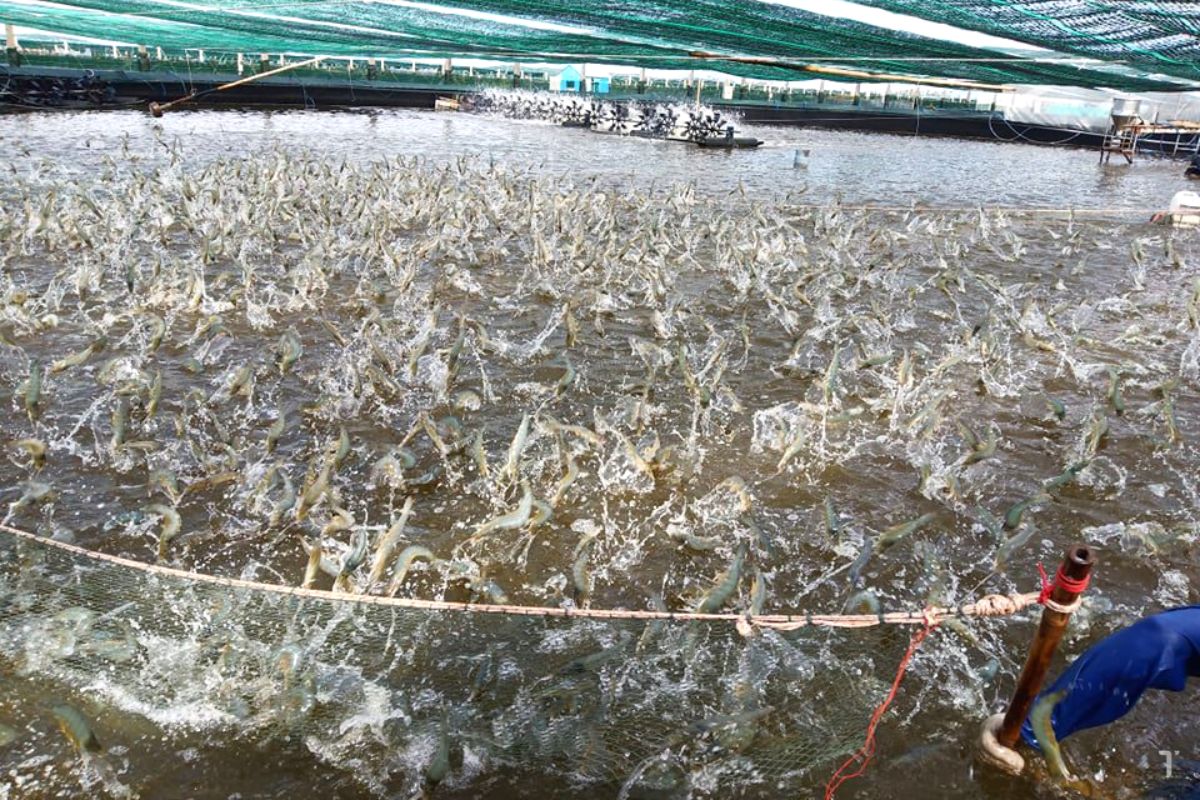
Total harvest is the activity of taking all the shrimp in the pond when their size has reached the target or sales criteria. Shrimp size is a measurement that states the number of shrimp in 1 kilogram (pcs/kg). To determine shrimp size, divide 1 kilogram of shrimp by ABW (Average Body Weight).
When should farmers do partial harvest?
Partial harvest tends to be more suitable for cultivation with high stocking densities such as in intensive systems, given the large number of shrimp in the pond. Farmers who implement an intensive cultivation system can do partial harvests periodically, starting when the shrimp reach size 100, which usually occurs on Day of Culture (DoC) 80-100 when the selling value is already good enough. DoC is the duration of cultivation, beginning from when the shrimp were first stocked in the pond.
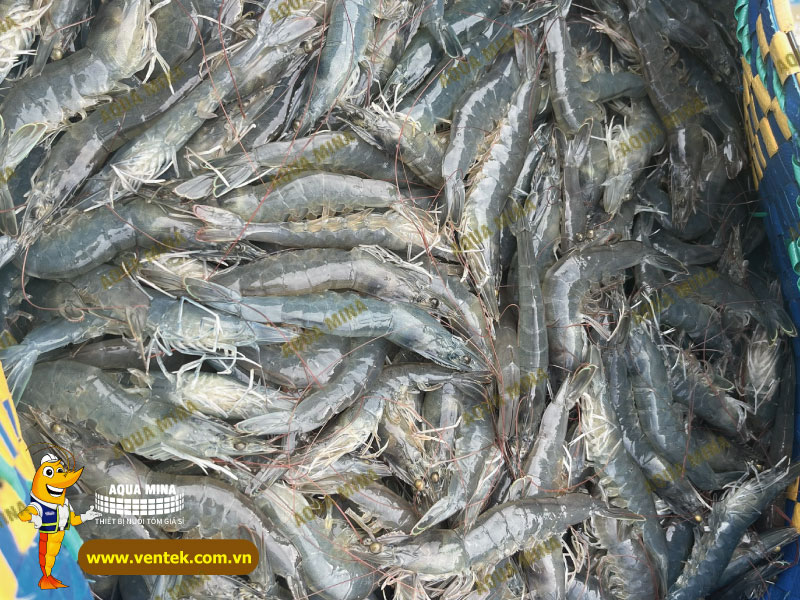
Partial harvest can also be done when the following cases occur:
1. Shrimp growth rate is slow
In some cases, shrimp can grow at varying speeds, some grow more quickly than others and some grow slower. It is possible for the shrimp with slower growth rate to lose in the competition to get feed. If it is neglected, the size uniformity will decline and affect harvest income. Partial harvest may reduce the eating competition among shrimp.
2. Carrying capacity is exceeded
In shrimp farming, carrying capacity is the capacity of the ecosystem to ensure that shrimp's food, habitat, space and other needs are met. If carrying capacity is met or even excessive, water quality will decline and disease will spread, resulting in the declining productivity. When this happens, a partial harvest must be conducted to maintain optimal shrimp growth.
When should farmers do total harvest?
Total harvest is usually done when the shrimp have achieved the desired target weight and size, generally between DoC 90 to 120. However, total harvest can be done earlier or later, depending on the growth rate of the shrimp or market demand.
Total harvest can also be done when the following cases occur:
1. Shrimp are infected with disease
Disease infections will endanger shrimp and lead to the risk of losses. In order to reduce losses, farmers may harvest all the shrimp in the pond.
2. Shrimp price drops
When shrimp price in the market shows signs of significant drop, farmers may conduct a total harvest. Every farmer definitely wants the best price for their shrimp, hence when the price of shrimp drops, like it or not, they have to harvest all the shrimp as soon as possible to reduce losses. As a disclaimer, it is important to not do panic harvest because it may lead to losses. When the shrimp price drops, it is better to find the most stable price and run the cultivation as usual to achieve the best price.
Cre: jala.tech
Aqua Mina's distributor in Japan: REX INDUSTRIES CO., LTD
- Address: 1-9-3 Hishiya-Higashi, Higashi-Osaka 578-0948 JAPAN
- Email: kimakubo@rexind.co.jp
- Phone: +81-(0)72-961-9893
- Website: http://www.rexind.co.jp/e/
WE WORK FOR YOUR SUCCESS!
Ngày đăng : 31/03/2025
3601 View


Other Articles
Intensifying El Niño Effect: Climate Change Risks Threaten the Global Shrimp Supply Chain
Evaluating Gaps in the Circular Economy Value Chain of the Shrimp Industry
A Comprehensive Overview of the Vietnamese Shrimp Industry
CA MAU ACCELERATES MARINE AQUACULTURE DEVELOPMENT FROM 2026 TO 2030, WITH A VISION TO 2045
VIETNAM’S SHRIMP INDUSTRY: FROM RECORD EXPORTS TO THE RACE FOR EFFICIENCY AND VALUE
Why Did a Customer Travel from Vinh Long to Ho Chi Minh City to Buy AQUA MINA PVC Knife Gate Valve
Green & Digital Transformation: A New Eco-Cycle for Shrimp-Rice Farming
High-Tech Shrimp Farming: A Double-Edged Sword
Why are PVC knife gate valves preferred for bottom drain pipes in shrimp and fish ponds?
EU’s New Packaging Life Cycle Regulations: What Should Seafood Businesses Prepare For?
Wild Shrimp Harvesting Faces Challenges in Supply and Sustainability
Minh Phú Invests in Production Expansion and Accelerates Automation in the Shrimp Industry


.jpg)