

FAO: Fraud may account for up to 20% of global seafood trade
The report titled “Food fraud in the fisheries and aquaculture sector” analyzes common types of fraud and how they occur throughout the supply chain. According to the report, the seafood sector is increasingly vulnerable to fraud due to the fact that more than 12,000 species are traded and multiple regulatory authorities are involved across different countries. These factors create loopholes for misconduct.
The main drivers of fraud are economic, including species substitution (selling low-value fish as high-value species), mislabeling, falsifying sustainability certifications, misreporting origin or farming methods, and adulteration to increase weight or improve product appearance. For example, farmed sea bass labeled as “locally caught” in Italy can be sold at prices two to three times higher than imported products from Greece or Turkey.
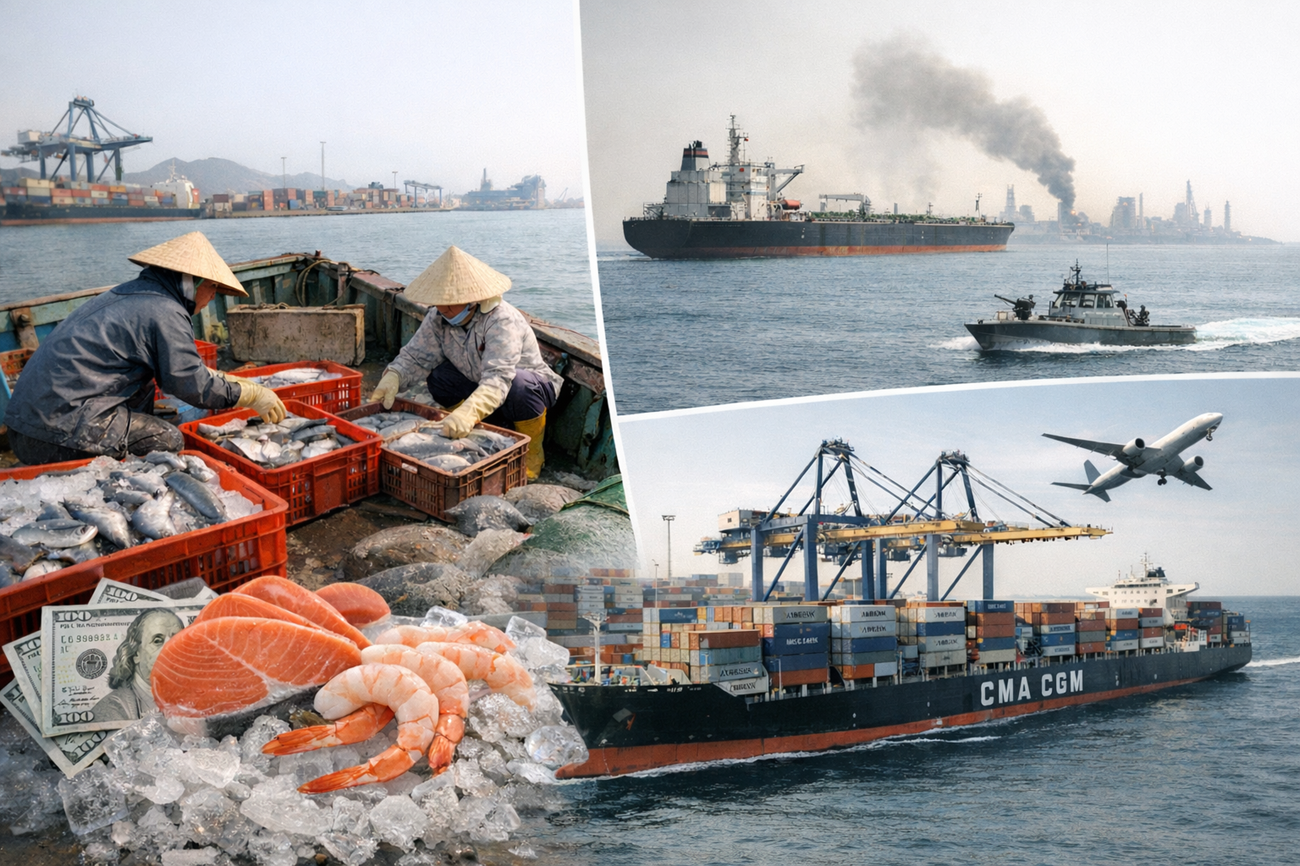
Beyond economic losses, such practices may also conceal illegal or over-quota fishing activities, thereby threatening the sustainability of aquatic resources. The report estimates the probability of fraud in this sector at 20.6%, significantly higher than in meat (13.4%) and fruits and vegetables (10.4%).
Evidence from previous studies shows that fraud is widespread. A global survey by the nonprofit organization Oceana found that one in five seafood samples was mislabeled. In the European Union, about one-third of large-scale food service providers violated labeling regulations, while in China, fraud rates may reach as high as 75.5%.
FAO emphasizes that addressing the issue requires more than increased inspections; it calls for a smarter approach. Key measures include risk-based controls, improved traceability systems, stronger international cooperation, and the implementation of sufficiently strict sanctions to deter violations.
Although modern technologies such as DNA testing and isotope analysis can improve fraud detection, their high costs and technical complexity may widen gaps between countries. Therefore, FAO recommends enhancing regional cooperation, sharing laboratory capacities, and building sustainable management systems rather than relying on isolated pilot projects.
One important recommendation is to harmonize global labeling regulations, including the use of scientific species names. However, achieving consensus remains challenging due to differences in language, culture, and commercial interests among countries.
Source: VASEP
AQUA MINA CO., LTD
– Address: 685 Le Duc Anh Street, Quarter 39, Binh Hung Hoa Ward, Ho Chi Minh City
– Phone: 1800 6071 (Toll-free hotline)
– Email: sales@aquamina.com.vn or oversea@aquamina.com.vn
– Aqua Mina’s Official Distributor in Japan: REX INDUSTRIES CO., LTD
– Address: 1-9-3 Hishiya-Higashi, Higashi-Osaka 578-0948, JAPAN
– Email: kimakubo@rexind.co.jp
– Phone: +81-(0)72-961-9893
– Website: www.rexind.co.jp/e/

WE WORK FOR THE SUCCESS
Ngày đăng : 24/04/2026
1324 View


Other Articles
Ca Mau, Can Tho and An Giang Play a Leading Role in Vietnam’s Shrimp Industry
Protecting rice-shrimp yields against environmental fluctuations caused by prolonged rain
AQUA MINA Turbo Blower: Quiet, Energy-Efficient Air Supply for Aquaculture Ponds
AQUA MINA has accompanied the experimental tank system project at Can Tho University from its very early days
AQUA MINA AMONG 20 OUTSTANDING PRESENTATIONS AT THE WORKSHOP ON APPLYING SCIENCE AND TECHNOLOGY TO IMPROVE THE QUALITY OF VIETNAM’S AQUATIC PRODUCTS
Vietnam’s Shrimp Farming Industry Enters the High-Tech Race
The U.S. market relies heavily on imported shrimp to bridge its domestic supply gap
The 2028 supply crisis: The shrimp industry is projected to face a 400,000-ton material shortage
High profits from high-tech shrimp farming come with persistent risks
Intensifying El Niño Effect: Climate Change Risks Threaten the Global Shrimp Supply Chain
Evaluating Gaps in the Circular Economy Value Chain of the Shrimp Industry
A Comprehensive Overview of the Vietnamese Shrimp Industry


.jpg)