


Shrimp exporters call for urgent support
Shrimp exporters face difficulties
According to enterprises, the appendix on the list, subjects, and scope of monitoring under the 2026 Program for monitoring residues of harmful substances in farmed aquatic animals and products (Official Letter No. 53/CCNB-NV dated January 21, 2026 of NAFIQPM) does not yet fully include key native shrimp species (black tiger shrimp, brown shrimp, greasyback shrimp, whiteleg shrimp) in major farming areas in Cà Mau.
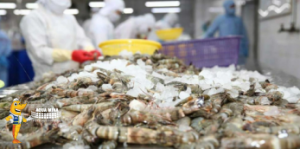
As a result, raw shrimp sourced from these areas are not eligible for certification for export to the EU and equivalent markets, causing direct losses to enterprises due to order cancellations and additional storage costs.
Mr. Ngô Minh Hiển, General Director of Nam Can Seafood Import-Export Joint Stock Company, stated that the lack of synchronization between the monitoring plan and the actual procurement, production, and export of shrimp to the EU is placing enterprises in an extremely difficult situation, as their products are not eligible for certification. The company has already had two export orders to Europe canceled (30 tons, valued at over USD 773,200, equivalent to more than VND 20 billion). Currently, three additional export orders worth over VND 24 billion remain in inventory and are at risk of cancellation if the issue is not resolved promptly.
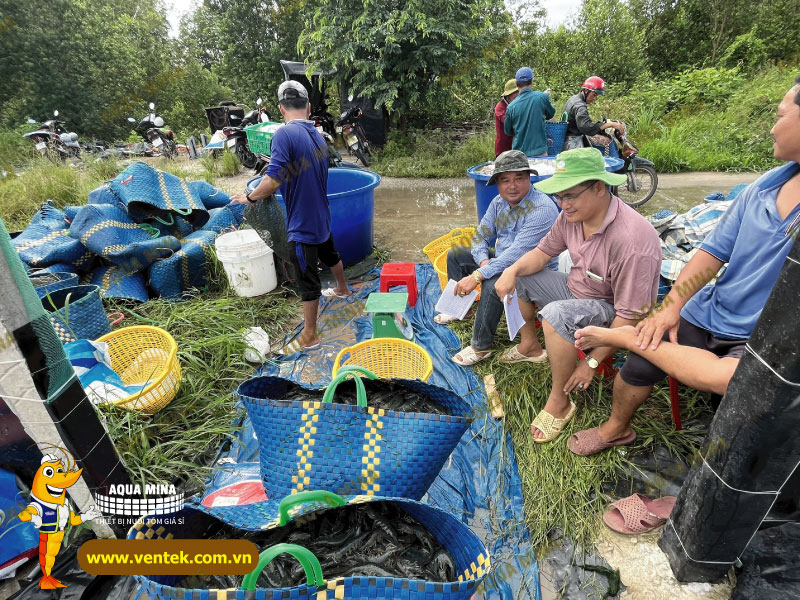
CAMIMEX Joint Stock Company also reported that many orders from European customers have been canceled since January 21. Inventory buildup has forced the company to bear additional interest costs, increasing financial pressure, affecting cash flow, and disrupting production continuity.
In addition, raw material suppliers have also suffered significant losses, as this is the peak harvest season for extensive black tiger shrimp farming, yet enterprises are unable to purchase.
Furthermore, according to enterprises, this issue may have long-term impacts on the competitiveness and reputation of Vietnamese shrimp exporters in the international market, as well as on the local aquaculture production and export supply chain.
On April 2, Cà Mau authorities and enterprises held a meeting to discuss and agree on recommendations to relevant ministries. According to VASEP, seafood exports are currently facing multiple challenges in major markets; therefore, ensuring continuity in raw material supply areas and maintaining certification procedures is critically important to seize market opportunities.
VASEP has requested NAFIQPM to review and address enterprises’ proposals, allowing transitional mechanisms and farming area recognition so that NAFIQPM Center 5 can continue appraisal and certification for export shipments based on previously monitored farming areas.
Source: DNSE
AQUA MINA CO., LTD
– Address: 685 Le Duc Anh Street, Quarter 39, Binh Hung Hoa Ward, Ho Chi Minh City
– Phone: 1800 6071 (Toll-free hotline)
– Email: sales@aquamina.com.vn or oversea@aquamina.com.vn
– Aqua Mina’s Official Distributor in Japan: REX INDUSTRIES CO., LTD
– Address: 1-9-3 Hishiya-Higashi, Higashi-Osaka 578-0948, JAPAN
– Email: kimakubo@rexind.co.jp
– Phone: +81-(0)72-961-9893
– Website: www.rexind.co.jp/e/

WE WORK FOR THE SUCCESS
Ngày đăng : 29/04/2026
1278 View


Other Articles
Ca Mau, Can Tho and An Giang Play a Leading Role in Vietnam’s Shrimp Industry
Protecting rice-shrimp yields against environmental fluctuations caused by prolonged rain
AQUA MINA Turbo Blower: Quiet, Energy-Efficient Air Supply for Aquaculture Ponds
AQUA MINA has accompanied the experimental tank system project at Can Tho University from its very early days
AQUA MINA AMONG 20 OUTSTANDING PRESENTATIONS AT THE WORKSHOP ON APPLYING SCIENCE AND TECHNOLOGY TO IMPROVE THE QUALITY OF VIETNAM’S AQUATIC PRODUCTS
Vietnam’s Shrimp Farming Industry Enters the High-Tech Race
The U.S. market relies heavily on imported shrimp to bridge its domestic supply gap
The 2028 supply crisis: The shrimp industry is projected to face a 400,000-ton material shortage
High profits from high-tech shrimp farming come with persistent risks
Intensifying El Niño Effect: Climate Change Risks Threaten the Global Shrimp Supply Chain
Evaluating Gaps in the Circular Economy Value Chain of the Shrimp Industry
A Comprehensive Overview of the Vietnamese Shrimp Industry


.jpg)