


Winter Shrimp Farming in Kim Son: High Investment, High Rewards—But Not Without Risks
Big Profits from Cold-Season Harvests
After a brief rain brought on by a cold air mass, sunshine once again blanketed the coastal aquaculture fields of Kim Son district. We visited the shrimp farm of Mr. Tran Van Hue in Hamlet 2, Kim Dong commune.
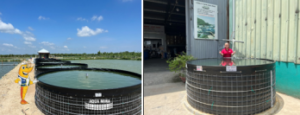
Out of his 10-mau (approx. 3.6-hectare) site, Mr. Hue allocated 3 mau for shrimp ponds and the remainder for a water treatment system. His ponds are round, HDPE-lined, and equipped with overhead covers to maintain temperature stability.
Taking advantage of the good weather, Mr. Hue’s family was busy preparing the ponds, checking water levels, and transferring shrimp juveniles from nursery tanks to grow-out ponds.
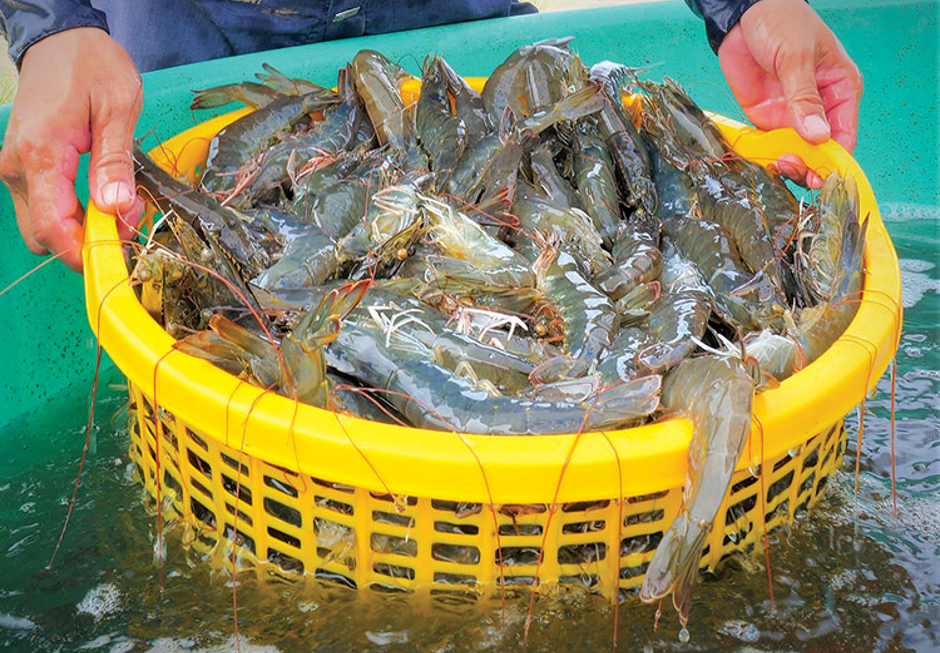
“Shrimp grow slowly in winter due to the cold,” Hue explained. “It takes 4 to 5 months to reach harvestable size—under 100 shrimp/kg. The longer grow-out time increases the risk of disease and environmental shifts. But winter also brings high prices, often VND 350,000–380,000/kg, compared to just VND 150,000–200,000/kg in other seasons. So the profits can be huge.”
Last year, his family earned over VND 1 billion from this area. Building on that success, he has stocked 450,000 post larvae this season, planning to begin harvest around the Qingming Festival.
High-Tech Winter Shrimp Ponds
Another leading farmer, Mr. Pham Van Hoc from Hamlet 4, Kim Hai commune, has invested nearly VND 10 billion in 7 high-tech round ponds, each 450m², lined with HDPE and sheltered by dome-shaped greenhouse roofs. The structure features triple-layered mesh and plastic film supported by a cable-reinforced frame.
This setup helps retain heat, preventing cold stress and maintaining ideal growing conditions. This winter, Hoc stocked 600,000 post larvae in staggered batches, ensuring a steady supply of shrimp from Lunar New Year through the end of April.
.png)
Hoc shared that erratic winter weather poses unique challenges.
“Sometimes, winter days hit 25–29°C. You have to monitor and adjust shading—lower it to retain warmth or lift it to release excess heat.”
Feeding is also adjusted based on growth stage: fewer meals for juveniles, up to five times per day for larger shrimp. He emphasized the need to supplement vitamin C, minerals, and probiotics to strengthen immunity, as well as regular water exchanges to maintain pond hygiene.
With strong technical knowledge, Hoc’s farm has consistently thrived for over three years, selling dozens of tons of shrimp annually and earning over VND 1 billion per year.
Technology Helps—But So Does Vigilance
Farmers across Kim Son’s coastal communes are increasingly turning to advanced and multi-phase shrimp farming systems, including Biofloc, RAS (Recirculating Aquaculture Systems), and in-house closed-loop systems.
The area of indoor winter shrimp farming has grown significantly—from just a few pilot households in 2016 to over 100 hectares today. Still, experts caution that these systems, while profitable, are not immune to risk.
Mr. Duong Viet Luynh, a pioneer in winter shrimp farming in Con Thoi, noted that:
“Winter shrimp farming is extremely sensitive to environmental fluctuations. Technology is only part of the equation. Without careful monitoring, even the best system can collapse overnight.”
He pointed out that a single rainstorm can shift pH levels dramatically, or a cold front can alter water quality.
“If you need to change water when shrimp are weak, and the temperature difference between tanks is too great, it can cause temperature shock and destroy the crop.”
To mitigate these risks, local authorities have been proactive—offering training workshops, conducting regular soil and water quality monitoring, and publicly sharing results to help farmers adjust accordingly.
Technical Guidelines for Safer Winter Farming
Mr. Nguyen Trung Tien, from the Fisheries Station under Ninh Binh’s Sub-Department of Fisheries, emphasized several key management tips for winter:
– Keep dissolved oxygen levels stable
– Monitor toxic NO₂ levels
– Maintain alkalinity between 120–150 ppm
– Only use clean, pre-treated water when refilling or exchanging water
Common diseases in winter include:
– SEMBV (Red Body Disease)
– White Spot Syndrome Virus (WSSV)
These viral diseases often cause mass mortality, especially 1–2 months after stocking, and currently have no cures, so prevention is critical. Transmission typically occurs via water or intermediate hosts.
Authorities recommend only stocking winter shrimp when infrastructure is fully equipped to handle the challenges, and only if the farm can implement scientific management and modern technology effectively.
Conclusion
Winter shrimp farming in Kim Son offers exceptional profit potential, with prices peaking during times of scarcity. But these gains come with high risk, requiring farmers to invest not just in facilities, but also in knowledge, vigilance, and technical discipline. As more farmers embrace innovation, proper training and cautious planning remain the pillars of success.
Source: Báo Ninh Bình


Ca Mau, Can Tho and An Giang Play a Leading Role in Vietnam’s Shrimp Industry
Protecting rice-shrimp yields against environmental fluctuations caused by prolonged rain
AQUA MINA Turbo Blower: Quiet, Energy-Efficient Air Supply for Aquaculture Ponds
AQUA MINA has accompanied the experimental tank system project at Can Tho University from its very early days
AQUA MINA AMONG 20 OUTSTANDING PRESENTATIONS AT THE WORKSHOP ON APPLYING SCIENCE AND TECHNOLOGY TO IMPROVE THE QUALITY OF VIETNAM’S AQUATIC PRODUCTS
Vietnam’s Shrimp Farming Industry Enters the High-Tech Race
The U.S. market relies heavily on imported shrimp to bridge its domestic supply gap
The 2028 supply crisis: The shrimp industry is projected to face a 400,000-ton material shortage
High profits from high-tech shrimp farming come with persistent risks
Intensifying El Niño Effect: Climate Change Risks Threaten the Global Shrimp Supply Chain
Evaluating Gaps in the Circular Economy Value Chain of the Shrimp Industry
A Comprehensive Overview of the Vietnamese Shrimp Industry



.jpg)