

Vietnamese Seafood Enterprises Accelerate Exports to the U.S. Market
Urgent Export Push
According to the Vietnam Association of Seafood Exporters and Producers (VASEP), Vietnam’s seafood exports showed a strong recovery in the first four months of 2025, reaching a total value of USD 3.3 billion — a 21% increase compared to the same period in 2024. In April alone, export turnover hit USD 894.2 million, up 15%.
Of particular note, the U.S. market rebounded in April 2025 after a quiet first quarter caused by a 46% countervailing tariff policy. Exports to the U.S. exceeded USD 153.6 million in April, an 8% increase year-on-year.
VASEP expert Ms. Le Hang, Deputy General Secretary, forecasts that Vietnam’s seafood exports will experience a significant shift during May and June 2025, ahead of the new U.S. countervailing tariff policy set to take effect on July 9. Vietnamese businesses are now focusing on maximizing exports to the U.S., particularly core products such as shrimp and pangasius, before the new tariff changes take place. Export value to this market is expected to increase by 10–15% compared to April 2025.
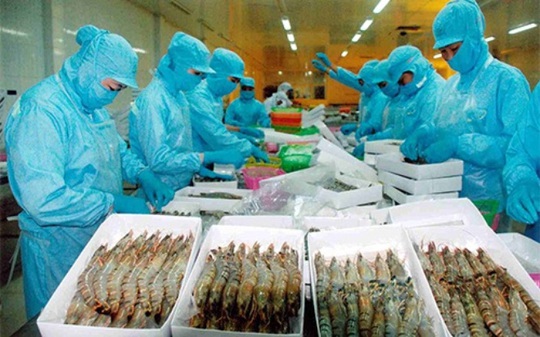
Mr. Tran Van Dung, General Director of Baseafood (Vietnam Seafood Import-Export Corporation), stated that the company is currently expediting shipments to fulfill U.S. orders signed in 2024. However, new contract negotiations have been temporarily halted due to concerns that the new tariffs will significantly raise product prices. Many U.S. importers are now considering shifting to alternative suppliers such as India and Ecuador.
In addition to tariffs, stricter technical barriers — including food safety inspections and stringent traceability requirements — are further reducing the competitiveness of Vietnamese enterprises in the U.S. market.
Market Diversification and High-Value Products
According to VASEP, the new U.S. tariff policies will increase competition for Vietnamese seafood businesses. Chinese seafood products, now subject to higher U.S. tariffs, are being redirected to domestic and neighboring markets such as ASEAN, including Vietnam. This influx will intensify competition, especially in the low-cost product segment.
VASEP predicts that in the coming months, seafood exports to China and ASEAN will likely stagnate, with growth expected at just 3–5%.
On a positive note, trade agreements such as the CPTPP and other free trade agreements (FTAs) are helping Vietnam mitigate these negative impacts by expanding into markets like the EU and Japan. Both of these markets have posted solid growth in the first four months of the year — 17% and 22%, respectively — and are expected to maintain steady growth of 8–10% in Q2 2025, thanks to the advantages provided by these FTAs.
Vietnamese enterprises are also adjusting their strategies, placing greater emphasis on high-value products and market diversification to reduce dependence on the U.S. market.
Mr. Nguyen Van Loc, Vice Chairman of the Provincial Fisheries Association, shared that in recent years, local seafood businesses have increasingly shifted focus to markets such as Japan, South Korea, Taiwan, and Hong Kong. Major companies such as Tu Hai, Ngoc Tung, and Dong Duong now consider Asia as their primary export market.
“Currently, Baseafood’s exports to the U.S. account for only about 10% of our total exports. The company is investing more in technology and R&D to develop deeply processed, high-value products, such as specialty foods for seniors and children targeted at the Japanese market. This approach helps enhance competitiveness and profitability,” said Mr. Tran Van Dung, General Director of Baseafood.
Source: nguoinuoitom.vn
Aqua Mina's distributor in Japan: REX INDUSTRIES CO., LTD
- Address: 1-9-3 Hishiya-Higashi, Higashi-Osaka 578-0948 JAPAN
- Email: kimakubo@rexind.co.jp
- Phone: +81-(0)72-961-9893
- Website: http://www.rexind.co.jp/e/
WE WORK FOR YOUR SUCCESS!
Ngày đăng : 04/07/2025
2201 View


Other Articles
Ca Mau, Can Tho and An Giang Play a Leading Role in Vietnam’s Shrimp Industry
Protecting rice-shrimp yields against environmental fluctuations caused by prolonged rain
AQUA MINA Turbo Blower: Quiet, Energy-Efficient Air Supply for Aquaculture Ponds
AQUA MINA has accompanied the experimental tank system project at Can Tho University from its very early days
AQUA MINA AMONG 20 OUTSTANDING PRESENTATIONS AT THE WORKSHOP ON APPLYING SCIENCE AND TECHNOLOGY TO IMPROVE THE QUALITY OF VIETNAM’S AQUATIC PRODUCTS
Vietnam’s Shrimp Farming Industry Enters the High-Tech Race
The U.S. market relies heavily on imported shrimp to bridge its domestic supply gap
The 2028 supply crisis: The shrimp industry is projected to face a 400,000-ton material shortage
High profits from high-tech shrimp farming come with persistent risks
Intensifying El Niño Effect: Climate Change Risks Threaten the Global Shrimp Supply Chain
Evaluating Gaps in the Circular Economy Value Chain of the Shrimp Industry
A Comprehensive Overview of the Vietnamese Shrimp Industry


.jpg)