



Get to Know the Covert Mortality Nodavirus which Can Attack Vannamei Shrimp
The CMNV virus in shrimp was first discovered in China in 2009 with a mortality rate of up to 80%, causing huge economic losses for the farmers there.
However, it is also possible that this vannamei shrimp disease will spread to Indonesia if it is not prevented and handled properly. Therefore, in this article, let’s learn more about the Covert Mortality Nodavirus (CMNV)!
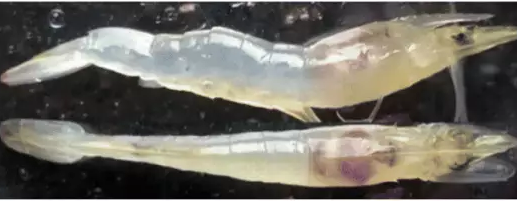
Life Stadia of Shrimp that are Vulnerable to CMNV
In white shrimp, mortality due to Covert Mortality Nodavirus (CMNV) was found in the first month after stocking up to 60-80 days after stocking. However, shrimp from various stages are also potentially infected with this virus.
Therefore, farmers need to detect early on the presence of the virus that causes Viral Covert Mortality Disease.
Vertical transmission of this disease can also occur. In previous studies, it was known that wild shrimp E. Carinicauda was strongly suspected of being an intermediary for CMNV to spread to ponds.
Meanwhile, a study by Liu (2018) showed that Covert Mortality Nodavirus (CMNV) could be detected in oogonia, oocytes, spermatocytes, fertilized eggs, and nauplii.
Symptoms of CMNV Affected Shrimp
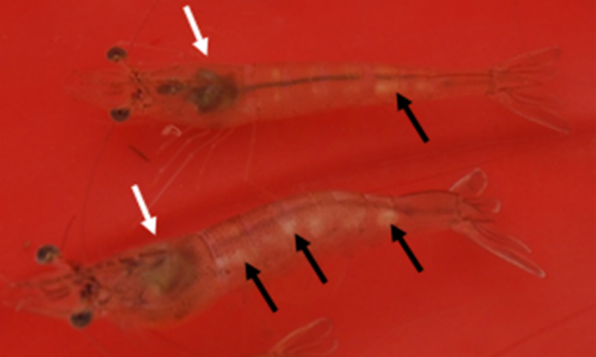
Shrimp waning due to Covert Mortality Nodavirus (CMNV) usually stays at the bottom of ponds rather than swimming on the surface. Over time, these shrimp will die. Therefore, CMNV disease is also referred to as “bottom death”.
While clinically, several symptoms are shown, including necrosis and atrophy of the hepatopancreas, empty stomach and intestines, softening of the outer shell of the shrimp, slowing growth, white muscles, and experiencing necrosis.
CMNV Diagnostic Methods
Diagnosing shrimp infected with Covert Mortality Nodavirus (CMNV) can be done using various methods, including Reverse Transcription Loop-mediated Isothermal Amplification (RT-LAMP), Nested Reverse Transcription PCR, gene sequencing, histopathology, RNA in-situ hybridization (ISH). Meanwhile, virus particles can be observed with Transmission Electron Microscopy (TEM).
How to Prevent CMNV in Vannamei Shrimp
As previously explained, the carrier part of the Covert Mortality Nodavirus (CMNV) comes from wild shrimp and other aquatic animals. Therefore, you must always be vigilant and monitor the possibility of this transmission.
In addition, considering that Covert Mortality Nodavirus (CMNV) can be detected early, make sure you cultivate shrimp fry that is healthy and free from various types of diseases.
Cre: DELOS Aqua
Ngày đăng : 02/02/2024
1848 View


Other Articles
Ca Mau, Can Tho and An Giang Play a Leading Role in Vietnam’s Shrimp Industry
Protecting rice-shrimp yields against environmental fluctuations caused by prolonged rain
AQUA MINA Turbo Blower: Quiet, Energy-Efficient Air Supply for Aquaculture Ponds
AQUA MINA has accompanied the experimental tank system project at Can Tho University from its very early days
AQUA MINA AMONG 20 OUTSTANDING PRESENTATIONS AT THE WORKSHOP ON APPLYING SCIENCE AND TECHNOLOGY TO IMPROVE THE QUALITY OF VIETNAM’S AQUATIC PRODUCTS
Vietnam’s Shrimp Farming Industry Enters the High-Tech Race
The U.S. market relies heavily on imported shrimp to bridge its domestic supply gap
The 2028 supply crisis: The shrimp industry is projected to face a 400,000-ton material shortage
High profits from high-tech shrimp farming come with persistent risks
Intensifying El Niño Effect: Climate Change Risks Threaten the Global Shrimp Supply Chain
Evaluating Gaps in the Circular Economy Value Chain of the Shrimp Industry
A Comprehensive Overview of the Vietnamese Shrimp Industry








.jpg)