


The 12.5% Tariff and a New Challenge for Vietnamese Seafood in the U.S. Market
1. The United States – a strategic market for Vietnamese seafood
According to the Vietnam Association of Seafood Exporters and Producers (VASEP), the U.S. market is one of the “pillars” of Vietnam’s seafood exports, contributing 20–25% of the industry’s total export turnover and maintaining an annual value of USD 1.8–2.1 billion. This is not only a high-value market but also plays a particularly important role in affirming the competitiveness and quality of Vietnamese seafood products in the international market.
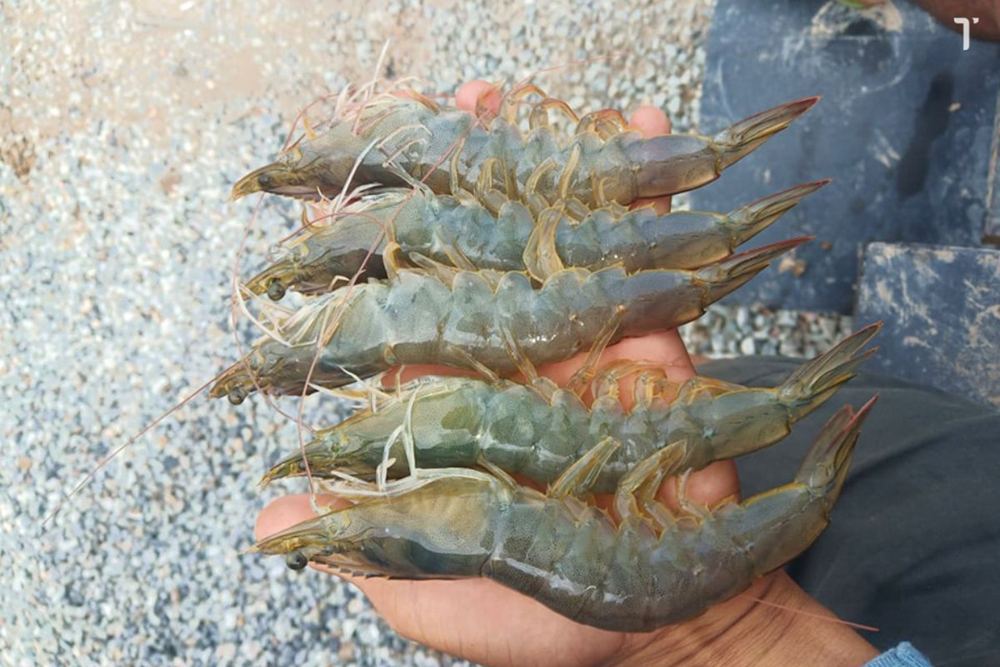
In Vietnam’s export structure, shrimp continues to be a key product. The United States currently imports nearly 800,000 tons of shrimp each year, while domestic production meets only about 14% of consumer demand. Vietnam currently accounts for around 8–9% of U.S. shrimp import volume and more than 10% of its import value, placing it among the largest suppliers.
For pangasius, about 92–93% of catfish imported into the United States currently originates from Vietnam. This figure shows the almost irreplaceable position of Vietnamese pangasius in the affordable white-fish segment in this market. Vietnamese shrimp exports account for more than 10% of the value of U.S. shrimp imports. Photo: VNA
Similarly, Vietnam is currently the second-largest tuna supplier to the United States in the canned tuna segment, accounting for about 16% of import volume. Other products such as squid, octopus, crab, swimming crab, mollusks, and other processed seafood products are also increasingly expanding their market share thanks to their ability to meet quality standards, traceability requirements, and processing demands from U.S. importers.
Meanwhile, according to data from the National Oceanic and Atmospheric Administration of the United States (NOAA Fisheries), about 70–85% of seafood consumed in the United States depends on imports. In 2023, the United States imported about 6.3 billion pounds of seafood for consumption. This shows that the country’s demand for imported seafood is not merely supplementary but has become an essential factor in ensuring food security.
2. Impacts not only on Vietnam
In international trade, selling price is always one of the key factors determining a product’s competitiveness. For the seafood industry, which already has relatively low profit margins, the additional 12.5% tariff is considered quite significant. If this policy is applied, import costs for U.S. businesses will increase accordingly.
The first group to be affected will be highly price-competitive products such as frozen shrimp, pangasius fillets, and processed tuna. These are all items for which buyers frequently compare prices among different supply sources. However, according to VASEP, imposing additional tariffs on Vietnamese seafood would not only affect export enterprises but also have a reverse impact on the U.S. market.
Unlike many industrial sectors, seafood is an essential food item closely linked to daily consumer demand. While U.S. domestic production is insufficient to meet demand, imported supply plays a decisive role in maintaining market stability.
For shrimp, the U.S. domestic fishing industry is mainly concentrated in the Gulf of Mexico and the South Atlantic region, with output heavily affected by weather, fuel costs, and environmental conditions. Meanwhile, Vietnam’s farmed shrimp can be supplied year-round in large volumes and with stable quality.
Similarly, Vietnamese pangasius is almost the main source of supply in the imported catfish segment in the United States. Higher import tariffs could push retail prices up, reducing consumers’ access to nutritious and reasonably priced food. Supermarkets, restaurants, food service providers, and food processing businesses in the United States may also have to adjust their business strategies, seek alternative sources of supply, or accept higher costs.
In other words, the additional tariff is not only an issue for Vietnamese exporters but also poses the risk of increasing costs across the entire U.S. food supply chain.
3. Responding to the challenge
According to experts, if this new tariff policy is implemented, the long-term impacts could be far more serious than the immediate effects. First is the risk of declining market share in one of Vietnam’s most important export markets. As U.S. importers are forced to diversify their sources of supply to reduce risks, competitors such as India, Ecuador, Indonesia, Thailand, or some South American countries may take advantage of the opportunity to increase their presence in the market. Once market share shrinks, winning customers back will be very difficult and costly, even if the tariff policy is adjusted in the future.
Vietnam’s seafood industry has always complied with regulations on labor, social responsibility, and raw material traceability. Photo: Nghe An Newspaper
Second, a decline in orders could trigger a chain reaction across the entire domestic production chain. Millions of workers involved in farming, fishing, processing, transportation, and supporting services could be affected.
Third, increased competitive pressure may force businesses to cut investment in technological innovation, factory upgrades, value-added product development, and sustainable development programs. This could affect the long-term competitiveness of the entire industry.
To respond to the current difficulties, according to VASEP, it is necessary to continue strengthening dialogue and policy advocacy with the U.S. side to clarify the specific characteristics of Vietnamese seafood products. Many products such as pangasius, warm-water farmed shrimp, and processed tuna do not directly compete with U.S. domestic products but instead play a role in supplementing supply for the market.
In addition, Vietnam should recommend that the U.S. consider exemption mechanisms for essential food groups, especially products for which domestic supply cannot fully meet consumer demand.
Also according to VASEP, the Trade Remedies Authority under the Ministry of Industry and Trade should request the U.S. side to recognize the Vietnamese seafood industry’s compliance efforts regarding labor, social responsibility, raw material traceability, control of farming areas, fishing vessels, purchasing facilities, suppliers, and processing plants. Many Vietnamese seafood enterprises have adopted social responsibility assessment programs, labor audits, and sustainability certifications according to customer and import market requirements.
The proposal to impose an additional 12.5% tariff on Vietnamese goods is placing the seafood industry before a new test. In the short term, the risks of declining orders and rising costs are real. In the long term, the industry may face the risk of losing market share and affecting millions of workers in the value chain.
However, with its position as one of the world’s leading seafood suppliers, along with an extensive network of free trade agreements and increasingly improved production capacity, Vietnam’s seafood industry still has a foundation to overcome these challenges. The important thing is to proactively adapt, diversify markets, increase added value, and continue affirming its role as an indispensable link in the global seafood supply chain.
On June 2, Washington time, the United States Trade Representative (USTR) announced the conclusion of its investigation into 60 countries under Section 301 of the Trade Act of 1974. USTR proposed imposing additional tariffs on all products from the economies under investigation, including Vietnam. The punitive tariff structure is divided into two tiers. Tier 1 applies a 10% tariff rate to economies that have issued import bans, established commitments through a reciprocal trade agreement, or applied partial control mechanisms. Vietnam and the remaining economies are proposed to fall under Tier 2, with a tariff rate of 12.5%.
Source: thuysanvietnam
AQUA MINA CO., LTD

WE WORK FOR THE SUCCESS


Ca Mau, Can Tho and An Giang Play a Leading Role in Vietnam’s Shrimp Industry
Protecting rice-shrimp yields against environmental fluctuations caused by prolonged rain
AQUA MINA Turbo Blower: Quiet, Energy-Efficient Air Supply for Aquaculture Ponds
AQUA MINA has accompanied the experimental tank system project at Can Tho University from its very early days
AQUA MINA AMONG 20 OUTSTANDING PRESENTATIONS AT THE WORKSHOP ON APPLYING SCIENCE AND TECHNOLOGY TO IMPROVE THE QUALITY OF VIETNAM’S AQUATIC PRODUCTS
Vietnam’s Shrimp Farming Industry Enters the High-Tech Race
The U.S. market relies heavily on imported shrimp to bridge its domestic supply gap
The 2028 supply crisis: The shrimp industry is projected to face a 400,000-ton material shortage
High profits from high-tech shrimp farming come with persistent risks
Intensifying El Niño Effect: Climate Change Risks Threaten the Global Shrimp Supply Chain
Evaluating Gaps in the Circular Economy Value Chain of the Shrimp Industry
A Comprehensive Overview of the Vietnamese Shrimp Industry



.jpg)