

Agriculture & Environment: Key Priorities for H2 2026
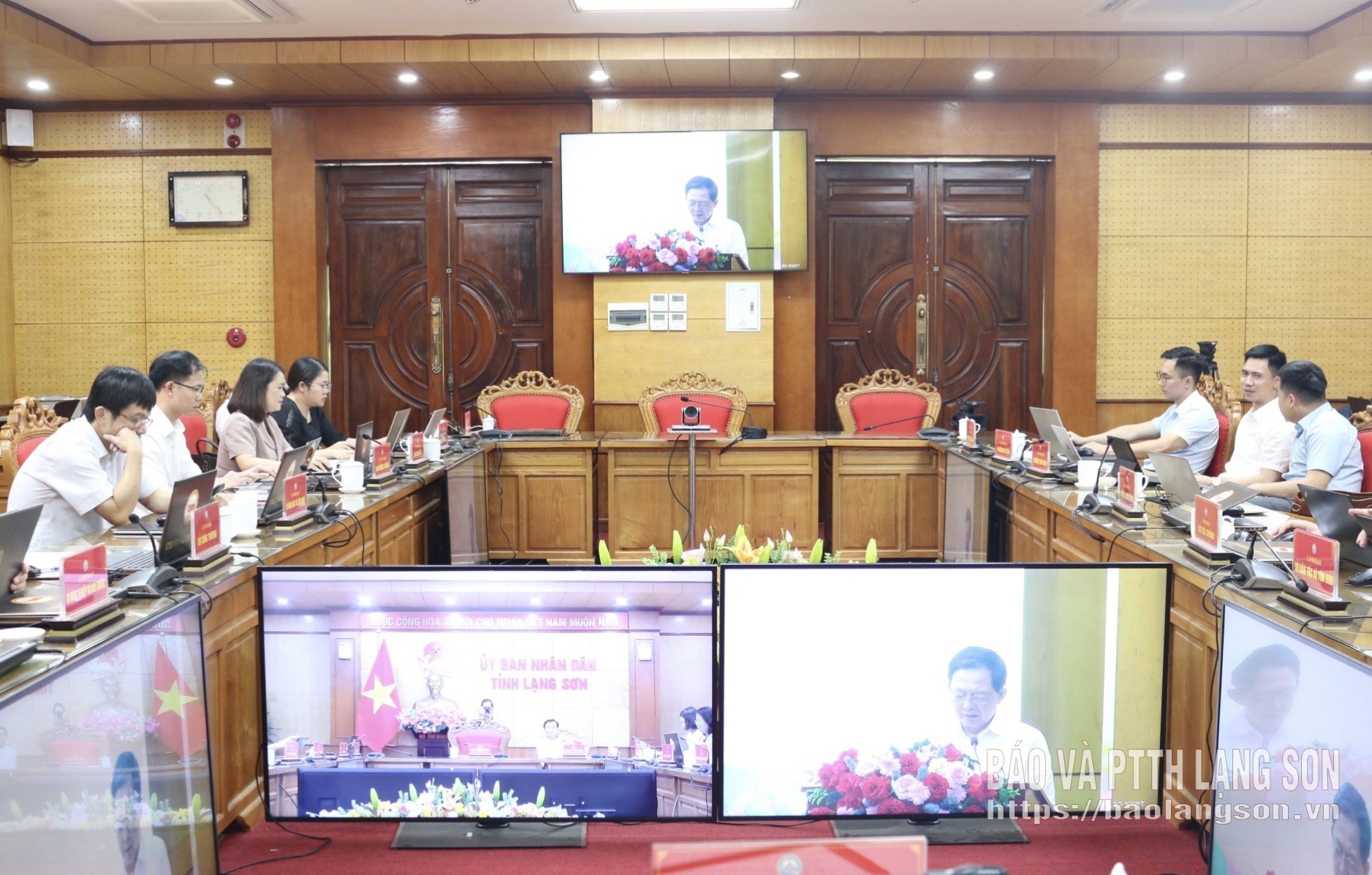
At the Lang Son provincial meeting point, the conference was attended by Comrade Tran Thanh Nhan, Vice Chairman of the Provincial People’s Committee, along with leaders of several departments, sectors, agencies, related units, and representatives of leaders from communes and wards across the province. According to the report presented at the conference, in the first six months of 2026, the Agriculture and Environment sector recorded positive results in many key areas.
Specifically, agricultural, forestry, and fisheries production continued to remain stable, contributing to ensuring domestic supply. Consumer markets continued to expand, while export activities showed positive signs. The total export turnover of agricultural, forestry, and fisheries products was estimated at USD 35.88 billion, up 6% compared with the same period in 2025.
Public investment disbursement was also accelerated. By the end of June 2026, the disbursed value was estimated at over VND 2.461 trillion, equivalent to 36.7% of the assigned capital plan. At the same time, the sector continued to focus on the application of science and technology as well as digital transformation, with the agricultural product traceability system officially put into operation.
Regarding national target programs, the Ministry of Agriculture and Environment focused on completing mechanisms, policies, and guiding documents for the implementation of national target programs for the 2026–2030 period. In addition, the management of water resources, irrigation, forecasting and disaster prevention, land management, geology, minerals, and the environment continued to be carried out in a coordinated and effective manner.
In Lang Son province, during the first six months of 2026, the provincial Agriculture and Environment sector also achieved many positive results. The agriculture, forestry, and fisheries sector recorded a growth rate of 4.82%. Agricultural, forestry, and livestock production developed steadily, while forest development work was actively promoted.
In addition, land management and the development of the national land database continued to be accelerated. By June 2026, the province had reviewed information for more than 1.6 million land parcels and updated and cleaned data for more than 1.2 million land parcels. Environmental protection and natural resource management in the province continued to be maintained and effectively implemented.
At the conference, delegates focused on discussions to further assess the achievements, while also identifying difficulties and obstacles in carrying out tasks during the first six months of 2026. Key topics included the development of the national land database, high-tech agriculture, the circular economy in agriculture, and investment in and development of dyke infrastructure. Based on these discussions, delegates proposed various solutions to strive for the successful completion of the goals and tasks set for 2026.
In his concluding remarks at the conference, Deputy Prime Minister Ho Quoc Dung requested that, in the coming period, the Agriculture and Environment sector continue to place strong focus on developing and improving mechanisms and policies, especially regulations related to land, natural resources, the environment, seas, and islands. At the same time, the sector needs to accelerate the completion of the planning system for submission to the Prime Minister for review and approval in accordance with regulations.
The Deputy Prime Minister also asked the sector to continue providing strong direction for the production, processing, and export of agricultural, forestry, and fisheries products in order to fulfill the growth targets for 2026. In particular, it is necessary to strictly implement the recommendations of the European Commission (EC), proactively prepare all necessary conditions for the upcoming inspection, and strive to soon remove the “yellow card” warning against Vietnamese seafood.
In addition, the Agriculture and Environment sector needs to further promote science and technology, innovation, and digital transformation; effectively and comprehensively implement national target programs; improve the efficiency of natural resource management, environmental protection, and planning work. At the same time, it is necessary to ensure the supply of construction materials for key national projects, avoid shortages that could affect project progress, and proactively implement measures for natural disaster prevention and control.
Source: baolangson
AQUA MINA – Standing alongside farmers with quality, efficient, and sustainable aquaculture solutions.
AQUA MINA CO., LTD

WE WORK FOR THE SUCCESS


Ca Mau, Can Tho and An Giang Play a Leading Role in Vietnam’s Shrimp Industry
Protecting rice-shrimp yields against environmental fluctuations caused by prolonged rain
AQUA MINA Turbo Blower: Quiet, Energy-Efficient Air Supply for Aquaculture Ponds
AQUA MINA has accompanied the experimental tank system project at Can Tho University from its very early days
AQUA MINA AMONG 20 OUTSTANDING PRESENTATIONS AT THE WORKSHOP ON APPLYING SCIENCE AND TECHNOLOGY TO IMPROVE THE QUALITY OF VIETNAM’S AQUATIC PRODUCTS
Vietnam’s Shrimp Farming Industry Enters the High-Tech Race
The U.S. market relies heavily on imported shrimp to bridge its domestic supply gap
The 2028 supply crisis: The shrimp industry is projected to face a 400,000-ton material shortage
High profits from high-tech shrimp farming come with persistent risks
Intensifying El Niño Effect: Climate Change Risks Threaten the Global Shrimp Supply Chain
Evaluating Gaps in the Circular Economy Value Chain of the Shrimp Industry
A Comprehensive Overview of the Vietnamese Shrimp Industry

.jpg)