



5 common mistakes when choosing knife valves for piping systems
However, choosing a knife gate valve is not simply a matter of considering the pipe size or product price. If you choose the wrong material, incorrect size, or a valve that is unsuitable for the operating conditions, it may operate inefficiently, deteriorate quickly, or make maintenance more difficult.
Below are 5 common mistakes when choosing a knife gate valve for a piping system that users should keep in mind before making a purchase.
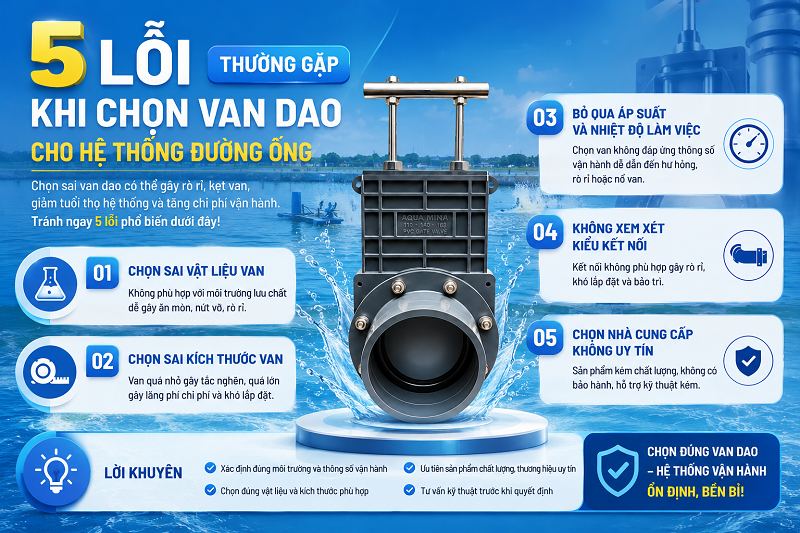
1. Choosing a Valve Based Only on Pipe Diameter
This is one of the most common mistakes.
When purchasing a PVC knife gate valve, many people simply provide information such as Ø90, Ø110, Ø140, Ø160, etc., assuming that a valve with the same size will automatically be compatible with the system.
In reality, pipe diameter is only one of the factors that should be considered. Users also need to check:
- The actual pipe diameter of the system
- The valve connection type
- Applicable dimensional standards
- Pressure and operating conditions
- Installation location
- Operating environment
Two products with similar diameter specifications may still be difficult to install if their connection designs are different.
How to avoid this: Before purchasing, provide complete information about the pipe diameter, pipe type, connection method, and intended valve installation location so that you can receive accurate recommendations.
2. Focusing Only on Price and Ignoring Materials
Price is an important factor, but it should not be the only criterion when choosing a knife gate valve.
A lower-priced product is not necessarily the more economical choice if its materials and construction are unsuitable for the operating conditions. This is especially important for systems that operate continuously or require frequent valve opening and closing, where components such as the knife plate, valve body, and valve handle need careful consideration.
For example, the knife plate is the component that directly performs the opening and closing function to control water flow. If the material is unsuitable or the construction is not sufficiently robust, long-term operating performance may be affected.
Therefore, when comparing knife gate valve prices, users should consider the following factors together:
- Knife plate material
- Knife plate thickness
- Valve body construction
- Valve handle material
- Internal bore design
- Warranty policy
The initial purchase price is only one part of the overall cost of ownership.
3. Failing to Check the Internal Bore Design
Another commonly overlooked mistake is focusing only on the external dimensions without checking the internal bore of the valve.
When the valve is fully open, its internal design affects how freely water can flow through the valve. If the flow passage is significantly restricted, the system may not achieve the desired flow performance.
This is particularly important for systems requiring high water flow rates, such as:
- Aquaculture pond water supply systems
- Shrimp pond drainage systems
- Fish farming facilities
- Water storage and treatment tanks
- Water distribution systems
Therefore, when choosing a PVC knife gate valve for a piping system, users should not only look at the Ø specification but also consider the internal design of the valve.
4. Choosing a Valve That Does Not Match the Operating Frequency
Not every system uses valves in the same way.
Some systems may only require the valve to be opened and closed a few times during operation, while farms and other facilities may need to operate valves frequently to distribute water between different areas.
If the opening and closing frequency is not taken into account, users may choose a product that does not meet their actual operating requirements.
For systems that require frequent operation, attention should be paid to the strength and durability of:
- Knife plate
- Valve handle
- Valve body
- Opening and closing mechanism
- Connection points
A robust and easy-to-operate design can make system operation, inspection, and maintenance more convenient.
5. Ignoring Warranty and After-Sales Support
Many people purchasing a knife gate valve focus only on price and technical specifications while overlooking the warranty policy.
This is an important mistake to avoid, especially when valves are used in systems with multiple installation points or continuous operation.
A reliable supplier should provide clear information about:
- Warranty period
- Warranty conditions
- Return and replacement policy
- Technical support
- Assistance in selecting the appropriate valve size
- Support when issues arise during operation
For example, Aqua Mina PVC Knife Gate Valves come with a 24-month warranty and a 1-for-1 replacement policy, subject to the product's warranty terms and conditions. This is an important factor that buyers can consider alongside material quality and valve design when selecting a product.
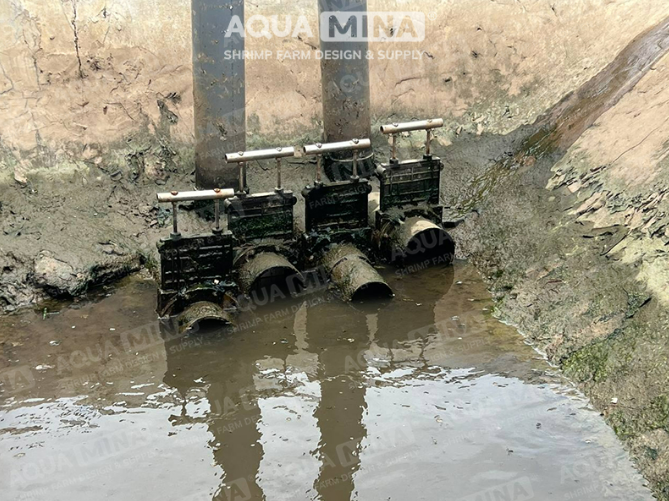
How to Choose the Right Knife Gate Valve?
Before placing an order, users can quickly check the following 5 criteria:
1. Correct Size:
Accurately determine the pipe diameter and connection method.
2. Correct Materials:
Check the materials used for the knife plate, valve body, and valve handle.
3. Appropriate Design:
Consider the valve construction and the openness of the internal bore.
4. Suitable for the Intended Application:
Determine the required opening and closing frequency and the actual operating conditions of the system.
5. Clear Warranty Policy:
Prioritize suppliers that provide clear warranty terms and technical support.
Aqua Mina PVC Knife Gate Valve – A Choice for Piping and Aquaculture Systems
For shrimp farming, fish farming, water supply and drainage, and water treatment systems, choosing the right valve from the beginning can make installation and operation more convenient.
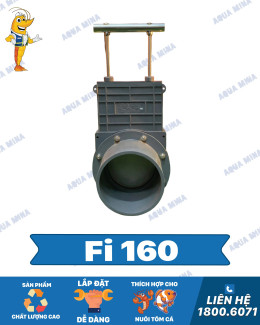
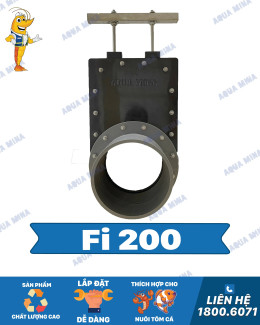
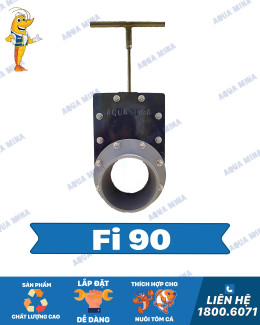
Aqua Mina PVC Knife Gate Valves feature several notable design characteristics, including a 4mm-thick SUS 304 stainless steel knife plate, one-piece cast valve body, wide and open internal bore, and improved SUS 304 stainless steel handle.
In addition, the product comes with a 24-month warranty and a 1-for-1 replacement policy, providing customers with greater peace of mind during use.
Conclusion
Choosing a knife gate valve for a piping system may seem simple, but relying only on price or pipe diameter can easily lead to mistakes.
The 5 common mistakes to avoid are:
- Choosing a valve based only on pipe diameter.
- Focusing only on price and ignoring materials.
- Failing to check the internal bore design.
- Choosing a valve that does not match the operating frequency.
- Ignoring warranty and after-sales support.
Especially for aquaculture systems, valve selection should be based on pipe size, materials, design, operating frequency, and actual operating conditions.
If you are looking for a PVC knife gate valve for piping systems, shrimp ponds, fish farms, or water treatment applications, Aqua Mina can help you select the appropriate valve size and product based on your actual application requirements.
AQUA MINA CO., LTD

WE WORK FOR THE SUCCESS


Ca Mau, Can Tho and An Giang Play a Leading Role in Vietnam’s Shrimp Industry
Protecting rice-shrimp yields against environmental fluctuations caused by prolonged rain
AQUA MINA Turbo Blower: Quiet, Energy-Efficient Air Supply for Aquaculture Ponds
AQUA MINA has accompanied the experimental tank system project at Can Tho University from its very early days
AQUA MINA AMONG 20 OUTSTANDING PRESENTATIONS AT THE WORKSHOP ON APPLYING SCIENCE AND TECHNOLOGY TO IMPROVE THE QUALITY OF VIETNAM’S AQUATIC PRODUCTS
Vietnam’s Shrimp Farming Industry Enters the High-Tech Race
The U.S. market relies heavily on imported shrimp to bridge its domestic supply gap
The 2028 supply crisis: The shrimp industry is projected to face a 400,000-ton material shortage
High profits from high-tech shrimp farming come with persistent risks
Intensifying El Niño Effect: Climate Change Risks Threaten the Global Shrimp Supply Chain
Evaluating Gaps in the Circular Economy Value Chain of the Shrimp Industry
A Comprehensive Overview of the Vietnamese Shrimp Industry




.jpg)