

HDPE Liner – The Foundation for Sustainable Aquaculture Models
Here is the English translation of your content, tailored for professional use in the aquaculture industry:
HDPE Liner – The Foundation for Sustainable Aquaculture Models
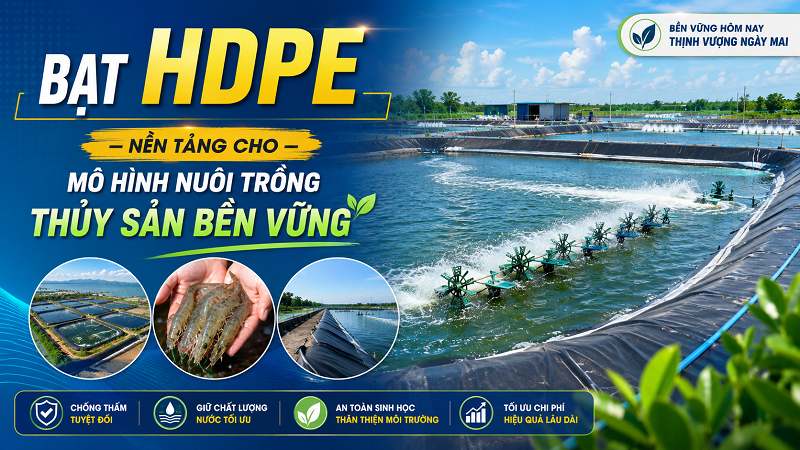
In the context of the aquaculture industry facing numerous environmental and disease-related challenges, applying technology to production processes is a matter of survival. Among these solutions, HDPE (High-Density Polyethylene) liners have emerged as a breakthrough, providing a solid foundation for sustainable, high-yield aquaculture models.
What is an HDPE liner, and why is it important in aquaculture?
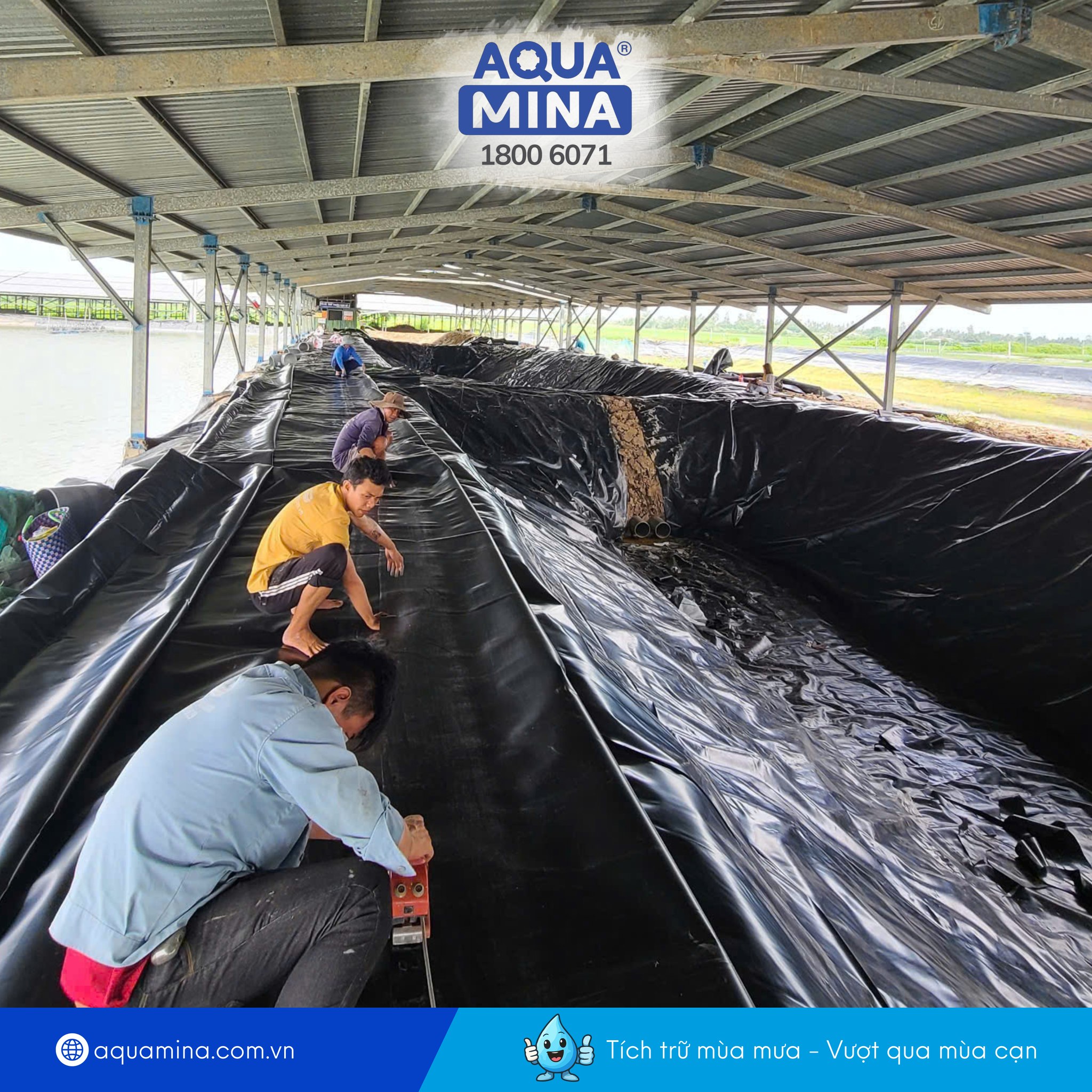
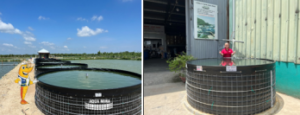
HDPE liner is a waterproof membrane made from high-density virgin resin, offering excellent mechanical strength and superior durability against UV radiation and chemical environments. Unlike traditional earthen pond farming methods, using HDPE liners allows farmers to take complete control of the ecological environment within the pond.
Outstanding advantages of HDPE liners
-
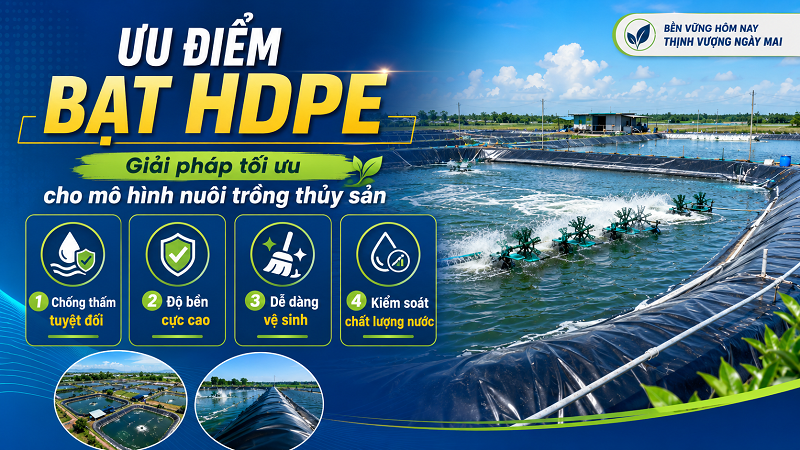
Absolute impermeability: Prevents water leakage, maintains stable water levels, and avoids the infiltration of pathogens from the soil or groundwater.
-
Extreme durability: With a lifespan of several decades, it helps optimize long-term investment costs.
-
Easy cleaning: The smooth surface of the liner limits the accumulation of organic waste, bacteria, and toxic algae, making pond cleaning after each harvest quick and effective.
-
Water quality control: Limits bank erosion and water turbidity, thereby helping aeration equipment operate more efficiently and ensuring optimal dissolved oxygen levels for aquatic life.
The role of HDPE liners in the trend toward sustainable agriculture
The transition from traditional farming to HDPE-lined shrimp and fish farming models is a significant step toward helping farmers realize their sustainability goals.
1. Improving survival rates and productivity
By isolating the pond from the soil—which often harbors pathogens and impurities—shrimp and fish raised in HDPE-lined ponds show significantly higher survival rates. A clean environment helps aquatic species grow faster, more uniformly, and reach higher commercial quality.
2. Reducing operational costs
Although the initial investment cost for HDPE liners is higher than that of earthen ponds, the benefits are substantial:
-
Reduces expenses for antibiotics and water treatment chemicals.
-
Saves on labor costs for pond maintenance and cleaning.
-
Minimizes the risk of financial loss due to disease, ensuring sustainable profits for farmers.
3. Environmentally friendly
HDPE liners make waste management in ponds more centralized and easier to handle. This limits the direct discharge of harmful waste into the natural environment, contributing to the protection of water sources surrounding the farming area.
Advice for choosing and installing HDPE liners for your ponds
To ensure maximum efficiency, the choice of material and installation technique is crucial:
-
Select the appropriate thickness: Depending on the scale and type of aquatic species (tiger shrimp, whiteleg shrimp, freshwater fish, etc.), you should choose the appropriate liner thickness (typically ranging from 0.5mm to 1.0mm).
-
Reputable suppliers: Prioritize suppliers that offer quality certification, clear warranty policies, and professional installation teams.
-
Welding technique: Ensure that all seams are sealed tightly with no leaks. This is the single most important factor determining the lifespan of your pond.
Conclusion
Investing in HDPE liners is not just a technical solution; it is a smart investment decision for a sustainable aquaculture model. With its advantages in control, productivity, and environmental protection, it is an indispensable foundation for modern aquaculture.
Are you looking for an HDPE lining solution for your ponds? Contact us today for professional technical advice and a detailed quotation!
AQUA MINA – Standing alongside farmers with quality, efficient, and sustainable aquaculture solutions.
AQUA MINA CO., LTD

WE WORK FOR THE SUCCESS


Ca Mau, Can Tho and An Giang Play a Leading Role in Vietnam’s Shrimp Industry
Protecting rice-shrimp yields against environmental fluctuations caused by prolonged rain
AQUA MINA Turbo Blower: Quiet, Energy-Efficient Air Supply for Aquaculture Ponds
AQUA MINA has accompanied the experimental tank system project at Can Tho University from its very early days
AQUA MINA AMONG 20 OUTSTANDING PRESENTATIONS AT THE WORKSHOP ON APPLYING SCIENCE AND TECHNOLOGY TO IMPROVE THE QUALITY OF VIETNAM’S AQUATIC PRODUCTS
Vietnam’s Shrimp Farming Industry Enters the High-Tech Race
The U.S. market relies heavily on imported shrimp to bridge its domestic supply gap
The 2028 supply crisis: The shrimp industry is projected to face a 400,000-ton material shortage
High profits from high-tech shrimp farming come with persistent risks
Intensifying El Niño Effect: Climate Change Risks Threaten the Global Shrimp Supply Chain
Evaluating Gaps in the Circular Economy Value Chain of the Shrimp Industry
A Comprehensive Overview of the Vietnamese Shrimp Industry


.jpg)