

Launch of the Vietnam Shrimp Association, with expectations to boost export growth
On the afternoon of April 14 in Ho Chi Minh City, the inaugural congress of the Vietnam Shrimp Association for the 2026–2031 term was officially held, bringing together representatives from regulatory agencies, businesses, scientists, and farmers nationwide. This marks the first time Vietnam’s shrimp industry has established a representative organization that connects the entire value chain—from production and processing to consumption.
First-ever organization representing the entire shrimp value chain
The Association was established under Decision No. 362/QĐ-BNV issued by the Ministry of Home Affairs. It operates nationwide, bringing together enterprises, cooperatives, farming households, input suppliers, processing and export companies, and experts in the fisheries sector. At the congress, the Executive Committee for the first term was elected with 17 members representing various segments of the value chain. Mr. Mai Văn Hoàng, CEO of GrowMax Group, was appointed as Chairman of the Association. The event took place in the context of Vietnam’s shrimp industry having experienced strong growth over several decades. From improved extensive farming models in the 1980s, to intensive farming since 1985, and super-intensive systems in recent years, production scale has continuously expanded.
In 1991, shrimp farming area was around 230,000 hectares with production of 56,000 tons. By 2005, it had grown to over 600,000 hectares with output exceeding 300,000 tons. By 2015, brackish water shrimp farming area surpassed 654,000 hectares with production exceeding 600,000 tons.
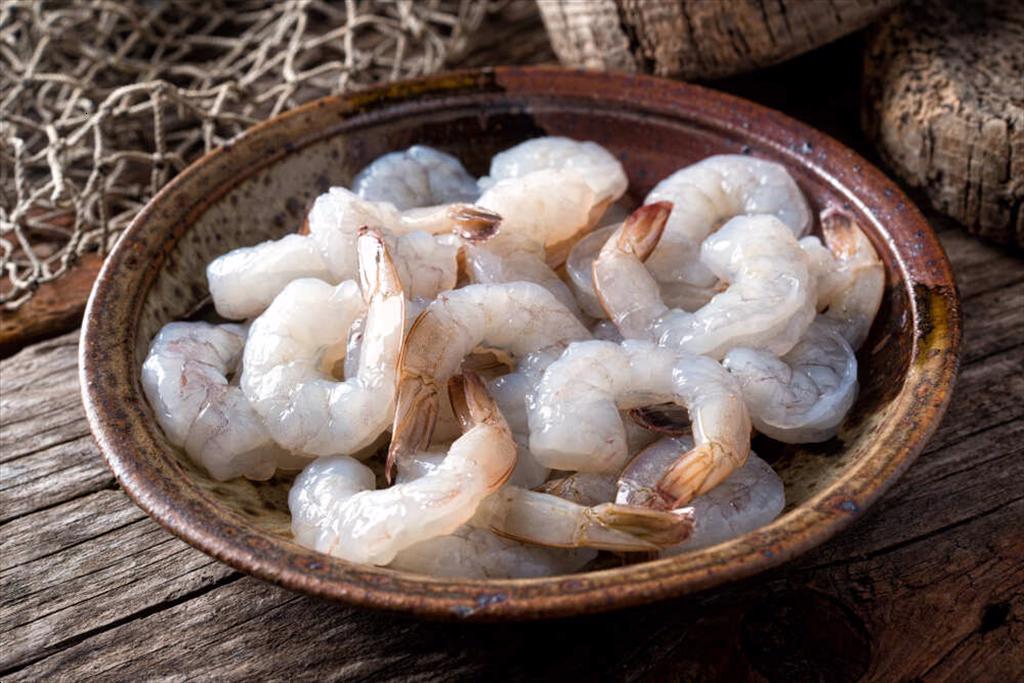
Notably, in 2025, shrimp export value reached approximately USD 4.6 billion, up 19% year-on-year and marking the highest level ever. Shrimp now accounts for about 40–45% of total seafood export value, reaching more than 100 markets worldwide. However, behind these growth figures lies the reality that the industry remains fragmented and lacks strong linkages, resulting in efficiency that does not fully match its potential.
Persistent bottlenecks and the need for transformation
Speaking at the congress, Mr. Vũ Chiến Thắng, Deputy Minister of Home Affairs, emphasized that the establishment of the Vietnam Shrimp Association comes at a time when the country is entering a new development phase, requiring rapid yet sustainable growth, transformation of growth models, and a stronger role for the business sector.
According to him, Vietnam’s shrimp industry has all the conditions to become a model sector for a new development mindset: larger scale, higher technology, greener production, and stronger integration with the global market.
“For many years, shrimp has been the most important export sector of Vietnam’s fisheries, accounting for 35–45% of total export value. However, international market requirements are becoming increasingly stringent, forcing the industry to change its development approach,” he noted.
The Deputy Minister pointed out that challenges are no longer about output, but about quality, added value, and adaptability. Requirements on traceability, environmental standards, carbon emissions, and social responsibility are becoming mandatory technical barriers.
This means the industry can no longer grow extensively, but must shift toward intensive, high-quality development. At the same time, the sector faces multiple bottlenecks, including dependence on imported broodstock, high feed costs, inadequate infrastructure, small-scale production, and weak value chain linkages.
From a market perspective, competition is intensifying as countries such as Ecuador and India continue to expand production at lower costs.
In this context, Mr. Vũ Chiến Thắng stressed that the Vietnam Shrimp Association must not merely be a gathering organization, but should act as a “linkage hub” and a “driving force” for the entire industry.
Under guidance from the Ministry of Home Affairs, the Association is expected to quickly complete its organizational structure, establish transparent and professional operating regulations, and fully comply with legal requirements.
Driving policy advocacy and innovation
One of the key priorities emphasized is policy advocacy. The Association should serve as a practical channel to reflect industry realities and support authorities in addressing bottlenecks related to farming area planning, infrastructure, credit, logistics, quarantine, and trade.
Science, technology, and digital transformation are also identified as core pillars. The Association is expected to lead in promoting technological applications in breeding, disease control, traceability, and supply chain management.
From the agricultural sector’s perspective, Mr. Phùng Đức Tiến, Deputy Minister of Agriculture and Environment, stated that the establishment of the Association is a necessary step to strengthen industry organization and enhance linkages among stakeholders.
Meanwhile, Mr. Mai Văn Hoàng, Chairman of the Association, expressed his commitment to building a practical and effective organization aligned with the needs of businesses and farmers.
With more than 27 years of experience in the shrimp industry, he affirmed that Vietnam’s goal of becoming a leading global shrimp exporter is entirely achievable with strong industry-wide collaboration.
Source: Dantri

WE WORK FOR THE SUCCESS


Ca Mau, Can Tho and An Giang Play a Leading Role in Vietnam’s Shrimp Industry
Protecting rice-shrimp yields against environmental fluctuations caused by prolonged rain
AQUA MINA Turbo Blower: Quiet, Energy-Efficient Air Supply for Aquaculture Ponds
AQUA MINA has accompanied the experimental tank system project at Can Tho University from its very early days
AQUA MINA AMONG 20 OUTSTANDING PRESENTATIONS AT THE WORKSHOP ON APPLYING SCIENCE AND TECHNOLOGY TO IMPROVE THE QUALITY OF VIETNAM’S AQUATIC PRODUCTS
Vietnam’s Shrimp Farming Industry Enters the High-Tech Race
The U.S. market relies heavily on imported shrimp to bridge its domestic supply gap
The 2028 supply crisis: The shrimp industry is projected to face a 400,000-ton material shortage
High profits from high-tech shrimp farming come with persistent risks
Intensifying El Niño Effect: Climate Change Risks Threaten the Global Shrimp Supply Chain
Evaluating Gaps in the Circular Economy Value Chain of the Shrimp Industry
A Comprehensive Overview of the Vietnamese Shrimp Industry



.jpg)