


China leads the global lobster market, Vietnam emerges as a key supplier
One of the core characteristics of the Chinese market is the strong preference for live lobster over frozen or processed products. Live seafood is not only prized for its freshness but also carries profound cultural and social significance. On important occasions, especially family banquets or business hospitality, the presence of a large lobster on the dinner table is considered a symbol of luxury and prosperity. Notably, color plays a vital role in consumer behavior: once cooked, lobsters turn red—a color symbolizing luck in Chinese culture—which intensifies demand, particularly during festive seasons.
This cultural factor creates a very distinct seasonality in the market. The Lunar New Year is the peak consumption period of the year, during which demand for lobster and premium crustaceans skyrockets. In the lead-up to the holiday, lobster prices at major wholesale markets such as Shanghai, Guangzhou, or Beijing can surge from 50% to nearly double their normal rates. However, this cycle is short-lived. Immediately after the holiday, demand drops rapidly, leading to a sharp decline in prices. Consequently, traders often adopt a cautious strategy, limiting live stock inventories post-Festival to avoid the risks of price depreciation and tank maintenance costs.
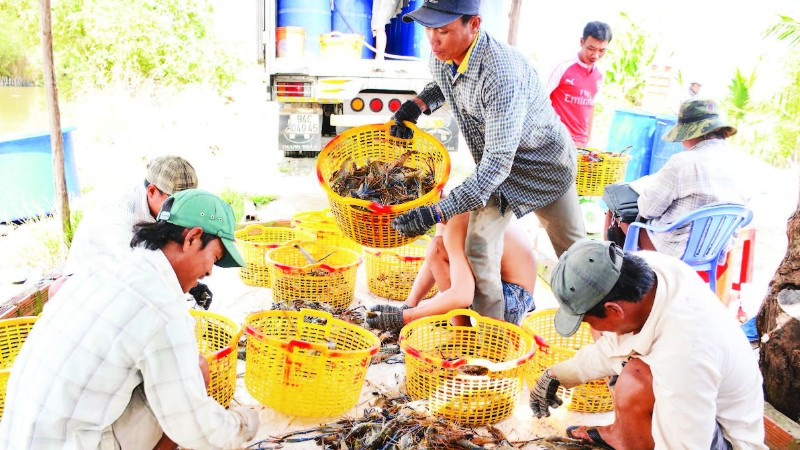
Alongside demand growth, the supply structure of lobsters to China has undergone significant shifts. Previously, North America—specifically Canada and the United States—was the primary source of American lobster. However, policy factors such as tariffs, combined with fluctuations in logistics and costs, have diminished the relative dominance of this region during certain periods. In its place, emerging suppliers have rapidly gained market share, most notably Vietnam with its green spiny lobster.
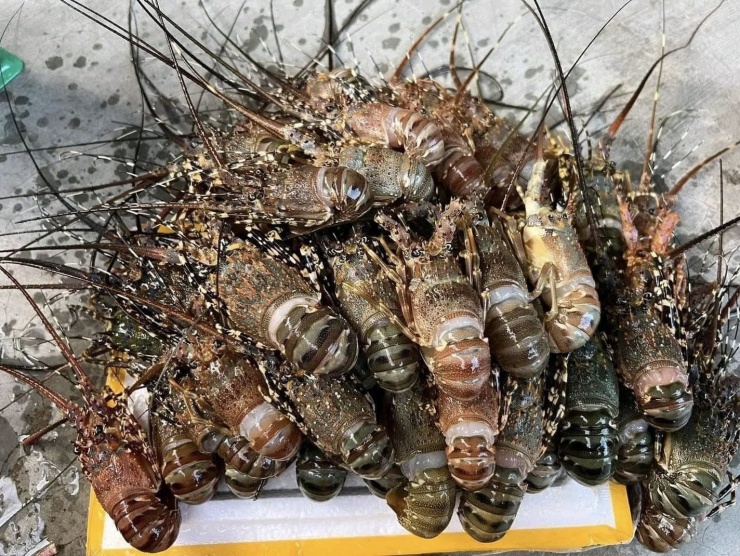
Vietnamese green spiny lobster has been viewed as a market 'phenomenon' in recent years. From negligible export levels in 2017, export value to China is projected to reach nearly $1 billion by 2025. Beyond the surge in value, Vietnam has become the largest supplier by volume, with an output exceeding 41,000 tons. This success stems from a stable supply capacity, large scale, and pricing that aligns with China's expanding consumer segment. Furthermore, the product’s characteristic—turning red when cooked—allows the green spiny lobster to satisfy cultural consumer preferences.
Beyond Vietnam, the Chinese market includes various other suppliers like Australia and New Zealand with rock lobsters, which, while holding a smaller share, remain pivotal in the premium segment. Meanwhile, geopolitical factors indirectly impact the market, such as Russia’s pivot toward exporting seafood to China, though primarily in the crab segment. These shifts indicate that the Chinese market is increasingly diversifying its supply sources and reducing dependence on any single region.
Another critical factor shaping the market is the distribution and wholesale system. Hubs like Jiangyang (Shanghai), Huangsha (Guangzhou), or major markets in Beijing serve as the market’s 'pricing points,' reflecting real-time supply-demand fluctuations. However, the nature of the live seafood trade forces merchants to face numerous risks, from storage costs and mortality rates to short-term price volatility. This contributes to increased market instability, especially during peak periods.
Overall, the Chinese lobster market operates under a unique model where demand growth is tightly linked to cultural factors, while prices are heavily influenced by seasonal cycles and trade sentiment. With its expanding scale and deep integration into the global supply chain, China is not only a consumption market but also a trendsetter for the global lobster industry. In this context, exporting nations—including Vietnam—will continue to rely heavily on this market’s developments while needing to adapt flexibly to its fast-paced and highly cyclical fluctuations.
Source: vasep
AQUA MINA CO., LTD
– Address: 685 Le Duc Anh Street, Quarter 39, Binh Hung Hoa Ward, Ho Chi Minh City
– Phone: 1800 6071 (Toll-free hotline)
– Email: sales@aquamina.com.vn or oversea@aquamina.com.vn
– Aqua Mina’s Official Distributor in Japan: REX INDUSTRIES CO., LTD
– Address: 1-9-3 Hishiya-Higashi, Higashi-Osaka 578-0948, JAPAN
– Email: kimakubo@rexind.co.jp
– Phone: +81-(0)72-961-9893
– Website: www.rexind.co.jp/e/

WE WORK FOR THE SUCCESS
Ngày đăng : 24/04/2026
1348 View


Other Articles
Ca Mau, Can Tho and An Giang Play a Leading Role in Vietnam’s Shrimp Industry
Protecting rice-shrimp yields against environmental fluctuations caused by prolonged rain
AQUA MINA Turbo Blower: Quiet, Energy-Efficient Air Supply for Aquaculture Ponds
AQUA MINA has accompanied the experimental tank system project at Can Tho University from its very early days
AQUA MINA AMONG 20 OUTSTANDING PRESENTATIONS AT THE WORKSHOP ON APPLYING SCIENCE AND TECHNOLOGY TO IMPROVE THE QUALITY OF VIETNAM’S AQUATIC PRODUCTS
Vietnam’s Shrimp Farming Industry Enters the High-Tech Race
The U.S. market relies heavily on imported shrimp to bridge its domestic supply gap
The 2028 supply crisis: The shrimp industry is projected to face a 400,000-ton material shortage
High profits from high-tech shrimp farming come with persistent risks
Intensifying El Niño Effect: Climate Change Risks Threaten the Global Shrimp Supply Chain
Evaluating Gaps in the Circular Economy Value Chain of the Shrimp Industry
A Comprehensive Overview of the Vietnamese Shrimp Industry





.jpg)