


As the U.S. Tightens Market Requirements, How Can Vietnamese Seafood Adapt?
Vietnam's Seafood Industry Facing Survival Test in the US: Cascading Trade Barriers
The US market has never been an easy territory for Vietnamese seafood. Beyond years of battling anti-dumping and countervailing duties alongside stringent labor, traceability, and technical standards, the industry now faces a formidable new hurdle. Access to the US market has narrowed significantly following the latest decision by the Office of the United States Trade Representative (USTR).
Cascading Barriers and Cumulative Tariff Pressures
Following the USTR's final determination under Section 301 investigations, the Vietnam Association of Seafood Exporters and Producers (VASEP) updated its impact assessment, confirming that most of Vietnam’s key export commodities were denied tax exemptions.
Consequently, key exports including shrimp, pangasius, tuna, squid, octopus, and crab will incur an additional 12.5% tariff upon entering the US. This levy is stacked directly on top of Most-Favored-Nation (MFN) rates and other duties based on specific HTSUS codes. The regulation officially took effect at 12:01 AM EDT on July 24, 2026, granting exemptions only to shipments loaded and fully cleared prior to July 28.
Crucially, this tariff burden is unfairly distributed among competing nations. While Vietnamese shrimp faces a 12.5% Section 301 tariff, key rivals such as India, Ecuador, and Indonesia are subject to only 10%. A 2.5 percentage point margin may appear modest on paper, but in an industry operating on razor-thin profit margins, it provides ample incentive for US importers to divert orders toward alternative suppliers. In the tuna segment, Ecuador holds a distinct advantage, securing Section 301 exemptions across four key product lines (albacore, fresh/chilled yellowfin, frozen tuna fillets, and bulk processed tuna).
According to VASEP, these supplementary tariffs will exert immense pressure on pangasius, tuna, and value-added items, compelling US buyers to demand price cuts, cost-sharing, or supplier substitution. The risk extends beyond the 12.5% rate itself; it underscores a broader trend of escalating compliance costs, particularly as two other Section 301 investigations regarding industrial overcapacity and intellectual property remain pending.
The Threat of the Proposed 2026 US Domestic Market Restoration Act
Beyond tariffs, non-tariff barriers concerning supply chain transparency, sustainability, and traceability are steadily rising. Navigating multiple trade defense instruments simultaneously has drastically heightened market entry costs, eroding Vietnam's competitive edge.
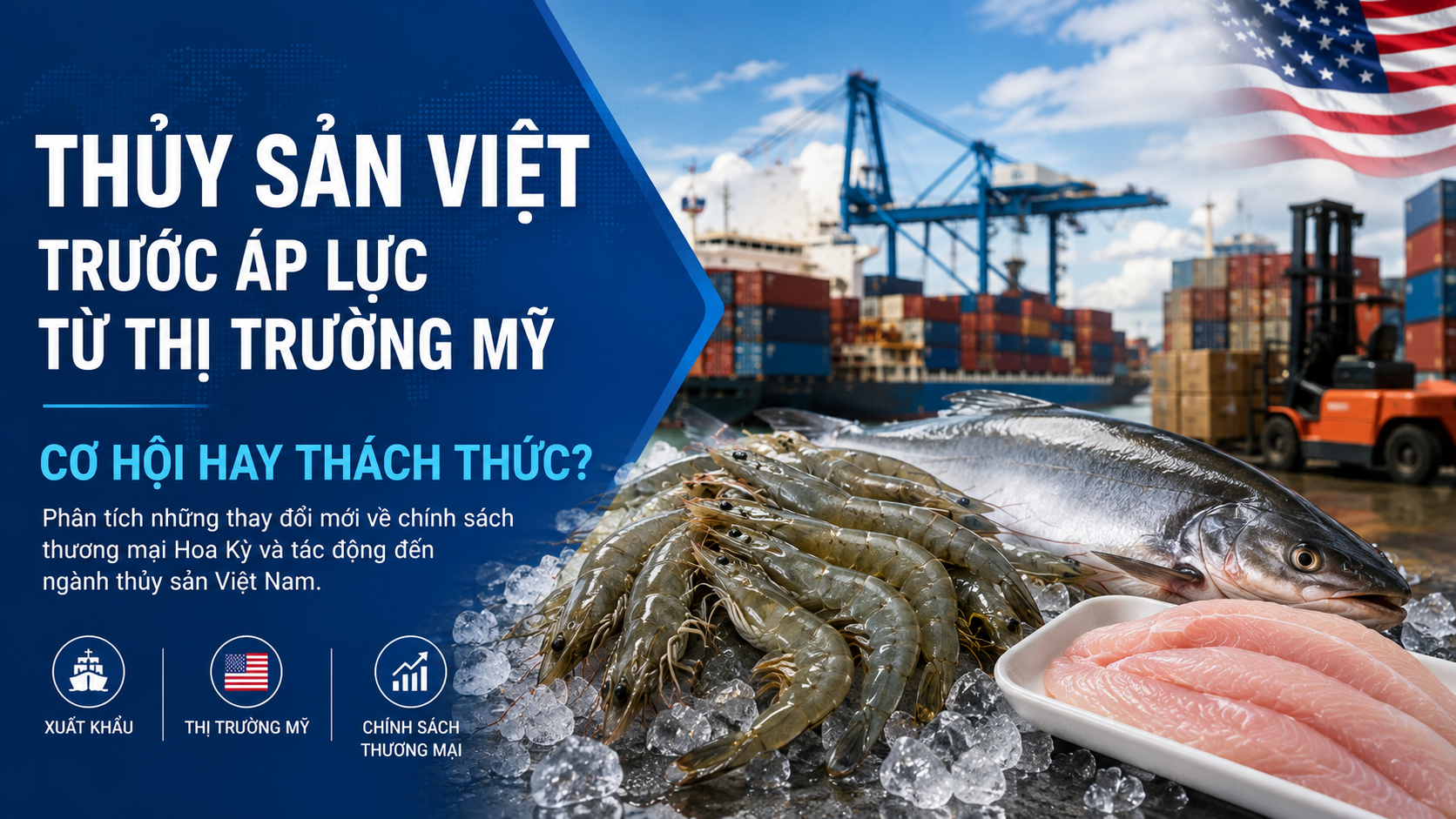
However, an even greater threat looms. VASEP recently submitted an impact assessment to the Ministry of Industry and Trade regarding the proposed US Domestic Market Restoration Act of 2026:
-
Shrimp Sector: The bill proposes an overall annual import quota of approximately 58,900 metric tons for Vietnamese shrimp, divided into sub-quotas. Out-of-quota volumes—which average 5,000 to 8,000 metric tons annually above the threshold according to USDA data—would face a steep 40% ad valorem tariff in addition to existing trade remedy duties.
-
Pangasius Sector: The situation is far more critical. The bill sets an annual quota of 84,000 metric tons for frozen catfish fillets from Vietnam. However, even in-quota shipments would be hit with a 50% ad valorem duty, while out-of-quota imports would face a prohibitive 200% tariff. Given that frozen pangasius fillets (HS code 0304.62) accounted for 92.8% to 98.1% of total Vietnamese pangasius exports to the US between 2023 and 2025, a 50% baseline tariff effectively neutralizes commercial viability, while the 200% penalty creates an outright embargo.
Strategic Adaptation and Policy Advocacy
To navigate these overlapping hurdles, industry experts advise exporters to immediately audit HTSUS classifications, shipment timelines, delivery terms, and contract clauses regarding tariff liability. Proactive engagement with US importers and customs consultants is essential to mitigate immediate operational risks.
At the policy level, VASEP has urged the Ministry of Industry and Trade to coordinate with the Ministry of Foreign Affairs and the Ministry of Agriculture and Environment to intensify diplomatic outreach. Strategic priorities include executive and parliamentary diplomacy, engaging directly with US lawmakers, bill sponsors, and congressional committees to exclude Vietnamese shrimp and pangasius fillets from the proposed tariff-rate quota scheme.
In the long run, experts emphasize that Vietnamese seafood companies must view this crisis as a catalyst for strategic repositioning rather than merely reacting to individual trade barriers. Diversifying export markets, expanding deep-processing capacity, ensuring supply chain traceability, and adopting rigorous sustainability standards will be vital to reducing dependence on a single market and sustaining global competitiveness.
AQUA MINA CO., LTD
WE WORK FOR THE SUCCESS


Ca Mau, Can Tho and An Giang Play a Leading Role in Vietnam’s Shrimp Industry
Protecting rice-shrimp yields against environmental fluctuations caused by prolonged rain
AQUA MINA Turbo Blower: Quiet, Energy-Efficient Air Supply for Aquaculture Ponds
AQUA MINA has accompanied the experimental tank system project at Can Tho University from its very early days
AQUA MINA AMONG 20 OUTSTANDING PRESENTATIONS AT THE WORKSHOP ON APPLYING SCIENCE AND TECHNOLOGY TO IMPROVE THE QUALITY OF VIETNAM’S AQUATIC PRODUCTS
Vietnam’s Shrimp Farming Industry Enters the High-Tech Race
The U.S. market relies heavily on imported shrimp to bridge its domestic supply gap
The 2028 supply crisis: The shrimp industry is projected to face a 400,000-ton material shortage
High profits from high-tech shrimp farming come with persistent risks
Intensifying El Niño Effect: Climate Change Risks Threaten the Global Shrimp Supply Chain
Evaluating Gaps in the Circular Economy Value Chain of the Shrimp Industry
A Comprehensive Overview of the Vietnamese Shrimp Industry


.jpg)