



Cost-efficient analysis helps breed disease-resistant fish
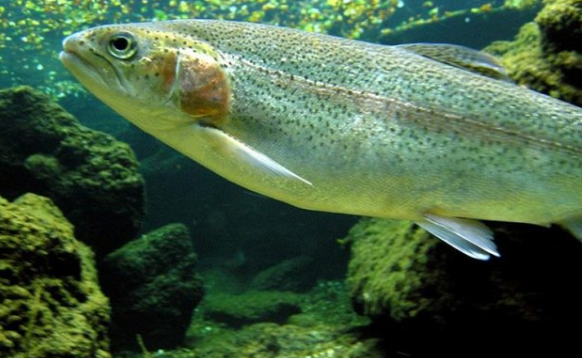
Source: Roslin Institude
A cost-effective method for breeding rainbow trout to be resistant to a common bacterial infection has been developed by scientists from the Roslin Institute, in collaboration with the Natural Resources Institute of Finland. Researchers applied a novel analysis strategy, based on a relatively small number of variations within DNA, to rainbow trout. This enabled the team to identify fish that are naturally resistant to the disease and guide breeding for healthier animals.
The team found that their approach using a relatively low number of variations, or genome markers, was as reliable as outcomes based on large sets of markers. Sidestepping the financial burden of obtaining large sets of markers allows breeders to adopt a cost-effective, yet equally feasible, route to leverage genomic selection for breeding, making it more accessible to small fish producers.
This approach could be extended to target other desirable traits, such as growth rate, resistance to other diseases or tolerance to environmental changes, presenting an avenue for comprehensive, accelerated trait improvement in farmed fish species, the team suggests.
Accessible genomics
Researchers focused their study on resistance to a bacteria that causes columnaris, a disease affecting farmed rainbow trout. Their findings could help alleviate growing concern over the infection, as rising environmental temperatures linked to global warming provide a favorable environment for its proliferation.
Findings from the study suggest that analyzing 300 genetic variants combined with computer modeling was as effective as using up to 28,000 genetic variants, with significantly lower costs.
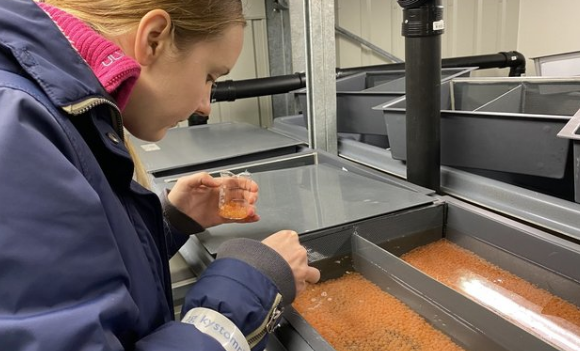
“Analysing smaller sets of markers could be cheaper than applying more complex genomic selection methods, and more effective than traditional selective breeding without the use of technology. The cost-effective method we tested presents an avenue for comprehensive, accelerated trait improvement in aquaculture, said Clemence Fraslin, Postdoctoral Research Fellow, Roslin Institute.
The research was carried out in collaboration with commercial partner Benchmark Genetics and funded by the European Union's Horizon 2020 research and innovation program.
Cre: Hatchery Feed Management


Ca Mau, Can Tho and An Giang Play a Leading Role in Vietnam’s Shrimp Industry
Protecting rice-shrimp yields against environmental fluctuations caused by prolonged rain
AQUA MINA Turbo Blower: Quiet, Energy-Efficient Air Supply for Aquaculture Ponds
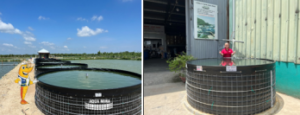
AQUA MINA has accompanied the experimental tank system project at Can Tho University from its very early days
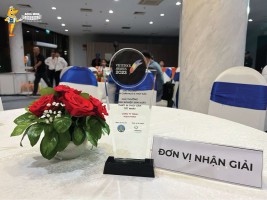
AQUA MINA AMONG 20 OUTSTANDING PRESENTATIONS AT THE WORKSHOP ON APPLYING SCIENCE AND TECHNOLOGY TO IMPROVE THE QUALITY OF VIETNAM’S AQUATIC PRODUCTS
Vietnam’s Shrimp Farming Industry Enters the High-Tech Race
The U.S. market relies heavily on imported shrimp to bridge its domestic supply gap
The 2028 supply crisis: The shrimp industry is projected to face a 400,000-ton material shortage
High profits from high-tech shrimp farming come with persistent risks
Intensifying El Niño Effect: Climate Change Risks Threaten the Global Shrimp Supply Chain
Evaluating Gaps in the Circular Economy Value Chain of the Shrimp Industry
A Comprehensive Overview of the Vietnamese Shrimp Industry


.jpg)