

Understanding Shrimp Nursery and Its Benefits in Aquaculture
Nursery plays a crucial role in helping shrimp adapt to pond environments. Vannamei shrimp, in particular, naturally inhabit brackish waters. Moreover, undenurtured shrimp larvae often struggle to adapt and have higher mortality rates.
What is Shrimp Nursery?
Shrimp nursery involves the process of growing shrimp larvae into post larvae. The aim is to increase the survival rate of post larvae released into ponds. Additionally, vannamei shrimp nursery helps farmers obtain uniformly sized and high-quality shrimp.
Successful Shrimp Nursery Techniques
1. Prepare the Nursery Environment and Fill with Water
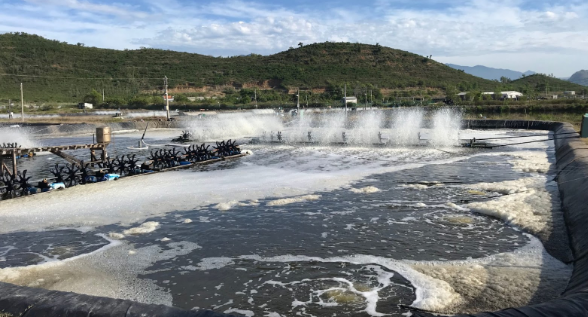
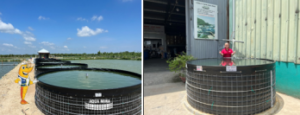
The first step involves preparing the nursery environment and filling it with water. An ideal nursery pond is rectangular and made of concrete. Ensure rounded corners to prevent debris buildup and facilitate water circulation. Before use, the pond should be cleaned, dried, and equipped with aeration systems and blowers for oxygenation.
For water filling, seawater is recommended. Ensure the pond is dry and the installation system is in place before filling. Water is added through an inlet pipe equipped with filters to remove any remaining impurities. Once filled with seawater, add sodium or EDTA (Ethylene Diamine Tetraacetic Acid) at 10 ppm for larval maintenance.
2. Release the Post Larvae
During the nursery phase, the shrimp larvae placed in the pond are nauplii. Before placement, nauplii need to acclimate for 15 minutes to adjust to the pond water temperature.
3. Feeding
At this stage, it’s crucial to pay attention to the type, dosage, and frequency of feeding. Larvae can be fed natural or artificial feeds, but nauplii should preferably be fed natural feeds as they still have their yolk sacs as food reserves. Artificial feeds are only necessary when larvae develop into zoea within 40 hours, requiring fine particles that larvae can consume. Phytoplankton should only be provided up to the mysis stage, then replaced with artemia at the post larvae stage. Feeding doses should be adjusted according to larval stages to maintain health and growth.
4. Proper Water Management
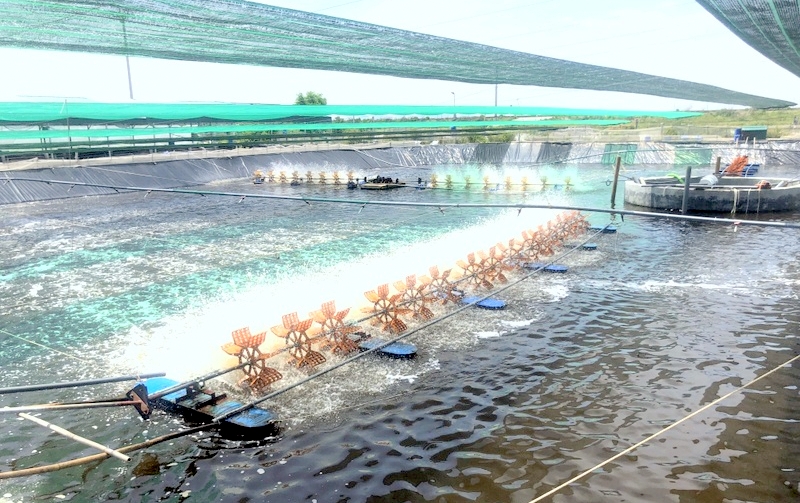
At this stage, regular water exchange in the pond is crucial. Without exchange, leftover feeds and feces can threaten larval health. Water exchange aims to maintain stable water parameters such as temperature, salinity, and pH, preventing stress in larvae due to sudden changes in water conditions.
5. Harvesting Post Larvae Carefully
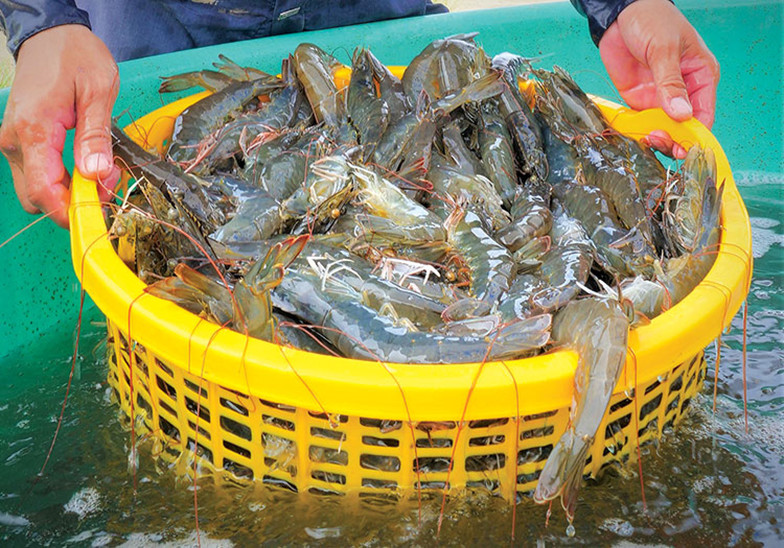
Harvesting post larvae is done after passing stress tests, salinity tests, and being declared free from diseases and luminescent bacteria. The harvesting process begins by draining 40% of the pond water, installing nets, and opening water channels. Post larvae are caught using harvesting nets, then transferred to buckets filled with water at 28 degrees Celsius. After this process, post larvae are ready for cultivation in ponds by the farmers.
Cre: delosaqua.com
Contact AQUA MINA for consultation and supply of aquaculture round tanks and aquaculture equipment for high-tech shrimp farming.
- Address: 685 National Highway 1A, Binh Hung Hoa Ward, Binh Tan District, Ho Chi Minh City
- Phone: 1800 6071 (Toll-free hotline)
- Email: sales@aquamina.com.vn or oversea@aquamina.com.vn
Aqua Mina's distributor in Japan: REX INDUSTRIES CO., LTD
- Address: 1-9-3 Hishiya-Higashi, Higashi-Osaka 578-0948 JAPAN
- Email: kimakubo@rexind.co.jp
- Phone: +81-(0)72-961-9893
- Website: http://www.rexind.co.jp/e/
WE WORK FOR YOUR SUCCESS!
Ngày đăng : 24/01/2025
2427 View


Other Articles
Ca Mau, Can Tho and An Giang Play a Leading Role in Vietnam’s Shrimp Industry
Protecting rice-shrimp yields against environmental fluctuations caused by prolonged rain
AQUA MINA Turbo Blower: Quiet, Energy-Efficient Air Supply for Aquaculture Ponds
AQUA MINA has accompanied the experimental tank system project at Can Tho University from its very early days
AQUA MINA AMONG 20 OUTSTANDING PRESENTATIONS AT THE WORKSHOP ON APPLYING SCIENCE AND TECHNOLOGY TO IMPROVE THE QUALITY OF VIETNAM’S AQUATIC PRODUCTS
Vietnam’s Shrimp Farming Industry Enters the High-Tech Race
The U.S. market relies heavily on imported shrimp to bridge its domestic supply gap
The 2028 supply crisis: The shrimp industry is projected to face a 400,000-ton material shortage
High profits from high-tech shrimp farming come with persistent risks
Intensifying El Niño Effect: Climate Change Risks Threaten the Global Shrimp Supply Chain
Evaluating Gaps in the Circular Economy Value Chain of the Shrimp Industry
A Comprehensive Overview of the Vietnamese Shrimp Industry


.jpg)