


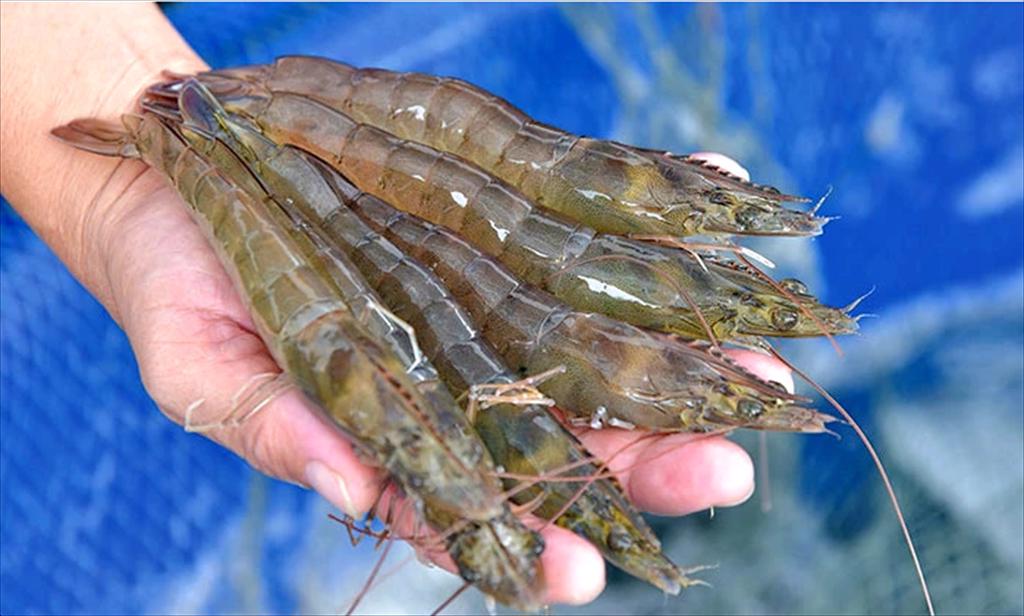
Whiteleg shrimp prices have dropped sharply
Currently, whiteleg shrimp sizing 20–100 pcs/kg fluctuates around 100,000–192,000 VND/kg (depending on size), which is about 50,000–60,000 VND/kg lower than the same period last year.
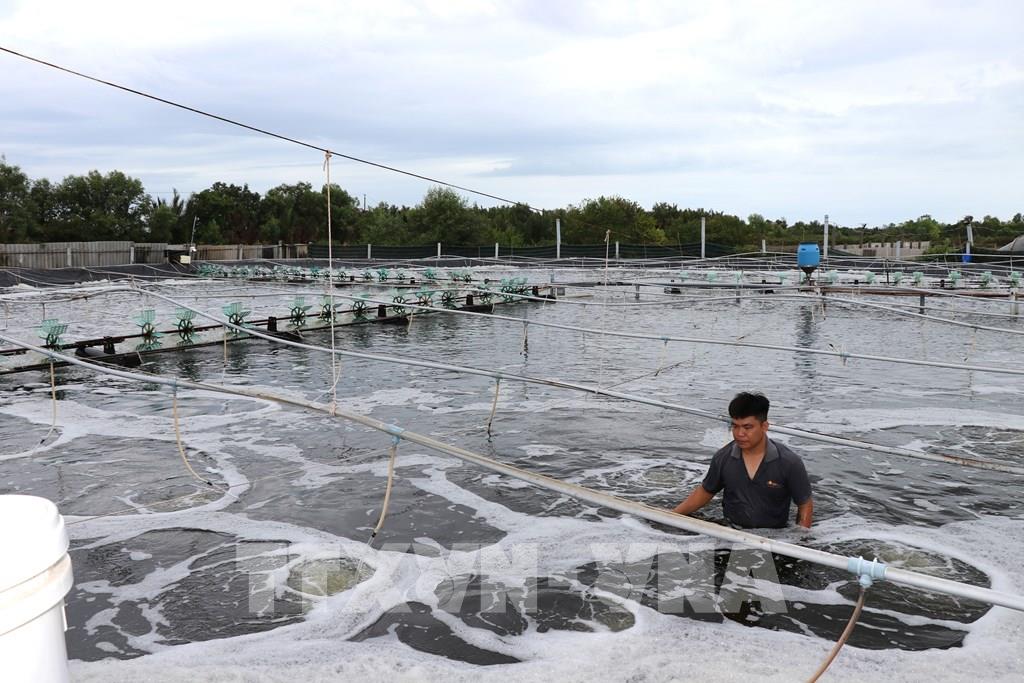
Mr. Ngo Viet Thang, a high-tech shrimp farmer in Long Thanh Commune, stated that the sharp decline in raw whiteleg shrimp prices recently has significantly affected farmers' profits. About 3 months ago, size 30 pcs/kg shrimp was purchased by traders at over 200,000 VND/kg, but now it has dropped to only around 120,000–140,000 VND/kg.
However, thanks to applying an intensive high-tech farming model, strictly managing environmental factors, effectively controlling diseases, and cutting production costs, his family has still maintained a profit compared to other farming methods.
According to Mr. Thang, in a context where input material costs remain high and the consumer market is volatile, farmers need to carefully calculate the stocking time, comply with technical processes, and apply technology to mitigate risks and enhance production efficiency.
The Deputy Director of the Vinh Long Province Department of Agriculture and Environment, Mr. Pham Minh Truyen, explained that the drop in raw shrimp prices is a general market trend due to the slow recovery of import demand in several major markets. Meanwhile, supply from key shrimp-producing countries like Ecuador and India has increased with significant cost advantages.
Additionally, export markets are increasingly tightening regulations on traceability, food safety, and product quality, posing numerous challenges for the domestic shrimp industry.
According to Mr. Pham Minh Truyen, in the face of market fluctuations, the province's agricultural sector advises farmers to proactively monitor price developments, consider appropriate stocking times, apply biosecure farming processes, and increase the integration of high technology and digital technology to reduce production costs, improve productivity, and enhance product quality.
The province's agricultural sector continues to promote the restructuring of the aquaculture industry toward raising added value and sustainable development; strengthening support for farmers in environmental management, disease monitoring, developing high-quality breeding stocks, and product traceability to meet export market requirements.
By the end of May, the brackish water shrimp farming area in Vinh Long Province reached 63,153 hectares, up 2.2% over the same period last year, with harvest output reaching 111,475 tons, up 2.9%. Whiteleg shrimp in particular continues to play a core role with a farming area of 17,686 hectares, up 6% over the same period, and a harvest output of 106,898 tons, up 2.8%.
Notably, the high-tech whiteleg shrimp farming area reached 5,825 hectares, with an output of 59,498 tons, accounting for more than 55% of the province's total harvested whiteleg shrimp output. This demonstrates a strong shift toward intensive, high-tech models that deliver efficiency by improving productivity, quality, and strong resilience against market fluctuations.
Source: bnews
AQUA MINA CO., LTD

WE WORK FOR THE SUCCESS


Ca Mau, Can Tho and An Giang Play a Leading Role in Vietnam’s Shrimp Industry
Protecting rice-shrimp yields against environmental fluctuations caused by prolonged rain
AQUA MINA Turbo Blower: Quiet, Energy-Efficient Air Supply for Aquaculture Ponds
AQUA MINA has accompanied the experimental tank system project at Can Tho University from its very early days
AQUA MINA AMONG 20 OUTSTANDING PRESENTATIONS AT THE WORKSHOP ON APPLYING SCIENCE AND TECHNOLOGY TO IMPROVE THE QUALITY OF VIETNAM’S AQUATIC PRODUCTS
Vietnam’s Shrimp Farming Industry Enters the High-Tech Race
The U.S. market relies heavily on imported shrimp to bridge its domestic supply gap
The 2028 supply crisis: The shrimp industry is projected to face a 400,000-ton material shortage
High profits from high-tech shrimp farming come with persistent risks
Intensifying El Niño Effect: Climate Change Risks Threaten the Global Shrimp Supply Chain
Evaluating Gaps in the Circular Economy Value Chain of the Shrimp Industry
A Comprehensive Overview of the Vietnamese Shrimp Industry


.jpg)