

Sediment Settling Techniques for Aquaculture Ponds
What is Sediment and Why Is Settling Necessary?
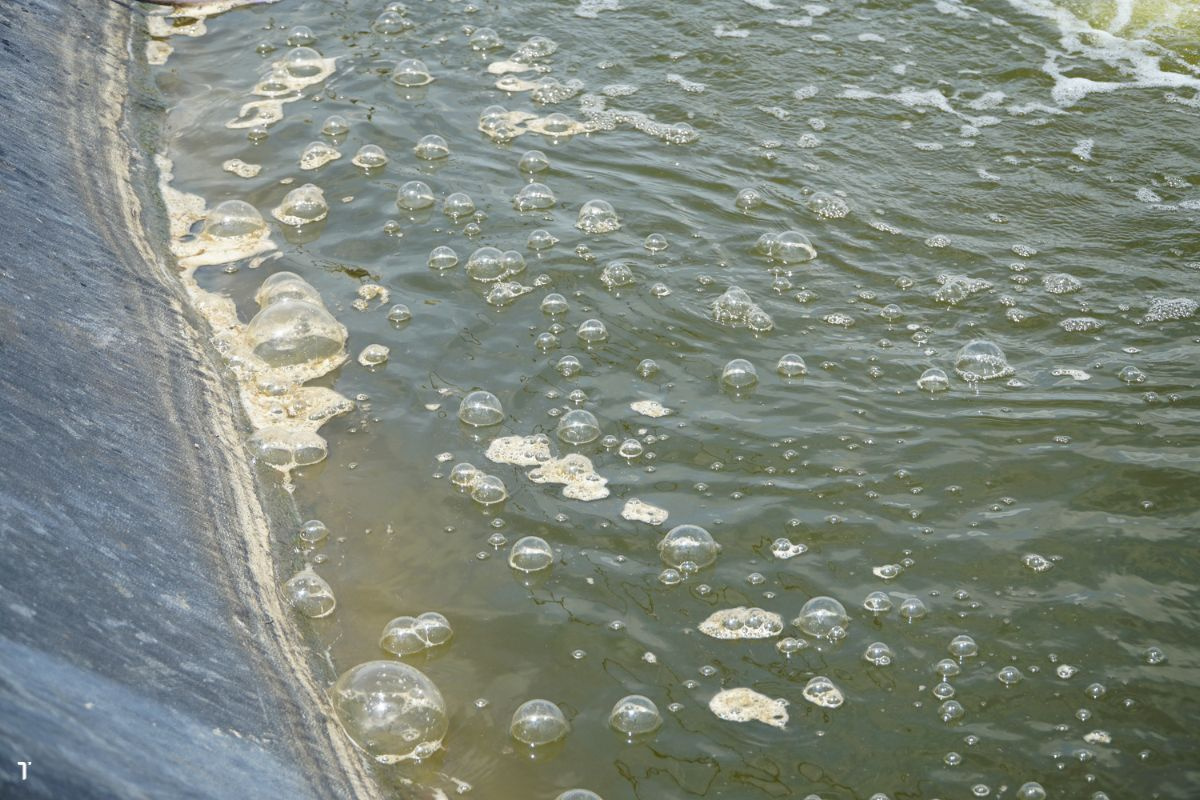
Sediment refers to a mixture of small solid particles such as clay, dust, and fine silt carried by water currents. In water sourced from rivers, canals, or reservoirs—especially during the rainy season or flood discharge—sediment levels can be extremely high.
While sediment brings certain benefits, such as providing minerals and improving pond bottom texture, excessive sediment in aquaculture ponds can cause several problems:
- Increases water turbidity, reducing light penetration and hindering photosynthesis of algae and plankton.
- Makes it difficult to observe fish or shrimp behavior and detect disease.
- Promotes the buildup of waste and disease-causing pathogens at the pond bottom.
- Leads to rapid sediment accumulation, reducing pond volume.
- Creates an anaerobic environment conducive to harmful bacteria.
Therefore, settling sediment before introducing water into ponds is a critical step in stabilizing the pond environment and enhancing farming efficiency.
Common Sediment Settling Methods
1. Settling Tanks or Ponds (Most Effective Method)
How it works:
- Construct a separate settling pond or tank upstream of the main culture pond, ideally 10–30% of the main pond’s area.
- Raw water from canals or rivers is directed into the settling pond first.
- Allow water to settle for 1–2 days to give suspended solids time to sink.
- Regularly remove the bottom sludge to maintain effectiveness.
Advantages:
- Highly effective at removing suspended solids and some pathogens.
- Significantly reduces turbidity and organic load in water.
Notes:
- Settling ponds should be fenced or covered to prevent intrusion from wild animals.
- Always test pH, alkalinity, and salinity before transferring water to culture ponds.
2. Using Coagulants and Flocculants
Some chemicals can bind fine particles into larger clumps, allowing them to settle faster.
Commonly used substances:
- Alum (Al₂(SO₄)₃)
- PAC (Poly Aluminum Chloride)
How to apply:
- Dilute the flocculant in water and evenly distribute it across the surface of the settling tank.
- Stir gently to spread evenly, then let the water sit still for 6–12 hours.
Advantages:
- Fast settling, ideal for highly turbid or large water volumes.
Disadvantages:
- Involves additional chemical costs.
- Incorrect dosage may be harmful to aquatic animals.
Important Notes When Settling Sediment
- Allow adequate time: Don’t rush the process. Let fine particles fully settle to the bottom.
- Water quality check: Even after settling, test key parameters such as DO, pH, alkalinity, and salinity to ensure they are within safe ranges.
- Cleaning the settling pond: Regularly dredge the sludge to prevent long-term pollution buildup.
- Consider bio-filtration: Use sand, gravel, or activated carbon as secondary filtration to enhance water quality after settling.
Sediment removal is a crucial step in aquaculture pond preparation. Depending on your conditions, farmers can choose between settling ponds, chemical flocculants, or combine these with aquatic plants for improved water treatment.
Effective sediment settling not only improves water clarity and quality but also reduces disease risk, enhances productivity, and supports long-term sustainability in aquaculture.
Source: tepbac.com
Aqua Mina's distributor in Japan: REX INDUSTRIES CO., LTD
- Address: 1-9-3 Hishiya-Higashi, Higashi-Osaka 578-0948 JAPAN
- Email: kimakubo@rexind.co.jp
- Phone: +81-(0)72-961-9893
- Website: http://www.rexind.co.jp/e/
WE WORK FOR YOUR SUCCESS!
Ngày đăng : 04/07/2025
2595 View


Other Articles
Ca Mau, Can Tho and An Giang Play a Leading Role in Vietnam’s Shrimp Industry
Protecting rice-shrimp yields against environmental fluctuations caused by prolonged rain
AQUA MINA Turbo Blower: Quiet, Energy-Efficient Air Supply for Aquaculture Ponds
AQUA MINA has accompanied the experimental tank system project at Can Tho University from its very early days
AQUA MINA AMONG 20 OUTSTANDING PRESENTATIONS AT THE WORKSHOP ON APPLYING SCIENCE AND TECHNOLOGY TO IMPROVE THE QUALITY OF VIETNAM’S AQUATIC PRODUCTS
Vietnam’s Shrimp Farming Industry Enters the High-Tech Race
The U.S. market relies heavily on imported shrimp to bridge its domestic supply gap
The 2028 supply crisis: The shrimp industry is projected to face a 400,000-ton material shortage
High profits from high-tech shrimp farming come with persistent risks
Intensifying El Niño Effect: Climate Change Risks Threaten the Global Shrimp Supply Chain
Evaluating Gaps in the Circular Economy Value Chain of the Shrimp Industry
A Comprehensive Overview of the Vietnamese Shrimp Industry


.jpg)