


How to Make Shrimp Molt Faster
1. Nutrients
Nutrition is the top factor in making shrimp molt quickly; proper nutrition promotes growth and physical development. If shrimp lack nutrients, they grow slowly, their shell doesn’t fully crack, and molting becomes difficult.
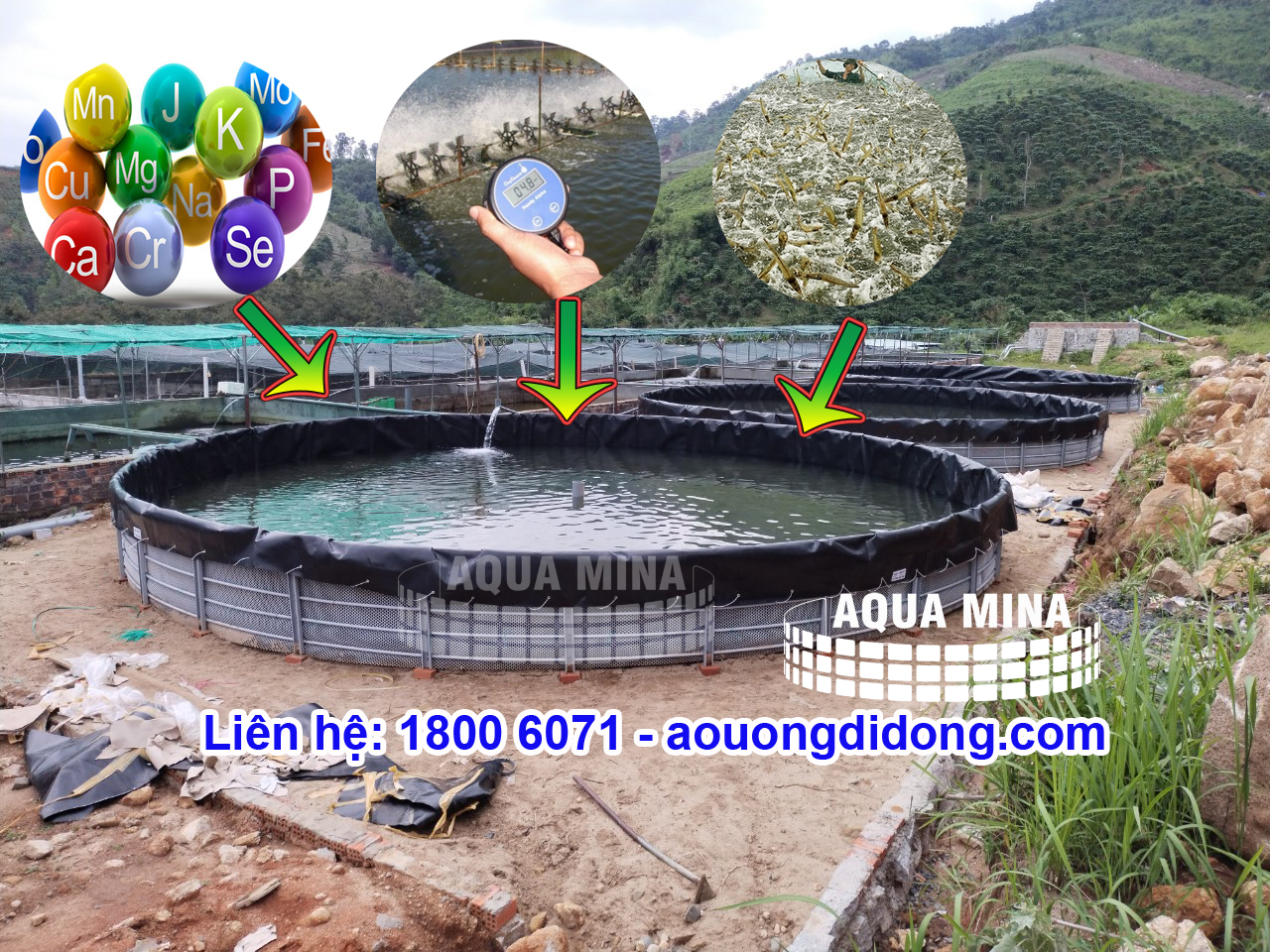
Farmers need to ensure that shrimp are provided with adequate nutrition, including natural food, commercial pellet feed, and homemade food, with a protein content of 32-45%.
Moreover, farmers need to know how to adjust the feed quantity for shrimp at different stages of development to maximize efficiency. For more details, see Feeding Shrimp at Each Stage.
2. Minerals
Minerals are essential for aquaculture, especially for shrimp, as their shell needs the support of minerals like calcium and magnesium to remain strong and protect their bodies.
In intensive industrial shrimp farming, when mass molting occurs, the amount of minerals in the water environment decreases drastically. If minerals are insufficient, the shell takes longer to harden, making shrimp more vulnerable to diseases.
To help shrimp molt faster, farmers should also know how to supplement minerals and recognize if shrimp are mineral-deficient. Please refer to the article Recognizing Mineral Deficiency in Shrimp.
3. Environment
- Dissolved Oxygen Levels: Farmers must maintain dissolved oxygen levels between 4-6 mg/L during the shrimp molting stage, especially at night or on cloudy days. Increased aeration and proper bottom oxygenation systems are necessary.
- Salinity: Ideal salinity for shrimp development is between 10-25‰. Salinity should not be too high or too low.
If the salinity exceeds 25‰, the shrimp’s shell becomes thick and hard, making molting difficult. Conversely, if salinity is low, the low mineral content affects shell development. Therefore, salinity should remain stable.
- pH: The optimal pH for shrimp growth is between 7.5 – 8.0, and during the molting stage, it should be maintained between 7.0 – 8.5.
High pH levels increase ammonia (NH3) in the pond, harming the shrimp's environment. Low pH increases hydrogen sulfide (H2S), which can kill shrimp.
- Alkalinity: Alkalinity measures the water's ability to neutralize acids and reflects the total amount of base ions like bicarbonate and hydroxide.
Whiteleg shrimp prefer alkalinity between 120-180 mg/L.
Tiger shrimp prefer alkalinity between 80-120 mg/L.
4. Preventing Disease-Causing Bacteria
Disease Prevention: Regularly treat the water environment to limit the development of harmful bacteria, especially during the shrimp molting stage, as this is when bacteria can easily invade shrimp.
Use biological products to treat water, create natural nutrient sources, and monitor shrimp daily.
Through this shared information, farmers can understand how to speed up shrimp molting uniformly and help shrimp grow in size and weight, reaching larger sizes more quickly.
Ngày đăng : 17/10/2024
2863 View


Other Articles
Ca Mau, Can Tho and An Giang Play a Leading Role in Vietnam’s Shrimp Industry
Protecting rice-shrimp yields against environmental fluctuations caused by prolonged rain
AQUA MINA Turbo Blower: Quiet, Energy-Efficient Air Supply for Aquaculture Ponds
AQUA MINA has accompanied the experimental tank system project at Can Tho University from its very early days
AQUA MINA AMONG 20 OUTSTANDING PRESENTATIONS AT THE WORKSHOP ON APPLYING SCIENCE AND TECHNOLOGY TO IMPROVE THE QUALITY OF VIETNAM’S AQUATIC PRODUCTS
Vietnam’s Shrimp Farming Industry Enters the High-Tech Race
The U.S. market relies heavily on imported shrimp to bridge its domestic supply gap
The 2028 supply crisis: The shrimp industry is projected to face a 400,000-ton material shortage
High profits from high-tech shrimp farming come with persistent risks
Intensifying El Niño Effect: Climate Change Risks Threaten the Global Shrimp Supply Chain
Evaluating Gaps in the Circular Economy Value Chain of the Shrimp Industry
A Comprehensive Overview of the Vietnamese Shrimp Industry


.jpg)