


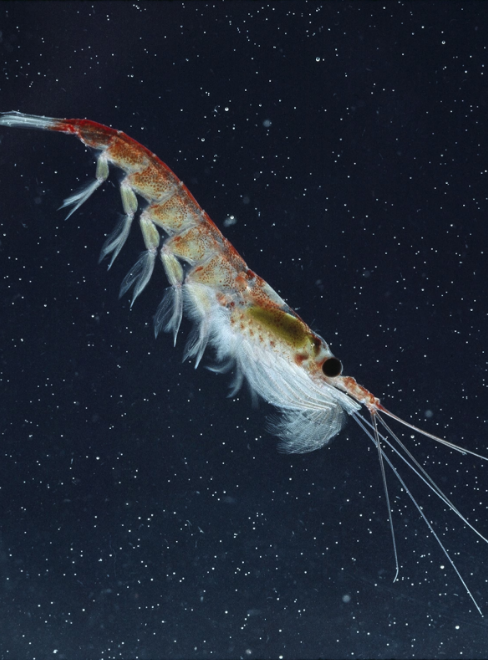
Pacific white shrimp thrive with Antarctic krill in the diet
In shrimp farming - krill is proven to:
- Improve stress resistance and yield without increasing production costs
- Increase attractability of feed and thereby give better growth
- Improve sustainability of feed
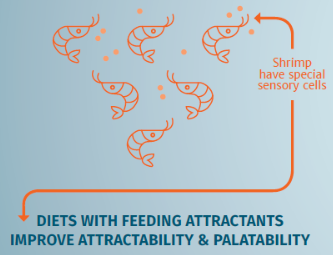
Krill attractability is triggering sensory cells of shrimp
Water-soluble, low molecular weight compounds, free amino acids, nucleotides, nucleosides, quaternary ammonium compounds, phospholipids, biogenic amines and monosaccharides have all been identified as feeding effectors that improve attractability and palatability of diets.
Increased attractability of diets reduces the feeding response time and thereby limits nutrient leaching and feed waste. This not only helps with nutrient-overloaded pond issues, but also lowers the energy a shrimp has to spend to find the feed and cost of feed that can make up to 50% of the total farming costs. The diet should therefore not only be nutritionally suitable, but also stimulate the special sensory cells of shrimp. Krill has proven to be a highly effective dietary supplement that provides many nutrients (omega-3 fatty acids, phospholipids, cholesterol and astaxanthin) and is able to entice the shrimp to eat and thus ensures steady growth.
Increased growth rate by dietary krill meal inclusion improves production efficiency by reducing a farm’s operational costs and causes shrimp to eat feeds that otherwise would not be attractive (consumed). Earlier harvests and a greater crop turnover increase annual yields and reduce the risk for disease occurrence.
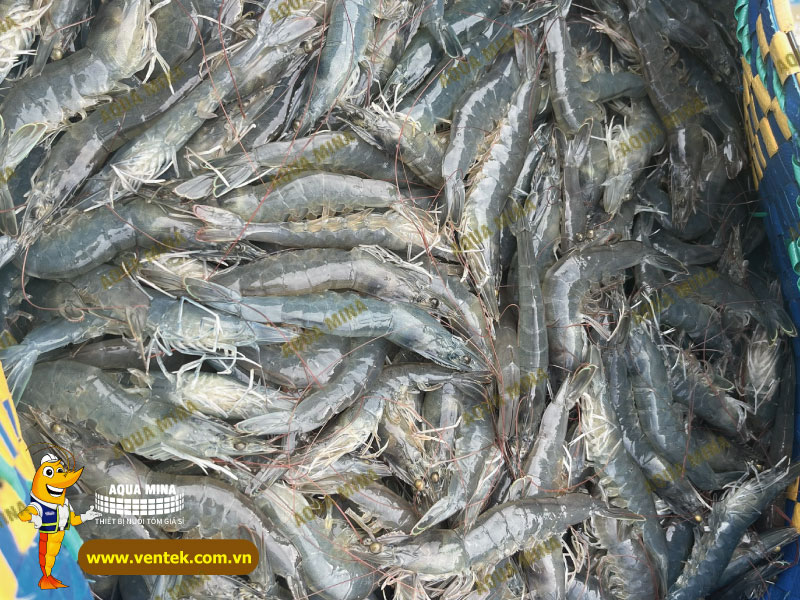
Reducing shrimp feed cost
Feed raw materials fluctuate in price, quality and availability, but by adding krill to the diet, farmers can reduce or exclude some of these ingredients. Fish meal can be significantly reduced, fish oil at least halved and soybean lecithin and cholesterol excluded from feed formulation.
Krill will also enhance the feed intake in fishmeal-reduced diets: reducing fishmeal in shrimp formulas requires the use of effective feeding effectors, such as krill meal. This allows for increased feed intake and reduces leaching of water-soluble nutrients from the feeds. This can lead to significant cost savings in shrimp feed formulations.
Cre: QRILL Aqua
Ngày đăng : 08/01/2024
1972 View


Other Articles
Ca Mau, Can Tho and An Giang Play a Leading Role in Vietnam’s Shrimp Industry
Protecting rice-shrimp yields against environmental fluctuations caused by prolonged rain
AQUA MINA Turbo Blower: Quiet, Energy-Efficient Air Supply for Aquaculture Ponds
AQUA MINA has accompanied the experimental tank system project at Can Tho University from its very early days
AQUA MINA AMONG 20 OUTSTANDING PRESENTATIONS AT THE WORKSHOP ON APPLYING SCIENCE AND TECHNOLOGY TO IMPROVE THE QUALITY OF VIETNAM’S AQUATIC PRODUCTS
Vietnam’s Shrimp Farming Industry Enters the High-Tech Race
The U.S. market relies heavily on imported shrimp to bridge its domestic supply gap
The 2028 supply crisis: The shrimp industry is projected to face a 400,000-ton material shortage
High profits from high-tech shrimp farming come with persistent risks
Intensifying El Niño Effect: Climate Change Risks Threaten the Global Shrimp Supply Chain
Evaluating Gaps in the Circular Economy Value Chain of the Shrimp Industry
A Comprehensive Overview of the Vietnamese Shrimp Industry


.jpg)