

How Many Times Can Shrimp be Harvested in a Year?
Factors Affecting Shrimp Harvest
1. Shrimp Cultivation Methods
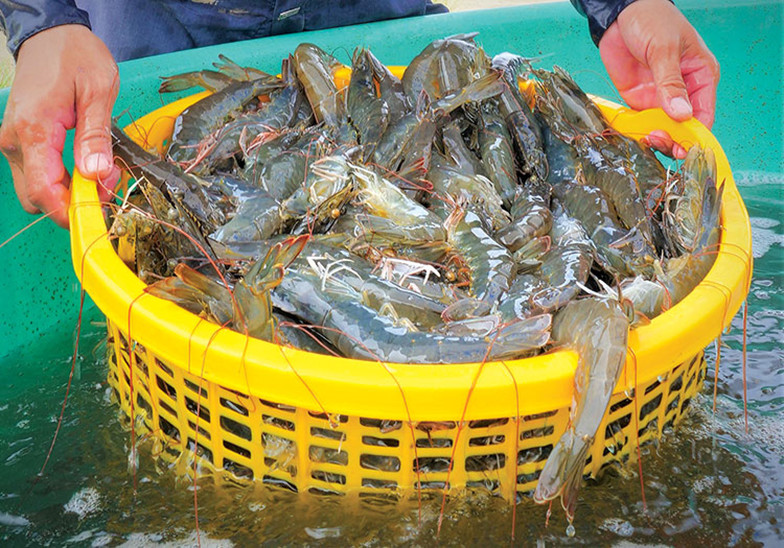
There are several common shrimp cultivation methods, including traditional (extensive) shrimp farming, semi-intensive, intensive, and super-intensive. Each cultivation method is supported by technology that allows for harvesting several times a year.
In traditional shrimp farming, which covers large areas with low shrimp populations, harvesting is generally done once or twice a year. This depends on the natural growth cycle of shrimp and environmental conditions.
Sei-intensive shrimp farming involves better technology than traditional farming, where shrimp are provided with additional feed and environmental conditions are more controlled. With this type of cultivation, harvesting can be done three to four times a year.
Next, in intensive farming systems involving more advanced and controlled pond technology and management, shrimp can be harvested four to six times a year. This includes partial harvesting as well.
Lastly, super-intensive shrimp farming, which utilizes high technology and limited space to cultivate large quantities of shrimp, can be harvested more frequently, typically every two to three months. This also includes partial harvesting when shrimp reach a certain age.
2. Cultivation Management
Good pond management practices are crucial in shrimp farming as they directly impact productivity and the health of the shrimp population. Proper feeding is one of the key aspects of this management, as adequate nutrition is essential for shrimp growth and development. Additionally, maintaining water quality is crucial because shrimp are highly susceptible to extreme changes in water quality. Clean water with appropriate parameters such as temperature, salinity, and dissolved oxygen can enhance the environmental conditions for optimal shrimp growth. Disease prevention is also an integral part of pond management, where efforts such as shrimp health monitoring, the use of probiotics, and sanitation practices can help reduce the risk of diseases and shrimp mortality.
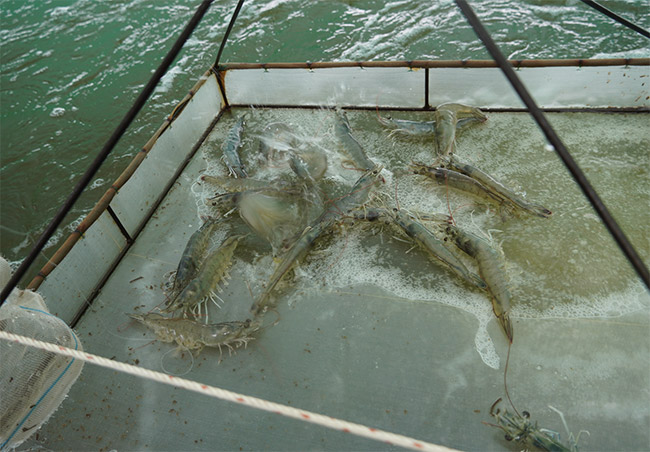
Good management not only affects shrimp health but also impacts harvesting frequency. By reducing the risk of shrimp diseases and mortality, farmers can ensure that the shrimp population remains healthy and productive, allowing for more frequent harvests. Furthermore, effective management also allows for the optimization of pond resources and feed utilization, which in turn can improve cultivation efficiency and produce shrimp at lower production costs.
3. Market Demand
Market demand levels are also important factors influencing farmers’ decisions in determining their shrimp harvesting schedules. When market demand increases and prices remain stable, farmers tend to respond by accelerating their harvesting schedules to meet the high demand.
This is a common strategy to optimize the profitability of shrimp farming businesses, where farmers take advantage of favorable market opportunities by increasing harvest frequencies to meet consumer demand. By carefully considering market dynamics, farmers can schedule harvests appropriately to optimize income and ensure the sustainability of their businesses.
Cre: delosaqua.com
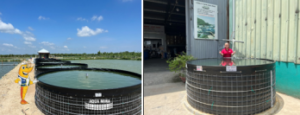
Contact AQUA MINA for consultation and supply of aquaculture round tanks and aquaculture equipment for high-tech shrimp farming.
- Address: 685 National Highway 1A, Binh Hung Hoa Ward, Binh Tan District, Ho Chi Minh City
- Phone: 1800 6071 (Toll-free hotline)
- Email: sales@aquamina.com.vn or oversea@aquamina.com.vn
Aqua Mina's distributor in Japan:
REX INDUSTRIES CO., LTD
- Address: 1-9-3 Hishiya-Higashi, Higashi-Osaka 578-0948 JAPAN
- Email: kimakubo@rexind.co.jp
- Phone: +81-(0)72-961-9893
- Website: http://www.rexind.co.jp/e/
WE WORK FOR YOUR SUCCESS!
Ngày đăng : 30/01/2025
3250 View


Other Articles
Ca Mau, Can Tho and An Giang Play a Leading Role in Vietnam’s Shrimp Industry
Protecting rice-shrimp yields against environmental fluctuations caused by prolonged rain
AQUA MINA Turbo Blower: Quiet, Energy-Efficient Air Supply for Aquaculture Ponds
AQUA MINA has accompanied the experimental tank system project at Can Tho University from its very early days
AQUA MINA AMONG 20 OUTSTANDING PRESENTATIONS AT THE WORKSHOP ON APPLYING SCIENCE AND TECHNOLOGY TO IMPROVE THE QUALITY OF VIETNAM’S AQUATIC PRODUCTS
Vietnam’s Shrimp Farming Industry Enters the High-Tech Race
The U.S. market relies heavily on imported shrimp to bridge its domestic supply gap
The 2028 supply crisis: The shrimp industry is projected to face a 400,000-ton material shortage
High profits from high-tech shrimp farming come with persistent risks
Intensifying El Niño Effect: Climate Change Risks Threaten the Global Shrimp Supply Chain
Evaluating Gaps in the Circular Economy Value Chain of the Shrimp Industry
A Comprehensive Overview of the Vietnamese Shrimp Industry



.jpg)