

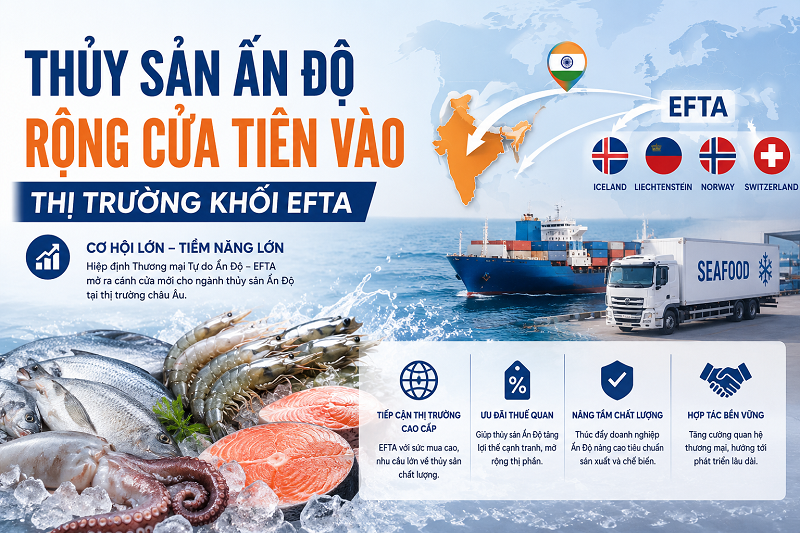
Doors open wide for Indian seafood to enter the EFTA market.
TEPA marks the first-ever historic trade agreement between India and the four member states of the European Free Trade Association (EFTA)—Iceland, Liechtenstein, Norway, and Switzerland. With a combined GDP of approximately USD 1.79 trillion, the bloc is expected to invest USD 100 billion in India while creating around one million direct jobs. The agreement is also set to accelerate technology transfer, foster joint ventures, and enable India's seafood industry—particularly in coastal regions—to expand its presence in international export markets.
The seafood sector is expected to be one of the biggest beneficiaries of TEPA's tariff reduction measures. Under the agreement, Iceland will eliminate its 55% import tariff on aquaculture and animal feed products; Norway will remove its 13.16% duty on shrimp and fish feed; while Switzerland will reduce import tariffs on fish fats and oils (excluding fish liver oil) from 18.05% to zero.
The event was attended by representatives from the Ministry of Commerce, Invest India, the Directorate General of Foreign Trade (DGFT), the Export Inspection Council (EIC), the Federation of Indian Export Organisations (FIEO), along with numerous seafood companies seeking to expand into EFTA markets.
During the event, participants discussed investment opportunities, export promotion policies, as well as the regulatory framework and quality standards required by EFTA countries. Throughout the open discussion sessions, government agencies and business representatives explored strategies to strengthen the competitiveness of Indian seafood products and expand their market share across Europe.
AQUA MINA CO., LTD
WE WORK FOR THE SUCCESS


Ca Mau, Can Tho and An Giang Play a Leading Role in Vietnam’s Shrimp Industry
Protecting rice-shrimp yields against environmental fluctuations caused by prolonged rain
AQUA MINA Turbo Blower: Quiet, Energy-Efficient Air Supply for Aquaculture Ponds
AQUA MINA has accompanied the experimental tank system project at Can Tho University from its very early days
AQUA MINA AMONG 20 OUTSTANDING PRESENTATIONS AT THE WORKSHOP ON APPLYING SCIENCE AND TECHNOLOGY TO IMPROVE THE QUALITY OF VIETNAM’S AQUATIC PRODUCTS
Vietnam’s Shrimp Farming Industry Enters the High-Tech Race
The U.S. market relies heavily on imported shrimp to bridge its domestic supply gap
The 2028 supply crisis: The shrimp industry is projected to face a 400,000-ton material shortage
High profits from high-tech shrimp farming come with persistent risks
Intensifying El Niño Effect: Climate Change Risks Threaten the Global Shrimp Supply Chain
Evaluating Gaps in the Circular Economy Value Chain of the Shrimp Industry
A Comprehensive Overview of the Vietnamese Shrimp Industry



.jpg)