

Adverse Weather Forces Shrimp Farmers to Suspend Stocking
Caution Urged for New Crops
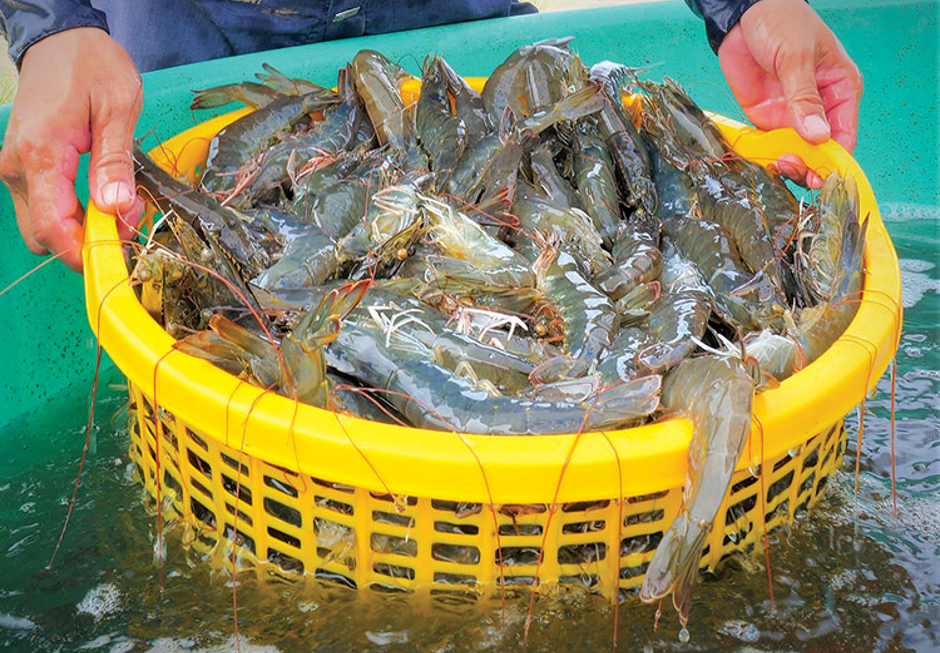
Mr. Huynh Van Thuyet, Director of Cho Ben Cooperative (Long Dat District), reported that the cooperative completed its shrimp harvest about a month ago but has yet to stock for the new crop due to extreme weather and unseasonal rains affecting water quality. “With unstable conditions, shrimp are more susceptible to disease and mortality. We are taking this time to thoroughly clean the ponds and will only resume stocking when the weather becomes more favorable,” Mr. Thuyet explained.
Previously, Mr. Pham Kim Cuong’s large-scale shrimp farms — Manh Cuong 1 and Manh Cuong 2, located near Cho Ben Cooperative — lost an entire crop of one million postlarvae due to adverse weather, which led to a severe outbreak of EHP (Enterocytozoon hepatopenaei). The loss amounted to billions of VND. “Even such an experienced farm suffered losses, so we must exercise great caution in starting the next crop,” Mr. Thuyet added.
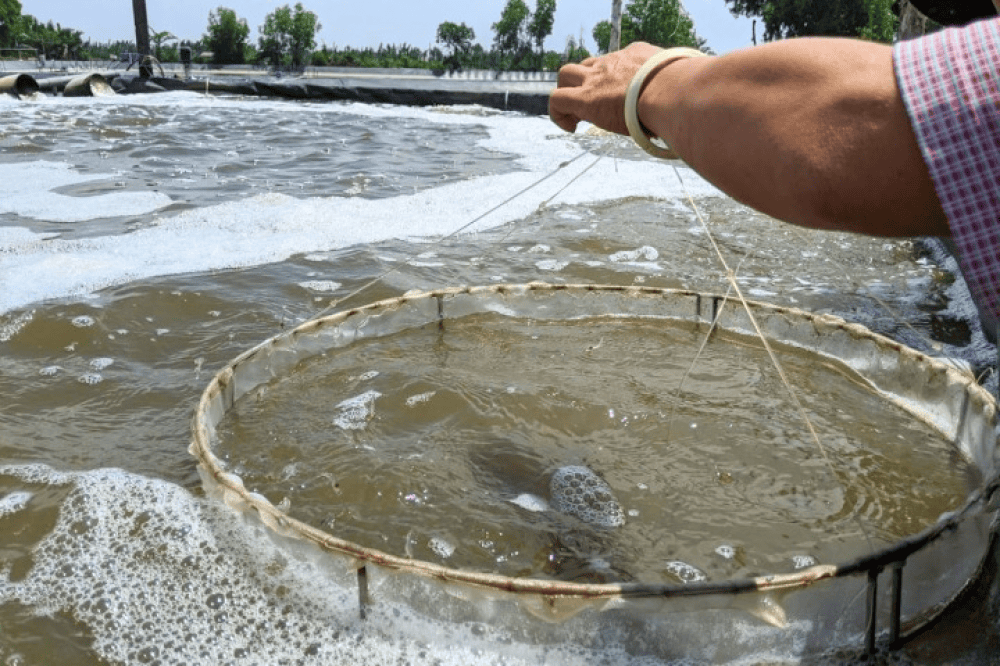
Similarly, Quyet Thang Agricultural Cooperative (Ba Ria City) has suspended operations for nearly two months. Mr. Nguyen Kim Chuyen, Director of the cooperative, shared that during this downtime, they are repairing and upgrading pond systems and thoroughly disinfecting infrastructure to eliminate pathogens — particularly those causing digestive diseases, EHP, acute hepatopancreatic necrosis disease (AHPND), and white spot syndrome virus (WSSV). Mr. Chuyen plans to resume stocking after June, when seasonal rains and milder temperatures stabilize environmental conditions.
Enhanced Monitoring of Aquaculture Environments
According to the Department of Agriculture and Environment, recent monitoring and environmental assessments of aquaculture areas reveal a declining trend in water quality. Certain parameters — such as pH, alkalinity, NH₄-N, NO₂-N, and COD — have exceeded acceptable limits. With increasingly erratic weather patterns, water environments are prone to fluctuations that can trigger dangerous diseases in farmed species.
In response to these extreme conditions, the Department has implemented multiple preventive measures, including intensified environmental monitoring, early warnings, and enhanced disease prevention for aquaculture in 2025.
“We have instructed local livestock, crop production, and extension stations across the province to regularly inspect and monitor aquaculture areas, conduct epidemiological investigations, and track disease developments. This will enable timely interventions if mortality or abnormal signs are detected,” stated Mr. Huynh Van Them, Deputy Director of the Department of Animal Husbandry and Crop Production.
The Department also advises farmers to select high-quality, certified postlarvae with clear origins, to perform nursery (pre-stocking) before commercial stocking, and to only stock when water temperatures are below 30°C — ideally in the early morning or late afternoon. Stocking densities should be adjusted based on the farming system.
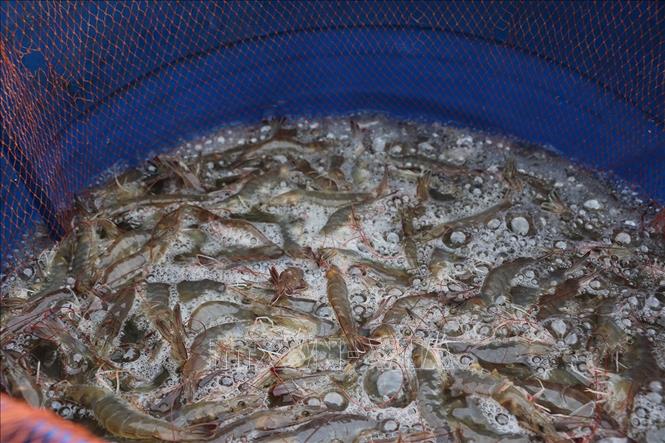
Farmers should regularly inspect pond embankments and sluices to prevent leaks, maintain pond depths above 1.5 meters, and ensure adequate aeration through paddle wheels and aerators — particularly between 10 a.m. and 6 p.m., and overnight. Where possible, 15–20% of pond water should be refreshed using fine-spray methods, preferably during the early morning.
If conditions allow, farmers are encouraged to use shade nets covering two-thirds of the pond surface and raised at least two meters above water level to reduce solar radiation, lower water temperatures, and prevent thermal stress in shrimp. Continuous monitoring of pond environments is critical, along with supplementing shrimp diets with vitamins and minerals to boost immunity. The use of probiotics is also recommended to improve water quality.
In addition, farmers should proactively harvest market-size shrimp or reduce stocking density when facing water shortages, drought, or salinity intrusion.
Source: nguoinuoitom.vn
Aqua Mina's distributor in Japan: REX INDUSTRIES CO., LTD
- Address: 1-9-3 Hishiya-Higashi, Higashi-Osaka 578-0948 JAPAN
- Email: kimakubo@rexind.co.jp
- Phone: +81-(0)72-961-9893
- Website: http://www.rexind.co.jp/e/
WE WORK FOR YOUR SUCCESS!
Ngày đăng : 04/07/2025
2195 View


Other Articles
Ca Mau, Can Tho and An Giang Play a Leading Role in Vietnam’s Shrimp Industry
Protecting rice-shrimp yields against environmental fluctuations caused by prolonged rain
AQUA MINA Turbo Blower: Quiet, Energy-Efficient Air Supply for Aquaculture Ponds
AQUA MINA has accompanied the experimental tank system project at Can Tho University from its very early days
AQUA MINA AMONG 20 OUTSTANDING PRESENTATIONS AT THE WORKSHOP ON APPLYING SCIENCE AND TECHNOLOGY TO IMPROVE THE QUALITY OF VIETNAM’S AQUATIC PRODUCTS
Vietnam’s Shrimp Farming Industry Enters the High-Tech Race
The U.S. market relies heavily on imported shrimp to bridge its domestic supply gap
The 2028 supply crisis: The shrimp industry is projected to face a 400,000-ton material shortage
High profits from high-tech shrimp farming come with persistent risks
Intensifying El Niño Effect: Climate Change Risks Threaten the Global Shrimp Supply Chain
Evaluating Gaps in the Circular Economy Value Chain of the Shrimp Industry
A Comprehensive Overview of the Vietnamese Shrimp Industry


.jpg)