

High-Tech Shrimp Farming: A Double-Edged Sword
Transitioning to high-tech shrimp farming is an imperative step to overcome weak infrastructure in Nghe An. However, this is an expensive venture requiring farmers to manage natural disaster risks through flexible adaptive techniques.
.png)
Financial Challenge & Storm Risks
-
High capital investment: A 5-hectare model consumed nearly 7 billion VND in just over one year of operation.
-
Natural disaster losses: Two consecutive typhoons in 2025 (especially Typhoon No. 10) disrupted operations, forcing the investor to spend nearly 2 billion VND more and take over 3 months to rebuild.
Adaptive Technical Solutions (Alternative to Roof Canopies)
Due to its coastal location exposed to strong winds, installing roof canopies was infeasible. Instead, the farm optimized water environment techniques:
-
Increasing water depth by 40 cm: Helps lower temperature and stabilize pH and alkalinity amidst extreme day-night temperature swings (reaching up to 42°C during the day).
-
Boosting immunity with herbs & probiotics: Blending garlic, ginger, turmeric, essential oils, and enzymes into feed throughout the culturing cycle, successfully preventing Enterocytozoon hepatopenaei (EHP).
-
Automated bottom waste treatment: Utilizing bottom aeration and automatic siphoning to collect and flush out sediment cleanly without trapping shrimp, optimizing operational costs and cutting labor down to just a few workers for the entire 5 ha.
24/7 Operational Discipline
-
Feeding-based monitoring: 100% pond inspection aligned with feeding schedules (6 times/day for juveniles, 4 times/day for larger shrimp).
-
Proactive incident management: Independently handling minor environmental fluctuations and immediately sending samples for testing upon detecting abnormal signs beyond control.
Strategic Orientation (Technology Shift)
This practical model aligns with Nghe An province's vision for 2026+: expanding high-tech super-intensive shrimp farming to proactively respond to climate change, increase yields, and achieve sustainable development.
Building upon 1,776 hectares and 11,428 tons of output in 2025, Nghe An identifies high-tech application as the core driver from 2026 onward. The province will focus on scaling up sustainable intensive models, using climate adaptability, disease control, and environmental protection as key benchmarks for growth.
AQUA MINA CO., LTD
WE WORK FOR THE SUCCESS


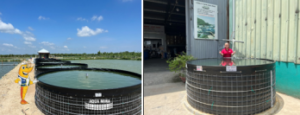
AQUA MINA has accompanied the experimental tank system project at Can Tho University from its very early days
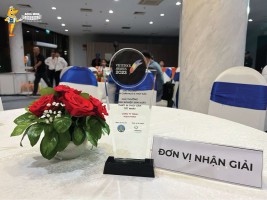
AQUA MINA AMONG 20 OUTSTANDING PRESENTATIONS AT THE WORKSHOP ON APPLYING SCIENCE AND TECHNOLOGY TO IMPROVE THE QUALITY OF VIETNAM’S AQUATIC PRODUCTS
Vietnam’s Shrimp Farming Industry Enters the High-Tech Race
The U.S. market relies heavily on imported shrimp to bridge its domestic supply gap
The 2028 supply crisis: The shrimp industry is projected to face a 400,000-ton material shortage
High profits from high-tech shrimp farming come with persistent risks
Intensifying El Niño Effect: Climate Change Risks Threaten the Global Shrimp Supply Chain
Evaluating Gaps in the Circular Economy Value Chain of the Shrimp Industry
A Comprehensive Overview of the Vietnamese Shrimp Industry
CA MAU ACCELERATES MARINE AQUACULTURE DEVELOPMENT FROM 2026 TO 2030, WITH A VISION TO 2045
VIETNAM’S SHRIMP INDUSTRY: FROM RECORD EXPORTS TO THE RACE FOR EFFICIENCY AND VALUE
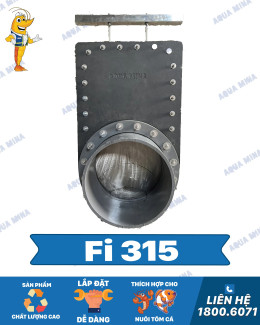
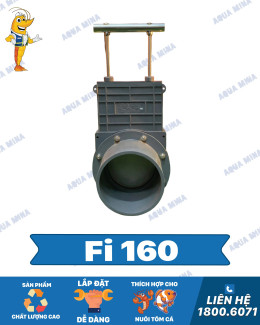
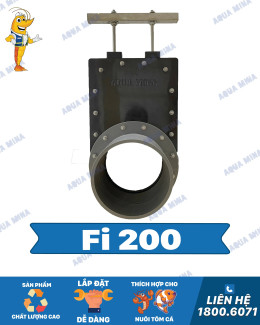
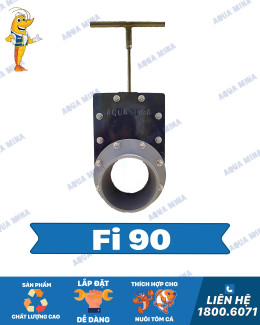
Why Did a Customer Travel from Vinh Long to Ho Chi Minh City to Buy AQUA MINA PVC Knife Gate Valve


.jpg)