

Japan: First-Ever Simultaneous Cultivation of Whiteleg Shrimp and Herbs in Seawater
Breakthrough Aquaponics Demonstration Using Seawater
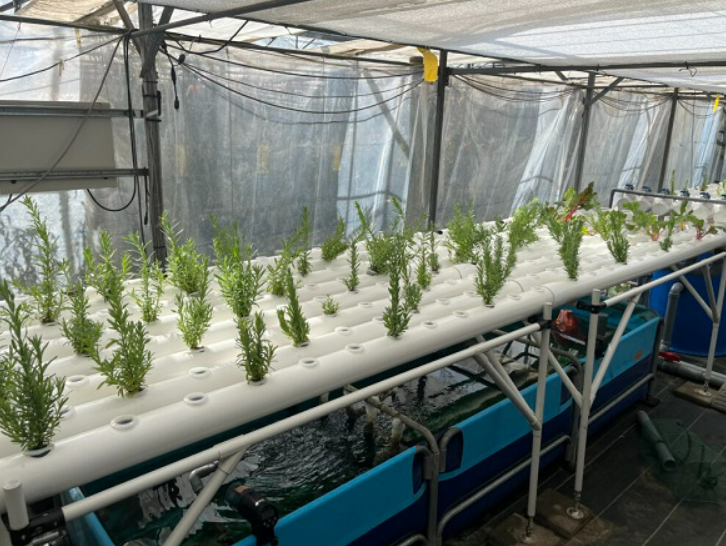
In this pilot experiment, seawater will be used in an aquaponics system to raise whiteleg shrimp — a species in high demand in Japan. The same water will be circulated through planting beds to grow salt-tolerant crops such as Swiss chard and high-value herbs. Throughout the experiment, sensors will be used to collect essential data for both shrimp and plants, and their symbiotic effects will be studied with the goal of commercializing brackish water aquaponics. As part of this goal, the company has started trial farming of whiteleg shrimp.
At Akponi’s private farm in Fujisawa City, Kanagawa Prefecture, trials are underway to develop and refine aquaponics systems while diversifying cultivated crops. Recently, the company has begun testing brackish aquaponics systems for shrimp farming.
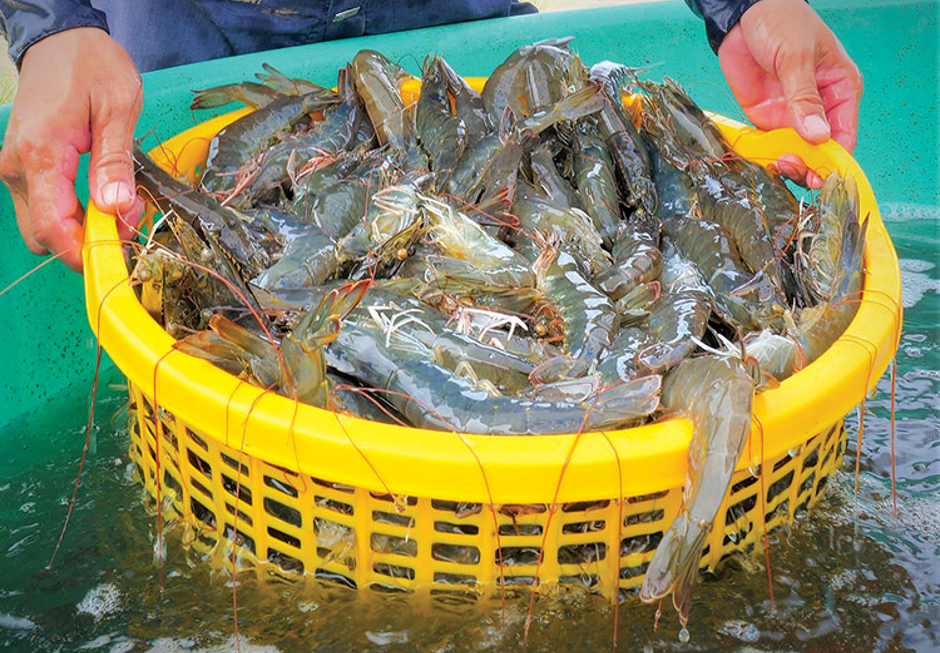
According to the Fisheries Agency, shrimp is one of the four most consumed seafood items in Japan. Despite high domestic demand, Japan is almost entirely reliant on imports (Reference: 2022 Fisheries White Paper, Fisheries Agency – Supply, Demand, and Consumption Trends of Seafood Products in Japan).
Currently, aquaponics in Japan is primarily based on freshwater systems. If brackish water aquaponics proves feasible, it could enable large-scale, land-based shrimp farming with low environmental impact, significantly expanding the potential of aquaponics in Japan. In recent years, requests for shrimp farming have been increasing, prompting the company to conduct this experiment to expand aquaponics possibilities.
Key Highlights of the Demonstration Trial
1. IoT Data Collection on Shrimp & Plants / Identifying the Best Crops for Brackish Aquaponics
In this trial, the company is using the Akponi Farming App, a proprietary platform that centrally manages aquaponics operations and uses IoT to gather data on whiteleg shrimp and vegetable crops.
This will help assess the farm environment and growth conditions, optimizing the shrimp culture system while identifying the most suitable crops for brackish aquaponics.
Data collected includes:
Feed quantity
Yield of whiteleg shrimp and vegetables
Air temperature, humidity, water temperature, salinity, DO (dissolved oxygen), pH, EC (electrical conductivity), CO₂ levels in the air, etc.
2. Evaluating Domestic Shrimp Production with the Goal of Minimizing Environmental Impact and Costs
Aquaponics integrates aquaculture with hydroponics to efficiently recycle resources, using nitrogen from shrimp/fish feed as fertilizer for vegetables.
Typically, in standalone land-based aquaculture, 88% of nitrogen from feed is discharged during regular water changes. In a previous pilot study, the company found that with aquaponics, up to 99% of nitrogen can be effectively used as fertilizer for crops. In addition, water consumption was reduced by about 66%, using only one-third the water compared to conventional aquaculture.
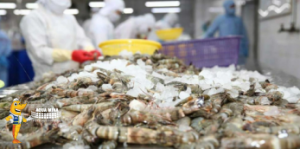
Currently, most shrimp consumed in Japan is frozen and imported, primarily from Southeast Asia. However, if this system can demonstrate viable domestic shrimp production, it could significantly reduce CO₂ emissions from transport and lower logistics costs for businesses — contributing to both environmental sustainability and economic efficiency.
Source: Fis-net
Aqua Mina's distributor in Japan: REX INDUSTRIES CO., LTD
- Address: 1-9-3 Hishiya-Higashi, Higashi-Osaka 578-0948 JAPAN
- Email: kimakubo@rexind.co.jp
- Phone: +81-(0)72-961-9893
- Website: http://www.rexind.co.jp/e/
WE WORK FOR YOUR SUCCESS!
Ngày đăng : 17/06/2025
2402 View


Other Articles
Ca Mau, Can Tho and An Giang Play a Leading Role in Vietnam’s Shrimp Industry
Protecting rice-shrimp yields against environmental fluctuations caused by prolonged rain
AQUA MINA Turbo Blower: Quiet, Energy-Efficient Air Supply for Aquaculture Ponds
AQUA MINA has accompanied the experimental tank system project at Can Tho University from its very early days
AQUA MINA AMONG 20 OUTSTANDING PRESENTATIONS AT THE WORKSHOP ON APPLYING SCIENCE AND TECHNOLOGY TO IMPROVE THE QUALITY OF VIETNAM’S AQUATIC PRODUCTS
Vietnam’s Shrimp Farming Industry Enters the High-Tech Race
The U.S. market relies heavily on imported shrimp to bridge its domestic supply gap
The 2028 supply crisis: The shrimp industry is projected to face a 400,000-ton material shortage
High profits from high-tech shrimp farming come with persistent risks
Intensifying El Niño Effect: Climate Change Risks Threaten the Global Shrimp Supply Chain
Evaluating Gaps in the Circular Economy Value Chain of the Shrimp Industry
A Comprehensive Overview of the Vietnamese Shrimp Industry


.jpg)