

Why is Ecuador's shrimp productivity 50 times higher than that of Ca Mau
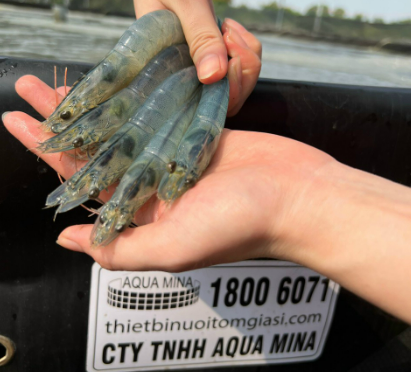
Boasting a farming area exceeding 270,000 hectares, Ecuador is currently the world’s leading shrimp exporter. The core of their success lies in a radically different production philosophy: focusing on the natural disease resistance of shrimp seeds rather than relying on chemicals or striving for a sterile environment.
For the past 30 years, Ecuador has strictly banned shrimp seed imports. Broodstock are directly selected from exceptional survivors right in harvest ponds for breeding. Notably, the seed production process takes place in microbially rich, sometimes heavily odoriferous ponds. Local experts believe that shrimp seeds surviving and thriving in such harsh conditions inherently possess strong natural immunity, driving subsequent farming success rates close to absolute perfection.
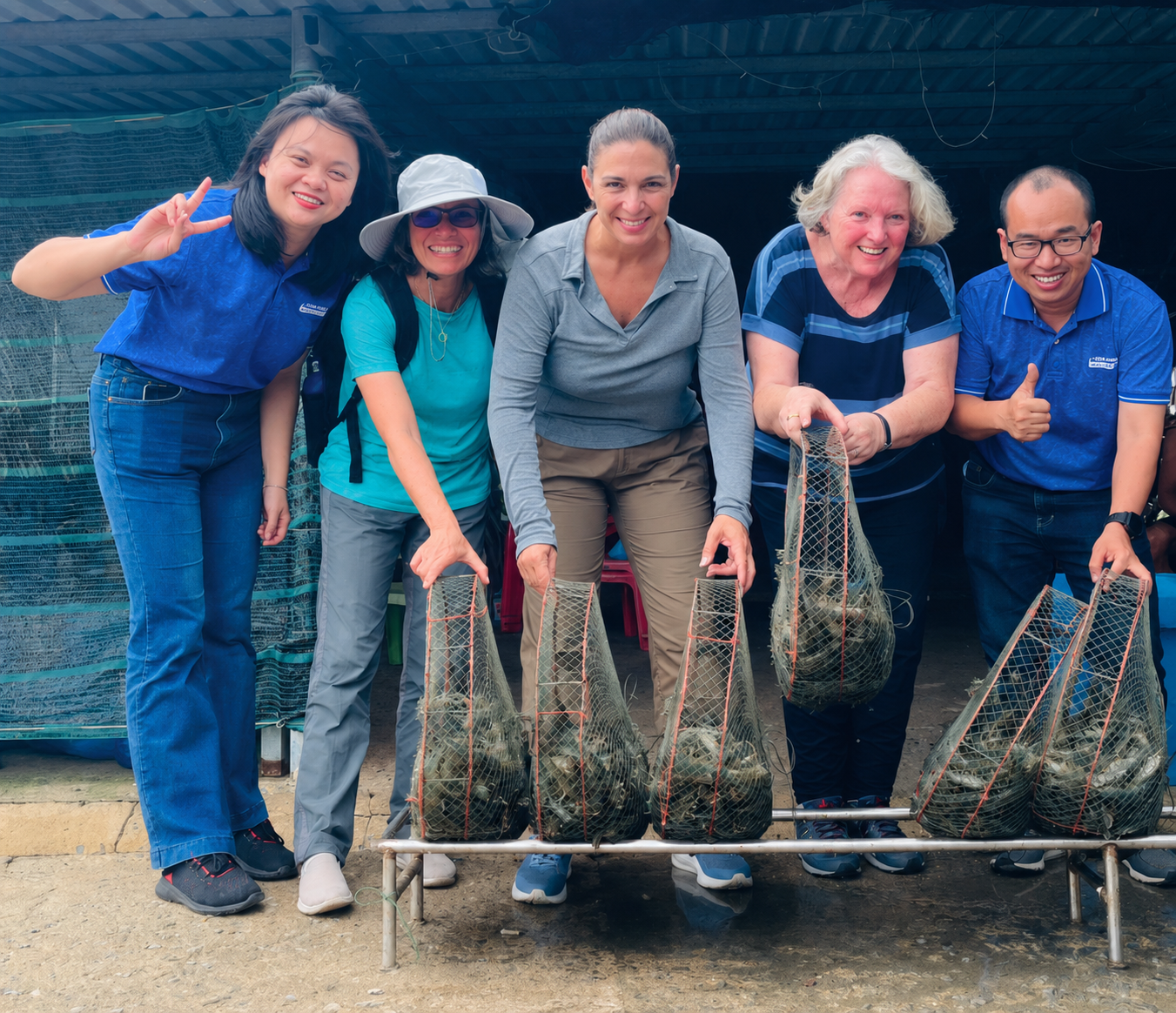
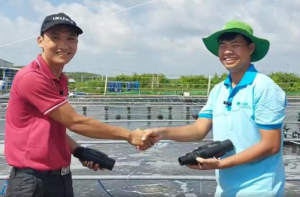
Beyond genetics, Ecuador avoids high-density super-intensive models, opting instead for a two-stage process akin to improved extensive farming. Post-larvae are nursed in fine-mesh hapas for about three weeks at densities exceeding 200 shrimp/m2, then transferred to large ponds ranging from 3 to 10 hectares for grow-out at moderate densities of 30-40 shrimp/m2. Recently, a delegation from Ca Mau province experienced firsthand the harvest of a 10-hectare pond in Ecuador, recording yields of 80 to 100 tons requiring nearly 20 refrigerated trucks for transport. With a turnaround of up to four crops per year, each hectare of pond in Ecuador yields a minimum of 20 tons annually.
The Comparative Challenge for Ca Mau, Vietnam's Shrimp Capital
In contrast, Ca Mau province—possessing Vietnam's largest shrimp farming area at over 420,000 hectares and generating around $2.5 billion in annual export revenue—faces significant bottlenecks in mindset and production methods.
Currently, Ca Mau's extensive shrimp farming yield remains very modest, hovering at just 370-380 kg/ha/year, which is up to 50 times lower than Ecuador's equivalent model. This gap stems from contrasting philosophies: while Vietnam focuses on the sClean (disease-free) approach, desperately trying to eliminate pathogens, heavily investing in costly super-intensive models, and depending on chemicals, Ecuador optimizes costs by leveraging the natural immunity of seeds and maintaining balanced stocking densities.
Drawing from their practical trip, Ca Mau representatives concluded that if local shrimp productivity could reach just one-tenth of Ecuador's, the province's export turnover would surge 5-fold, triggering a genuine revolution for local shrimp farmers. The province is currently expediting a pilot project for this model on a small scale to accurately assess adaptability before widespread replication.
¡TRABAJAMOS PARA SU ÉXITO!


Ca Mau, Can Tho and An Giang Play a Leading Role in Vietnam’s Shrimp Industry
Protecting rice-shrimp yields against environmental fluctuations caused by prolonged rain
AQUA MINA Turbo Blower: Quiet, Energy-Efficient Air Supply for Aquaculture Ponds
AQUA MINA has accompanied the experimental tank system project at Can Tho University from its very early days
AQUA MINA AMONG 20 OUTSTANDING PRESENTATIONS AT THE WORKSHOP ON APPLYING SCIENCE AND TECHNOLOGY TO IMPROVE THE QUALITY OF VIETNAM’S AQUATIC PRODUCTS
Vietnam’s Shrimp Farming Industry Enters the High-Tech Race
The U.S. market relies heavily on imported shrimp to bridge its domestic supply gap
The 2028 supply crisis: The shrimp industry is projected to face a 400,000-ton material shortage
High profits from high-tech shrimp farming come with persistent risks
Intensifying El Niño Effect: Climate Change Risks Threaten the Global Shrimp Supply Chain
Evaluating Gaps in the Circular Economy Value Chain of the Shrimp Industry
A Comprehensive Overview of the Vietnamese Shrimp Industry


.jpg)