

Mastering RAS technology: The answer to green aquaculture
1. Preliminary Field Results
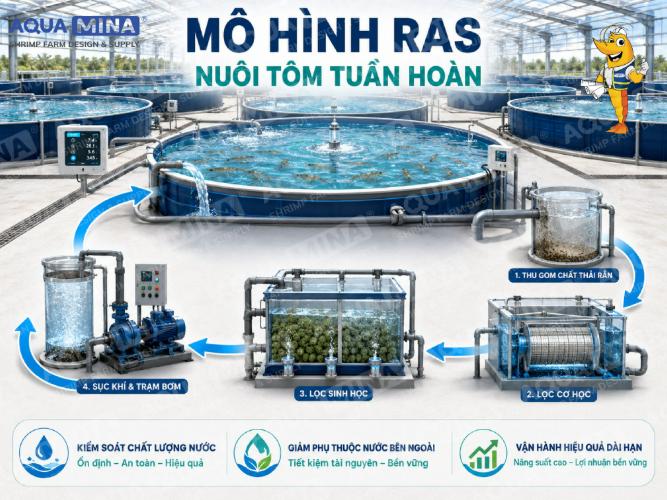
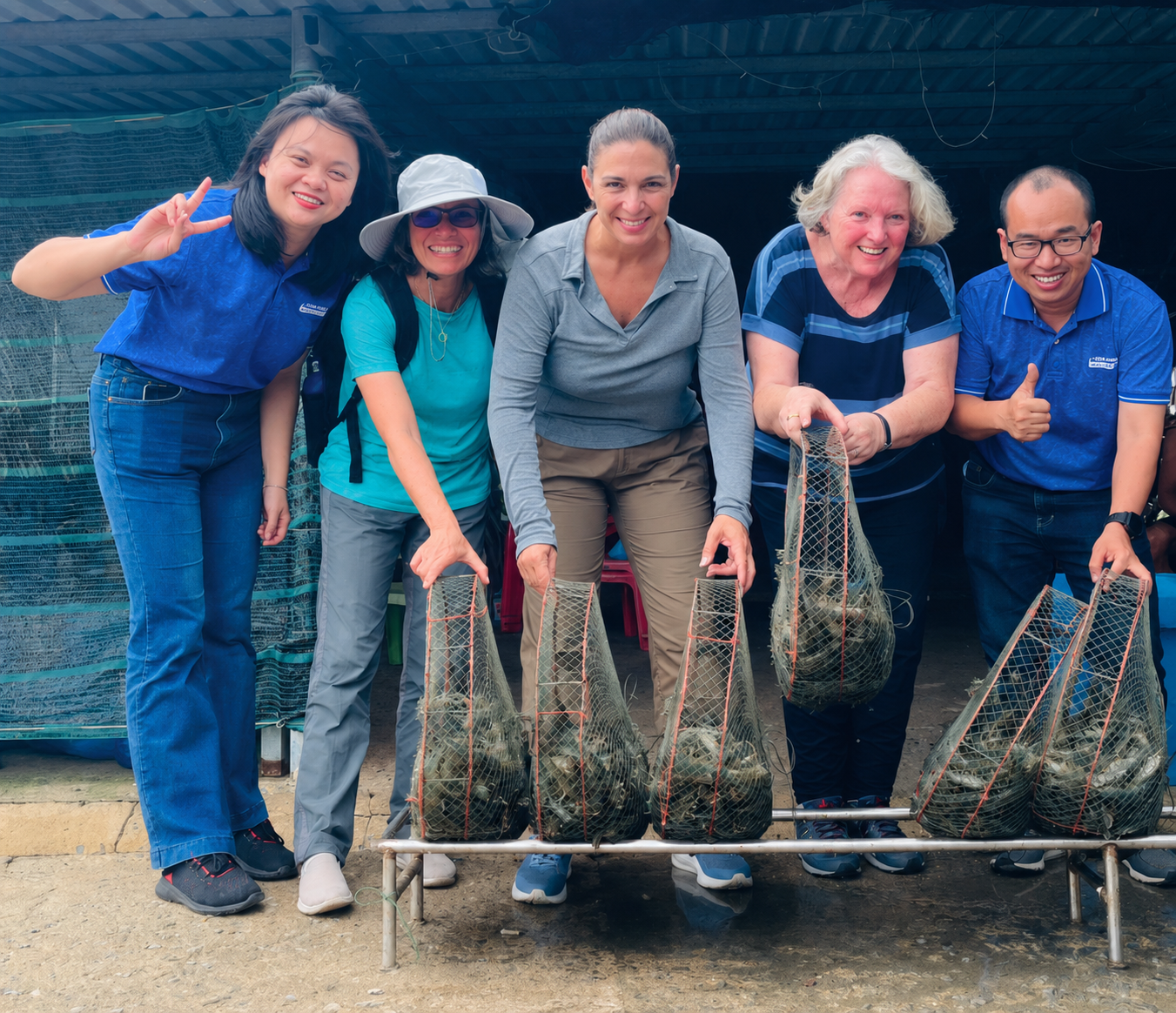
Positive Indicators: The Recirculating Aquaculture System (RAS) model—focusing on water reuse and cost optimization—has achieved initial success in Vinh Chau and My Xuyen (with surveys underway to expand into Cu Lao Dung). Shrimp survival rates reached 57%–98%, with yields ranging from 1 to 10 tons per household.
Favorable Profits: 6 out of 7 initial shrimp farming households recorded net profits between USD 1,000 and USD 26,000 per crop; crab farming models maintained steady net profits of VND 3–18 million per crop.
Progress of the IUCN-led Project:
Target: Implement 45 RAS models combined with the restoration of 18 hectares of mangrove forest across Ca Mau and Can Tho.
Status: Achieved 85% completion (38/45 models installed). Ca Mau achieved 100% completion (23/23 households), while Can Tho finalized 15 households. Full project operations are expected before December 2026.
Approach: Direct partnership with cost-sharing mechanisms; assisting farmers in retrofitting existing ponds and mangrove plots to lower capital expenditure.
2. Context of Can Tho's Seafood Sector
Massive Scale: In the first 8 months of 2026, seafood export turnover reached USD 1,615.97 million (+22.04% year-on-year). Total harvested volume reached 490,779.1 tons across an area of 83,030 hectares.
Environmental Pressures: 189.5 hectares of shrimp suffered damage due to prolonged heatwaves combined with heavy rain, underlining the urgent need for climate-resilient farming systems and water management.
3. Core Challenges & Scalability Solutions
Infrastructure & Market Barriers:
Space Constraints: Many smallholders lack sufficient land area to build ponds compliant with technical RAS specifications.
Price Volatility: Price drops for large-size shrimp (under 50 count/kg) occasionally penalize farmers who invest extra time and resources into extended grow-out cycles.
Technical Risks: Unstable seed stock quality, electrical/equipment failures, and the reliance on traditional habits require farmers to strictly follow technical protocols.
Strategic Directions:
Production Alignment: Strengthen agricultural cooperatives and supply chain integration with enterprises to secure input quality and output market access.
Capacity Building: Deliver practical knowledge and operational skill transfers alongside hardware delivery.
Green Incentives: Measure and commercialize carbon credits from protected mangrove forests to generate supplementary income for farming communities.
AQUA MINA CO., LTD
– Address: 685 Le Duc Anh Street, Quarter 39, Binh Hung Hoa Ward, Ho Chi Minh City
– Phone: 1800 6071 (Toll-free hotline)
– Email: sales@aquamina.com.vn or oversea@aquamina.com.vn
– Aqua Mina’s Official Distributor in Japan: REX INDUSTRIES CO., LTD
– Address: 1-9-3 Hishiya-Higashi, Higashi-Osaka 578-0948, JAPAN
– Email: kimakubo@rexind.co.jp
– Phone: +81-(0)72-961-9893
– Website: www.rexind.co.jp/e/
WE WORK FOR THE SUCCESS
Ngày đăng : 12/09/2026
1142 View


Other Articles
How strictly is the chlorine gas management process controlled?
Building 48 Value Chains: Ca Mau Strives for Sustainable Shrimp Farming
Vietnam's shrimp industry is still struggling to achieve self-sufficiency in breeding stock.
EVFTA paves the way for Vietnamese seafood to conquer high-end markets
Russian importers are paying increasing attention to seafood supplies from Pakistan
Ca Mau, Can Tho and An Giang Play a Leading Role in Vietnam’s Shrimp Industry
Protecting rice-shrimp yields against environmental fluctuations caused by prolonged rain
AQUA MINA Turbo Blower: Quiet, Energy-Efficient Air Supply for Aquaculture Ponds
AQUA MINA has accompanied the experimental tank system project at Can Tho University from its very early days
AQUA MINA AMONG 20 OUTSTANDING PRESENTATIONS AT THE WORKSHOP ON APPLYING SCIENCE AND TECHNOLOGY TO IMPROVE THE QUALITY OF VIETNAM’S AQUATIC PRODUCTS
Vietnam’s Shrimp Farming Industry Enters the High-Tech Race
The U.S. market relies heavily on imported shrimp to bridge its domestic supply gap


.jpg)