

Why Is Feed Management Important in Shrimp Farming?
If shrimp lack feed, they will suffer from poor health, nutrient deficiency, stunted growth, become more vulnerable to diseases, and may even turn cannibalistic.
If overfed, abiotic factors like pH and alkalinity may fluctuate, while biotic factors like bacteria and algae may bloom excessively. Shrimp are extremely sensitive to environmental changes, so these imbalances can lead to stress, disease, and death.
Moreover, feed costs can account for up to 60% of the total production cost in white-leg shrimp farming when using commercial feed. Both underfeeding and overfeeding negatively impact shrimp growth and profitability. Therefore, effective feed management is essential for optimizing feed cost and improving farming efficiency.
Guidelines for Effective Feed Management in White-Leg Shrimp Farming
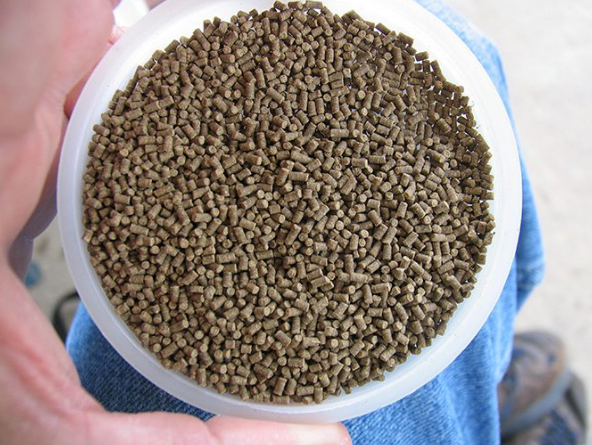
1. Feed Quality Is Top Priority
Using high-quality, nutritionally balanced feed allows shrimp to consume more effectively and reduces waste. When choosing feed, farmers should:
Ensure it has a clear origin, valid expiry date, and intact packaging. Avoid caked or moldy feed.
Stick to one feed brand throughout the crop. If switching is necessary, transition slowly to avoid shrimp feed refusal.
Choose the appropriate feed pellet size based on the shrimp's developmental stage.
Supplement with essential vitamins and minerals as needed to replace nutrients lost during processing.
Mix Microbe-Lift DFM probiotics into the feed to boost gut flora, digestion, and nutrient absorption.

2. Feed Shrimp Properly
Proper feeding technique is equally important for effective feed management.
During the first 24 days, follow expert or manufacturer feeding guidance carefully. Distribute feed evenly across the pond to ensure shrimp access it easily.
If the pond has good plankton color in the first 10 days, shrimp can rely on natural food, and supplemental feeding can be minimal.
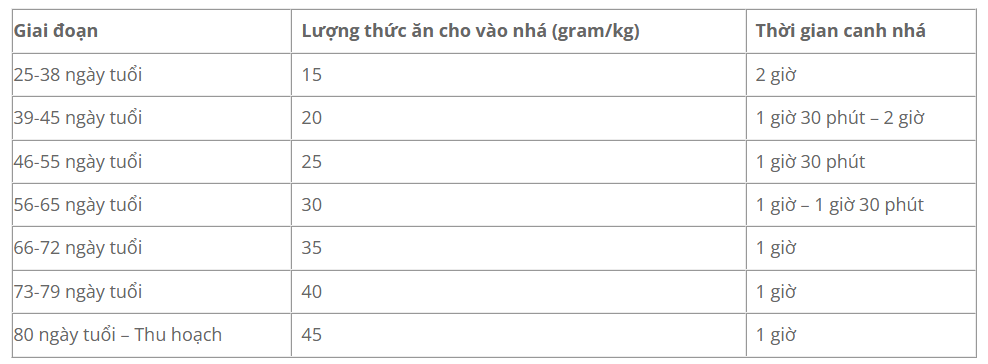
From day 25 onward, use feeding trays (sàng/nhá) to monitor feed intake. For ponds of 2,000–2,500 m², use 1–2 trays of 80×80 cm.
Refer to the feeding tray schedule to determine how much feed to place and how long to wait before checking.
When checking trays:
Observe feed leftovers. If more than 25% remains, stop feeding for the next two meals and reduce the following feeding by 10%.
Check shrimp intestines—a full gut with feed-colored content is a good sign; abnormal colors require investigation.
Feeding tips:
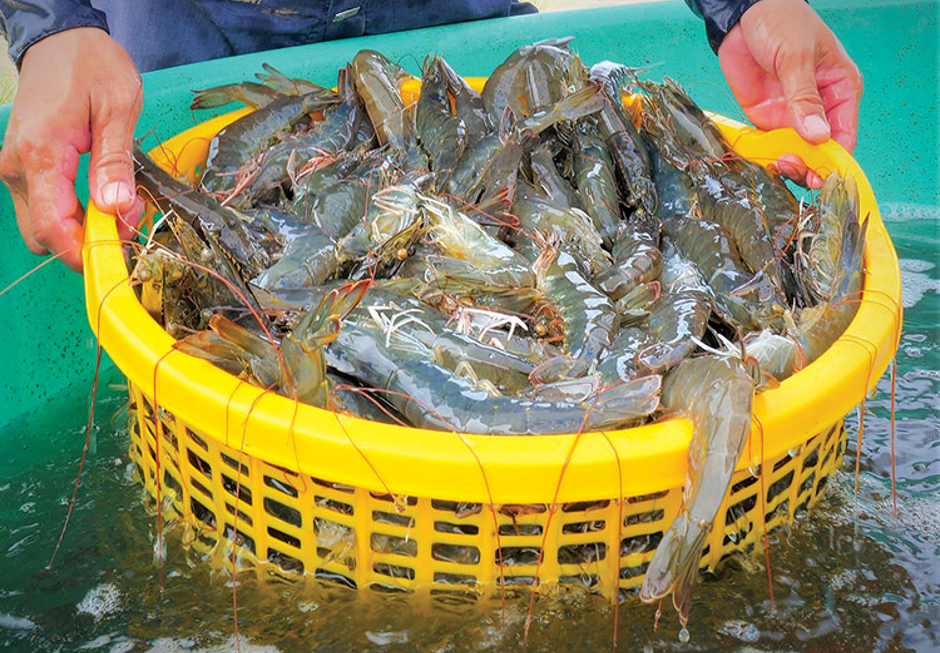
Shrimp feed continuously, so split into 4–5 meals/day
Avoid feeding at night if pond oxygenation is insufficient.
From month 2, consider automatic feeders to save labor and improve feed efficiency.
If diseases are present or during hot midday weather, reduce or skip the noon feeding, and mix medications into the feed to boost shrimp appetite and immunity.
Adjust Feeding Based on Conditions
During molting: Reduce feeding by 20–30%.
Hot weather or heavy rain: Reduce feeding by 30–50%.
Poor water quality (NH₃ > 0.3 mg/L, H₂S > 0.005 mg/L, smelly pond bottom): Reduce feeding by 30–50%.
To manage feed effectively in white-leg shrimp farming, understanding the farming process is essential. Proper feed quality, feeding techniques, monitoring, and adjustments based on shrimp behavior and environmental changes all contribute to better shrimp health, improved growth, and reduced costs.
Source: microbelift.vn
Aqua Mina's distributor in Japan: REX INDUSTRIES CO., LTD
- Address: 1-9-3 Hishiya-Higashi, Higashi-Osaka 578-0948 JAPAN
- Email: kimakubo@rexind.co.jp
- Phone: +81-(0)72-961-9893
- Website: http://www.rexind.co.jp/e/
WE WORK FOR YOUR SUCCESS!
Ngày đăng : 25/04/2025
2791 View


Other Articles
Ca Mau, Can Tho and An Giang Play a Leading Role in Vietnam’s Shrimp Industry
Protecting rice-shrimp yields against environmental fluctuations caused by prolonged rain
AQUA MINA Turbo Blower: Quiet, Energy-Efficient Air Supply for Aquaculture Ponds
AQUA MINA has accompanied the experimental tank system project at Can Tho University from its very early days
AQUA MINA AMONG 20 OUTSTANDING PRESENTATIONS AT THE WORKSHOP ON APPLYING SCIENCE AND TECHNOLOGY TO IMPROVE THE QUALITY OF VIETNAM’S AQUATIC PRODUCTS
Vietnam’s Shrimp Farming Industry Enters the High-Tech Race
The U.S. market relies heavily on imported shrimp to bridge its domestic supply gap
The 2028 supply crisis: The shrimp industry is projected to face a 400,000-ton material shortage
High profits from high-tech shrimp farming come with persistent risks
Intensifying El Niño Effect: Climate Change Risks Threaten the Global Shrimp Supply Chain
Evaluating Gaps in the Circular Economy Value Chain of the Shrimp Industry
A Comprehensive Overview of the Vietnamese Shrimp Industry


.jpg)