


Efficiency of shrimp farming in low-salinity water environments
Currently, many whiteleg shrimp farming facilities have gradually replaced traditional methods with Recirculating Aquaculture System (RAS) technology. The utilization of this technology helps farmers conserve water, prevent environmental pollution, and reduce the risks of disease outbreaks and disinfectant chemical usage. However, this solution has been exposing limitations regarding nutrient deficiencies in the water. Meanwhile, since whiteleg shrimp feed on organic detritus, RAS does not present an ideal environment for optimal shrimp growth. In contrast, Biofloc Technology (BFT) is a technique that creates bioflocs from suspended organic matter in the water converted by microorganisms. This product functions as a beneficial probiotic for aquatic animals, rich in proteins and minerals that improve water quality in farming ponds while overcoming the limitations of RAS technology. Nevertheless, misalignments between technological solutions combined with unscientific feeding practices have kept shrimp farming efficiency relatively low. Consequently, this requires farmers to aim for a solution that both establishes a stable farming environment to avoid diseases and supplements a suitable nutrient source for optimal shrimp growth.
.png)
Faced with this reality, Dr. Do Manh Hao from the Institute of Oceanography (Vietnam Academy of Science and Technology), in collaboration with his colleagues, implemented the project: Perfecting and testing the process of Biofloc - biofiltration hybrid technology (Bio RAS) for cultivating whiteleg shrimp in low-salinity environments. This is a combination based on RAS technology and Biofloc technology to generate bioflocs rich in microorganisms and nutrients directly inside the culture tanks. Through the Bio RAS technological solution, the research team also aims to perfect the design of a shrimp farming system in low-salinity environments that achieves high productivity and quality compared to traditional methods.
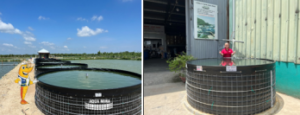
According to Dr. Do Manh Hao, the core aspect of Bio RAS is not a mechanical integration of the two technologies, but rather a redesign of the system so that the recirculating filtration and biofloc processes complement each other. This creates an efficient aquaculture ecosystem with a stable environment and provides a significant source of natural feed for the shrimp from bioflocs formed by the aggregation of algae, microorganisms, and shrimp feces in the farming pond. Thereby, it helps shrimp grow rapidly, reduces investment costs, improves the pond environment, and minimizes infectious diseases. The development of autotrophic nitrifying bacteria and nutrition within the bioflocs in the farming pond will be significantly enhanced due to the efficiency of ammonia and nitrite treatment compared to standalone RAS technology. With these outstanding advantages, Bio RAS technology can be considered the most advanced technological solution today when applied to whiteleg shrimp farming in low-salinity environments. To ensure accurate testing results, the research team conducted four shrimp crops following a two-stage process, combined with staggered stocking in two types of tanks with volumes of $50\text{ m}^2$ and $300\text{ m}^2$. The results showed that the system operated smoothly under various weather conditions. The shrimp reached a harvest weight of 68 to 80 pcs/kg, with a survival rate exceeding 85% and stable productivity.
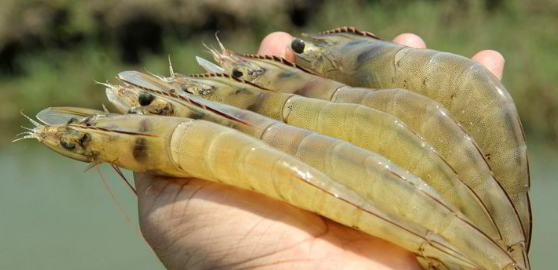
Along with these advantages, the research process indicated that low-salinity shrimp farming not only utilizes abandoned, alum-acid land areas that are inefficient for crop cultivation but also limits disease outbreaks. It is highly suitable for building modern farming systems to improve productivity and quality while mitigating pollution in the surrounding environment. However, the application of this technological solution also encounters certain difficulties, such as water scarcity and the strict control required for discharged water to avoid salinizing the surrounding environment. Furthermore, the water quality requirements for cultivation are higher due to the increased toxicity of certain pollutants, demanding the maintenance and balance of minerals and ions, as well as the management of newly emerging diseases.
According to the Evaluation Council of the Vietnam Academy of Science and Technology, the project has completed a massive volume of work. The obtained results hold high scientific value and practicality, allowing for the widespread application of this technology in whiteleg shrimp farming within low-salinity environments, yielding high economic efficiency compared to traditional methods. The success of the project inherits the results of prior scientific research works, while simultaneously bringing immense technical value, operational stability, and low investment costs to aquaculture. It reduces environmental pressure and limits disease outbreaks, opening up directions for the effective utilization of degraded and saline land areas.
Source: nhandan
AQUA MINA CO., LTD

WE WORK FOR THE SUCCESS


Ca Mau, Can Tho and An Giang Play a Leading Role in Vietnam’s Shrimp Industry
Protecting rice-shrimp yields against environmental fluctuations caused by prolonged rain
AQUA MINA Turbo Blower: Quiet, Energy-Efficient Air Supply for Aquaculture Ponds
AQUA MINA has accompanied the experimental tank system project at Can Tho University from its very early days
AQUA MINA AMONG 20 OUTSTANDING PRESENTATIONS AT THE WORKSHOP ON APPLYING SCIENCE AND TECHNOLOGY TO IMPROVE THE QUALITY OF VIETNAM’S AQUATIC PRODUCTS
Vietnam’s Shrimp Farming Industry Enters the High-Tech Race
The U.S. market relies heavily on imported shrimp to bridge its domestic supply gap
The 2028 supply crisis: The shrimp industry is projected to face a 400,000-ton material shortage
High profits from high-tech shrimp farming come with persistent risks
Intensifying El Niño Effect: Climate Change Risks Threaten the Global Shrimp Supply Chain
Evaluating Gaps in the Circular Economy Value Chain of the Shrimp Industry
A Comprehensive Overview of the Vietnamese Shrimp Industry


.jpg)