


New solutions reduce GHG emissions from shrimp ponds: Research
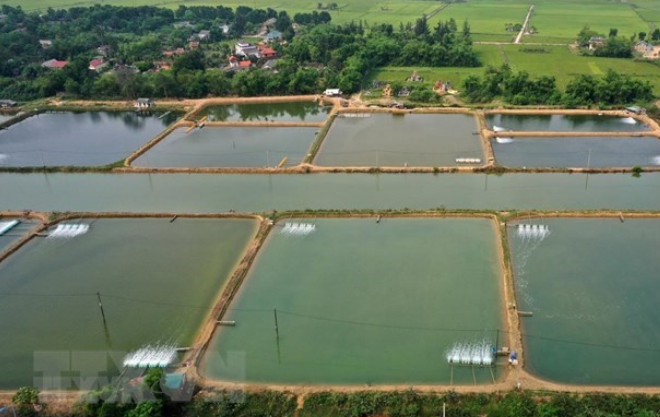
The research is part of the Energy transition and climate change mitigation in Mekong Delta project co-funded by ActionAid Vietnam and Bread for the World (BfdW) from 2021 to 2023. Associate Prof. Dr. Le Anh Tuan, a senior lecturer from Can Tho University who represents the research team, said that GHG emissions recorded in shrimp farms in Dong Hai district of Bac Lieu province showed that emissions released from intensive shrimp farming model are 15 times higher than that from extensive shrimp farming model.
“Findings from the research revealed that while farming density, pond dredging and shrimp breeding are the main factors that determine the amount of GHG emitted from extensive shrimp farming ponds, in the intensive shrimp farming model, electricity and shrimp feed are the two major sources of emissions, in which electricity consumption makes up 82% and feed 17% of the total GHG emission”, Dr. Tuan said at a conference on November 3.
He said that basing on this result, the research team came up with a number of GHG reduction solutions, including reducing electricity consumption, replacing electricity from fossil energy with renewable energy, treating shrimp waste with biogas composting, optimising shrimp feed intake, changing feeding methods, changing shrimp stocking density, and improving the water treatment system to avoid shrimp diseases.
After nine months of application of the solutions, the GHG emissions released from extensive shrimp farming model dropped 16.9%, while that from intensive shrimp farming model was cut by 10.8%.
Nguyen Trung Hieu, Vice Director of the Bac Lieu Department of Agriculture and Rural Development, said that Bac Lieu, one of the largest shrimp production hubs of the country, has focused on expanding the intensive shrimp farms to reduce negative impacts on the environment.
He held that the determination of major emission sources and provision of solutions to reduce GHG emissions from shrimp ponds are of great help, which needs to be popularised in the coming time.
Associate Prof. Nguyen Hieu Trung, Vice Principal of Can Tho University, said that the research of GHG emissions from aquaculture ponds and the application of GHG emission reduction measures in aquaculture will helping raise public understanding about the importance of reducing emissions and ensuring the sustainability of the aquaculture industry in the Mekong Delta region, contributing to realising Vietnam's commitments to implement the United Nations' sustainable development goals.
At the conference, representatives of state management agencies, research agencies, businesses and shrimp farmers discussed solutions to replicate the shrimp farming model to reduce GHG emissions in the Mekong Delta region. They emphasised the need to strengthen the issuance of guiding documents and organise training to improve awareness and techniques for shrimp farmers, along with favourable policies in the field.
Cre: Vietnam plus
Ngày đăng : 13/06/2024
2237 View


Other Articles
Ca Mau, Can Tho and An Giang Play a Leading Role in Vietnam’s Shrimp Industry
Protecting rice-shrimp yields against environmental fluctuations caused by prolonged rain
AQUA MINA Turbo Blower: Quiet, Energy-Efficient Air Supply for Aquaculture Ponds
AQUA MINA has accompanied the experimental tank system project at Can Tho University from its very early days
AQUA MINA AMONG 20 OUTSTANDING PRESENTATIONS AT THE WORKSHOP ON APPLYING SCIENCE AND TECHNOLOGY TO IMPROVE THE QUALITY OF VIETNAM’S AQUATIC PRODUCTS
Vietnam’s Shrimp Farming Industry Enters the High-Tech Race
The U.S. market relies heavily on imported shrimp to bridge its domestic supply gap
The 2028 supply crisis: The shrimp industry is projected to face a 400,000-ton material shortage
High profits from high-tech shrimp farming come with persistent risks
Intensifying El Niño Effect: Climate Change Risks Threaten the Global Shrimp Supply Chain
Evaluating Gaps in the Circular Economy Value Chain of the Shrimp Industry
A Comprehensive Overview of the Vietnamese Shrimp Industry





.jpg)