



EDTA in Shrimp Farming
What is EDTA?
EDTA stands for EthyleneDiamineTetraacetic Acid. This is a strong organic acid (more than 1,000 times stronger than acetic acid). Its salts are usually in the form of white crystals or powder, non-volatile, and highly soluble in water.
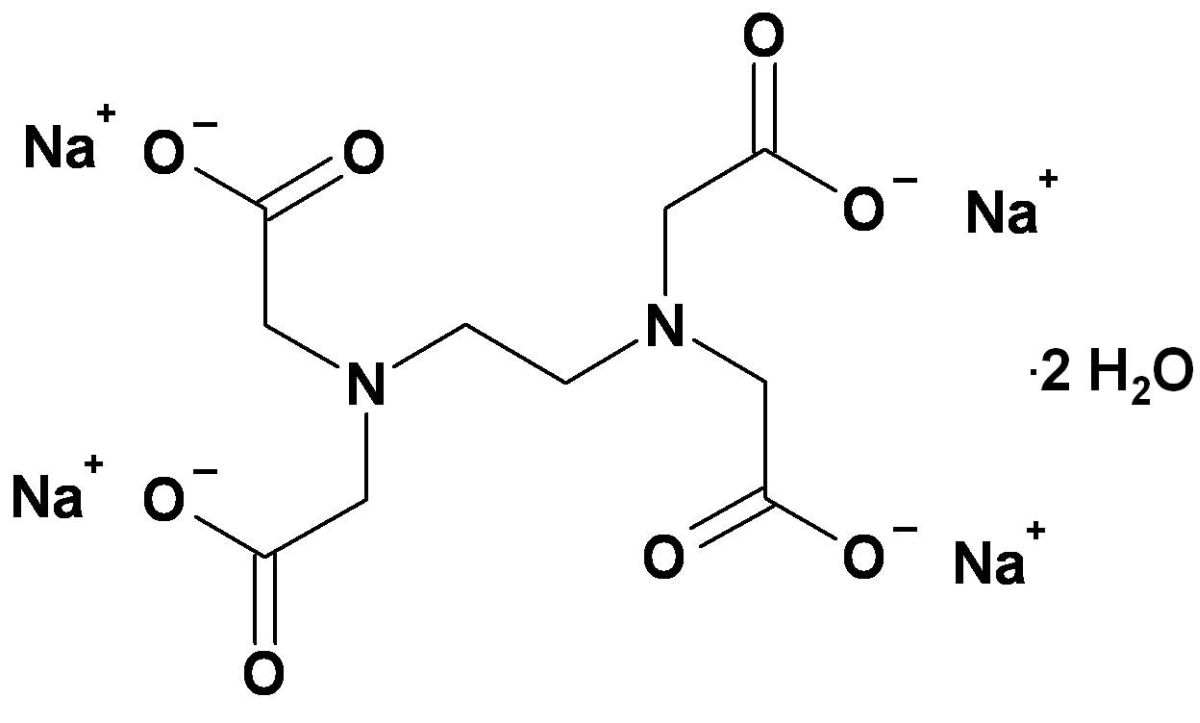
Uses of EDTA
- In aquaculture: EDTA is used to neutralize acidity, remove heavy metals, reduce water viscosity and scum in ponds. It also breaks down toxins from chemical use and reduces pH in shrimp ponds.
- EDTA is one of the ingredients found in cosmetic products like shampoos, hair dyes, etc.
- In laboratories: EDTA is used to remove metal ions.
- In pharmaceuticals: It acts as an antioxidant to prevent free radicals from damaging blood vessels and reducing atherosclerosis, although it has not yet been applied practically.
- In industry: EDTA isolates metal ions that alter the color of dye products.
- In agriculture: EDTA is used to create chelates to prevent the precipitation of heavy metals in the water environment.
Dosage of EDTA in Shrimp Farming
- For water treatment in hatcheries, the commonly applied dosage is 5-10 ppm.
- For water treatment in shrimp farming, especially in areas with low salinity and acidic soil, when water levels in ponds reach about 0.8-1 m, if the alkalinity is low and the water has a light yellow color, EDTA can be used at a dosage of 2-5 kg per 1,000 m²
Ngày đăng : 14/09/2024
3560 View


Other Articles
Ca Mau, Can Tho and An Giang Play a Leading Role in Vietnam’s Shrimp Industry
Protecting rice-shrimp yields against environmental fluctuations caused by prolonged rain
AQUA MINA Turbo Blower: Quiet, Energy-Efficient Air Supply for Aquaculture Ponds
AQUA MINA has accompanied the experimental tank system project at Can Tho University from its very early days
AQUA MINA AMONG 20 OUTSTANDING PRESENTATIONS AT THE WORKSHOP ON APPLYING SCIENCE AND TECHNOLOGY TO IMPROVE THE QUALITY OF VIETNAM’S AQUATIC PRODUCTS
Vietnam’s Shrimp Farming Industry Enters the High-Tech Race
The U.S. market relies heavily on imported shrimp to bridge its domestic supply gap
The 2028 supply crisis: The shrimp industry is projected to face a 400,000-ton material shortage
High profits from high-tech shrimp farming come with persistent risks
Intensifying El Niño Effect: Climate Change Risks Threaten the Global Shrimp Supply Chain
Evaluating Gaps in the Circular Economy Value Chain of the Shrimp Industry
A Comprehensive Overview of the Vietnamese Shrimp Industry












.jpg)
