


A new breakthrough in the prevention of diseases caused by the microsporidian parasite EHP in shrimp farming
Shrimp – A Key Export Sector of Vietnam’s Aquaculture Industry
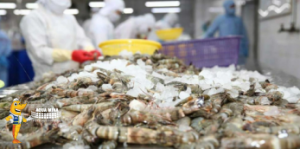
For Vietnam’s aquaculture industry, shrimp is the leading export commodity, contributing approximately 35–40% of the total annual seafood export value. Therefore, ensuring the sustainable, safe development of shrimp farming and effective disease control is an urgent requirement—not only for farmers but for the entire shrimp value chain.
EHP Causes Severe Damage to the Shrimp Hepatopancreas
The hepatopancreas is a vital organ in shrimp, playing an essential role in digestion, nutrient absorption, energy storage, and many critical functions related to growth and development. However, it is also the primary target organ favored by the microsporidian parasite EHP.
When EHP infects the tubules of the hepatopancreas, shrimp digestion and nutrient absorption are severely impaired. As a result, shrimp are unable to properly digest feed, and the regeneration of damaged epithelial cells is limited. Shrimp gradually lose appetite, feed weakly, and exhibit slow growth. Shrimp infected with EHP achieve only 10–40% of the growth rate compared to shrimp in non-infected ponds.
Biological Compounds as a Preventive Solution Against EHP
With strong expertise in biotechnology and as a pioneer in the use of biological products to replace antibiotics in animal disease prevention and treatment, R.E.P Biotech has focused on research and successfully developed LOKSpo—a product combining biological compounds that delivers high efficiency in preventing EHP in shrimp farming.
LOKSpo is a synergistic formulation of probiotics and herbal compounds, designed to inhibit the proliferation of microsporidia inside shrimp cells and prevent EHP from dividing and forming new spores. Over time, its use helps reduce the EHP pathogen load, improve hepatopancreatic condition, and enhance growth performance.
Catechin – A Key Bioactive Compound in LOKSpo
One of the most important biological compounds contributing to EHP suppression in LOKSpo is catechin.
Catechins are a group of natural polyphenolic compounds with strong biological activity, exhibiting broad-spectrum effects such as antibacterial, antiviral, antifungal, and especially anti-microsporidian properties. Studies have shown that catechins—particularly EGCG (epigallocatechin gallate)—can alter cell membrane permeability, denature surface proteins, inhibit transpeptidase enzymes, and disrupt biofilm formation. These mechanisms significantly suppress the growth of pathogens such as Vibrio spp. and opportunistic bacteria in the shrimp hepatopancreas.
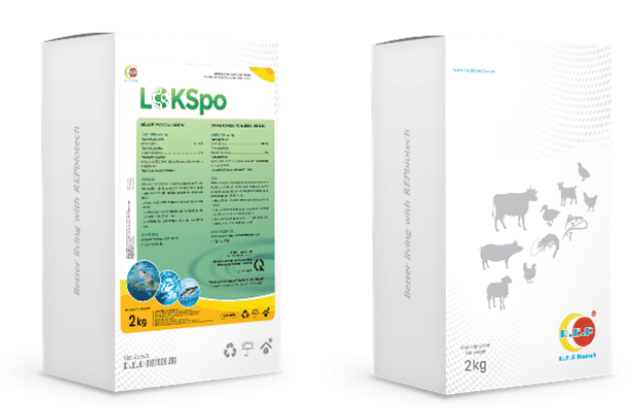
In addition, catechins can denature spore wall proteins, weakening the adhesion and survival capacity of EHP in the environment. Beyond their direct effects on pathogens, catechins also play a crucial role in hepatopancreatic cell regeneration and immune modulation, enhancing antioxidant enzyme activities (SOD, CAT, GPx), reducing oxidative stress in the hepatopancreas, and improving non-specific immune responses.
Proven EHP Control Efficacy of LOKSpo
To verify the effectiveness of LOKSpo in controlling EHP in shrimp farming, R.E.P Biotech conducted experimental studies with the following results.
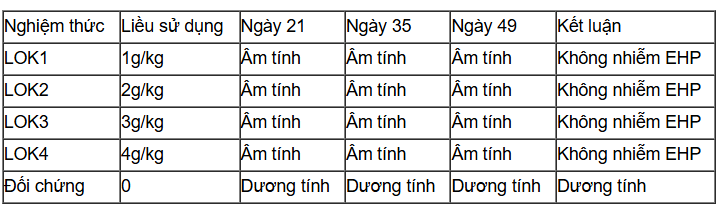
Continuous supplementation of LOKSpo for 14 days prior to EHP challenge and throughout the experimental period demonstrated clear preventive efficacy. qPCR analysis at sampling points (days 21, 35, and 49 post-infection) detected no EHP-specific amplification signals in all samples across the four LOKSpo treatment groups (Table 1).
Table 1. Summary of qPCR results for EHP detection in LOKSpo treatments at sampling points
Histopathological Results Confirm qPCR Findings
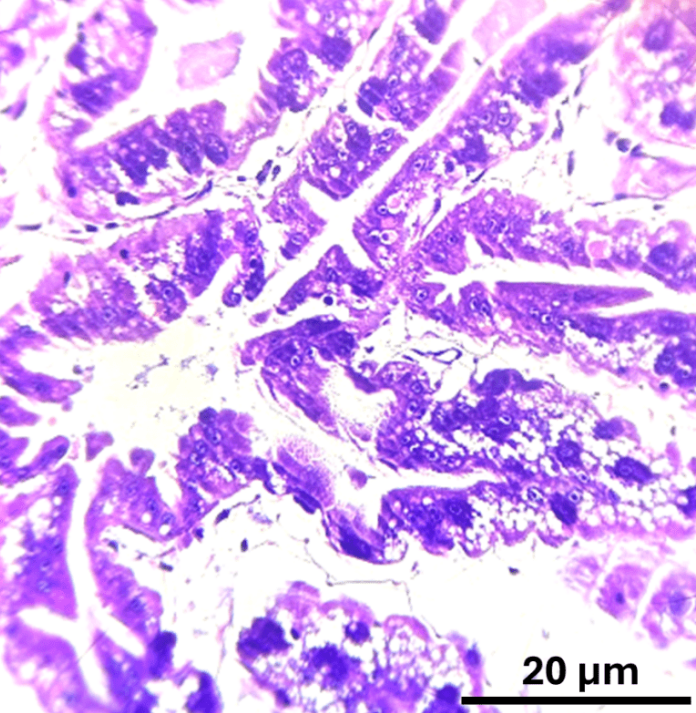
Histopathological analysis further supported the qPCR data. Shrimp in all LOKSpo-supplemented treatments showed no hepatopancreatic tissue damage caused by EHP. Microscopic observation revealed clearly defined hepatopancreatic tubules, intact and uniformly arranged columnar epithelial cells, with no signs of sloughing, necrosis, or cellular degeneration—pathological features typically observed in EHP-infected shrimp (Figure 4).
Hematoxylin & Eosin (H&E) staining showed intact tubule structures, uniform columnar epithelial cells, and no presence of EHP spores or characteristic inclusion bodies. No epithelial necrosis, sloughing, or tubule degeneration was observed, corresponding to G0 damage level according to Lightner (1996). Images were taken at 400× magnification.
Importantly, no microsporidian spores or EHP-specific inclusion bodies were detected in either the tubule lumen or epithelial cells. All samples were classified as G0, indicating normal hepatopancreatic tissue per Lightner’s classification (1996), fully consistent with the negative qPCR results at all sampling times (21, 35, and 49 days post-infection).
LOKSpo – A Breakthrough in EHP Prevention
Based on these findings, researchers confirmed that LOKSpo demonstrates clear effectiveness in preventing EHP, while maintaining healthy hepatopancreatic tissue structure in farmed shrimp. The use of LOKSpo reduces the risk of EHP infection and protects the integrity of hepatopancreatic tubules and epithelial layers.
After 21 days of LOKSpo application, no EHP signals were detected. Hepatopancreatic health improved, along with enhanced digestive and nutrient absorption capacity. Additionally, the probiotic strains in LOKSpo help stabilize gut microbiota, strengthen non-specific immune responses, and contribute to a more stable pond environment.
Source: nguoinuoitom
AQUA MINA CO., LTD
– Address: 685 Le Duc Anh Street, Quarter 39, Binh Hung Hoa Ward, Ho Chi Minh City
– Phone: 1800 6071 (Toll-free hotline)
– Email: sales@aquamina.com.vn or oversea@aquamina.com.vn
– Aqua Mina’s Official Distributor in Japan: REX INDUSTRIES CO., LTD
– Address: 1-9-3 Hishiya-Higashi, Higashi-Osaka 578-0948, JAPAN
– Email: kimakubo@rexind.co.jp
– Phone: +81-(0)72-961-9893
– Website: www.rexind.co.jp/e/

WE WORK FOR THE SUCCESS
Ngày đăng : 27/12/2025
1979 View


Other Articles
Ca Mau, Can Tho and An Giang Play a Leading Role in Vietnam’s Shrimp Industry
Protecting rice-shrimp yields against environmental fluctuations caused by prolonged rain
AQUA MINA Turbo Blower: Quiet, Energy-Efficient Air Supply for Aquaculture Ponds
AQUA MINA has accompanied the experimental tank system project at Can Tho University from its very early days
AQUA MINA AMONG 20 OUTSTANDING PRESENTATIONS AT THE WORKSHOP ON APPLYING SCIENCE AND TECHNOLOGY TO IMPROVE THE QUALITY OF VIETNAM’S AQUATIC PRODUCTS
Vietnam’s Shrimp Farming Industry Enters the High-Tech Race
The U.S. market relies heavily on imported shrimp to bridge its domestic supply gap
The 2028 supply crisis: The shrimp industry is projected to face a 400,000-ton material shortage
High profits from high-tech shrimp farming come with persistent risks
Intensifying El Niño Effect: Climate Change Risks Threaten the Global Shrimp Supply Chain
Evaluating Gaps in the Circular Economy Value Chain of the Shrimp Industry
A Comprehensive Overview of the Vietnamese Shrimp Industry


.jpg)