


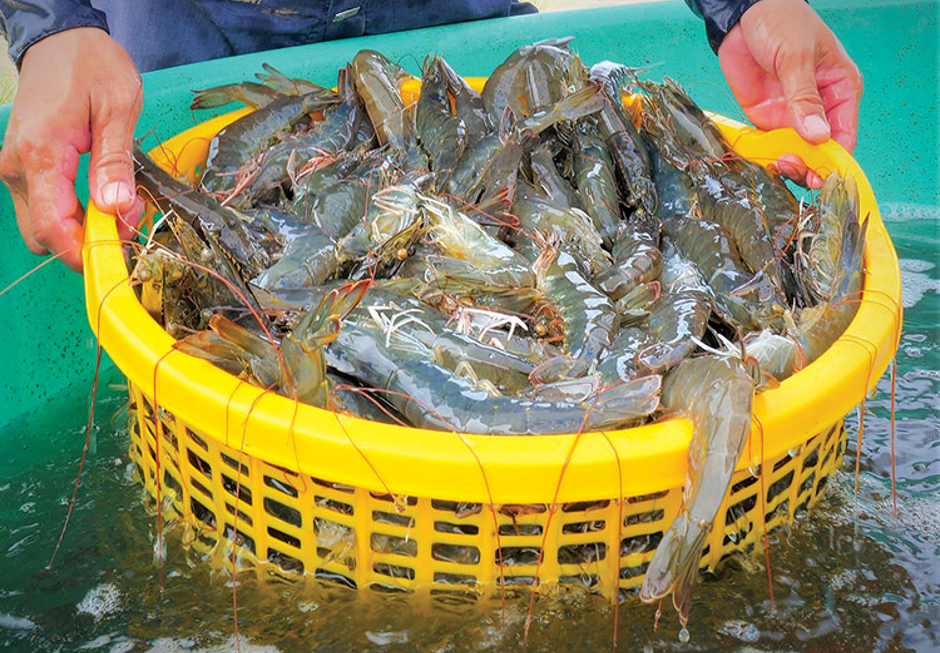
Philippines ends disposal of eggs from virus-infected broodstock shrimp
The shrimp hatchery complex of SEAFDEC/AQD aims to promote the production of high-quality shrimp post larvae and help revive the black tiger shrimp industry in the Philippines. Here, broodstock shrimp are screened for pathogens using polymerase chain reaction (PCR) testing before their eggs are introduced into biosecure hatcheries. After spawning, the broodstock are tested for white spot syndrome virus (WSSV), monodon baculovirus (MBV), infectious hypodermal and hematopoietic necrosis virus (IHHNV), yellow head virus (YHV), acute hepatopancreatic necrosis disease (AHPND), and the parasite Enterocytozoon hepatopenaei (EHP).
Dr. de la Peña stated, “We collect eggs from each breeder shrimp and wash them with UV-sterilized seawater. The washed eggs are then disinfected with iodine and rinsed again with sterilized seawater.”
In practice, disinfected eggs from some batches of infected broodstock have shown normal development and no signs of pathogens. This helped the trial hatchery achieve a 19% survival rate (from nauplii to postlarvae) in 2020—more than double the 9% survival rate recorded in 2018 before disinfection was applied.
.png)
Disinfecting eggs has allowed the trial hatchery to reduce losses from discarding infected broodstock and their eggs. In the Philippines, each breeder shrimp costs between USD 31–42, while successfully developing eggs into postlarvae fetches USD 4–5 per 1,000 PL.
This approach has become even more critical as an increasing number of wild-caught broodstock are found to carry the notorious WSSV. “In the mid-2000s, we detected WSSV in about 0.3 - 10% of wild shrimp, and recently, this figure has risen to 60%,” Dr. de la Peña revealed.
Although hatcheries now find it easier to detect pathogens using PCR methods, the alarming increase in WSSV prevalence (a tenfold rise) may pose a significant economic threat to the shrimp hatchery sector.
The Philippines was once one of the world’s leading shrimp producers, harvesting 120,000 tons of black tiger shrimp in 1992, valued at USD 300 million. However, disease outbreaks over the years have caused the country’s output to fall to roughly one-third of that volume—currently at 42.45 thousand tons, valued at Php 20.60 billion.
SEAFDEC/AQD continues to refine its protocols and technologies for future collaboration with Philippine government agencies such as the Bureau of Fisheries and Aquatic Resources (DA-BFAR) and the National Fisheries Research and Development Institute (NFRDI).
Source: aquamina.com.vn
Aqua Mina's distributor in Japan: REX INDUSTRIES CO., LTD
- Address: 1-9-3 Hishiya-Higashi, Higashi-Osaka 578-0948 JAPAN
- Email: kimakubo@rexind.co.jp
- Phone: +81-(0)72-961-9893
- Website: http://www.rexind.co.jp/e/
WE WORK FOR YOUR SUCCESS!
Ngày đăng : 03/08/2025
1764 View


Other Articles
Ca Mau, Can Tho and An Giang Play a Leading Role in Vietnam’s Shrimp Industry
Protecting rice-shrimp yields against environmental fluctuations caused by prolonged rain
AQUA MINA Turbo Blower: Quiet, Energy-Efficient Air Supply for Aquaculture Ponds
AQUA MINA has accompanied the experimental tank system project at Can Tho University from its very early days
AQUA MINA AMONG 20 OUTSTANDING PRESENTATIONS AT THE WORKSHOP ON APPLYING SCIENCE AND TECHNOLOGY TO IMPROVE THE QUALITY OF VIETNAM’S AQUATIC PRODUCTS
Vietnam’s Shrimp Farming Industry Enters the High-Tech Race
The U.S. market relies heavily on imported shrimp to bridge its domestic supply gap
The 2028 supply crisis: The shrimp industry is projected to face a 400,000-ton material shortage
High profits from high-tech shrimp farming come with persistent risks
Intensifying El Niño Effect: Climate Change Risks Threaten the Global Shrimp Supply Chain
Evaluating Gaps in the Circular Economy Value Chain of the Shrimp Industry
A Comprehensive Overview of the Vietnamese Shrimp Industry


.jpg)