

Canada waives retaliatory tariffs on US seafood imports
The US-Canada tariff war has taken a new turn as Ottawa proactively exempts imported US seafood from retaliatory duties.
-
Failed Negotiations: On August 21, bilateral talks collapsed after both sides accused each other of introducing unreasonable, last-minute demands.
-
Escalating Trade War: The US fired the first shot on August 22 by imposing a 50% tariff on $20 billion worth of Canadian goods. Just three days later, Canada retaliated with its own 50% tariff on $20 billion in US imports, targeting steel, home appliances, and agricultural products.
-
Canada's Strategic Step Back: On August 26, the Department of Finance Canada decided to remove US seafood from the tariff list. Minister of Fisheries Joanne Thompson emphasized that this move was intended to protect coastal livelihoods, even as the government remains determined to maintain an equivalent total penalty scale against the US.
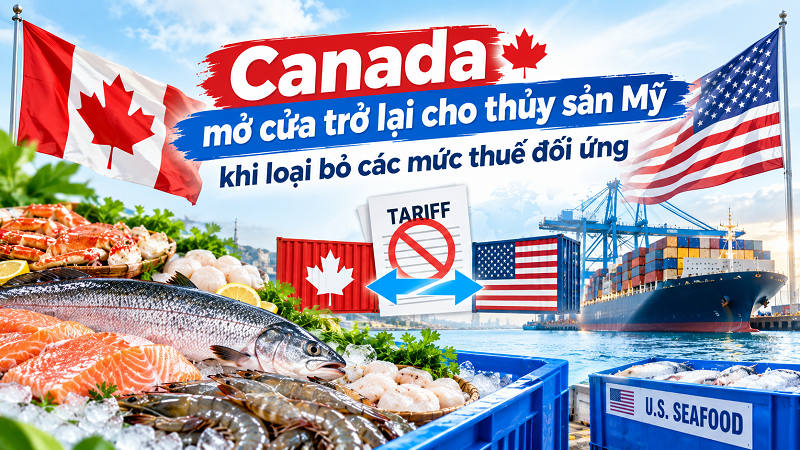
Following the breakdown of trade talks and tit-for-tat 50% tariff packages on $20 billion worth of goods, Canada was forced to make localized adjustments. To shield coastal fishing communities from commercial blowback, Minister of Fisheries Joanne Thompson confirmed the government had withdrawn US fish and seafood products from the reciprocal duty list. Despite granting flexible relief to the seafood industry, Canada's Department of Finance declared it will maintain the overall value and proportion of its retaliation against the US.
To minimize damage to its coastal economy, Canada has removed US fish and seafood items from its retaliatory sanction list. According to Minister of Fisheries Joanne Thompson on August 26, this flexible recalibration aims to safeguard a vital economic sector.
AQUA MINA CO., LTD
WE WORK FOR THE SUCCESS


How strictly is the chlorine gas management process controlled?
Building 48 Value Chains: Ca Mau Strives for Sustainable Shrimp Farming
Vietnam's shrimp industry is still struggling to achieve self-sufficiency in breeding stock.
EVFTA paves the way for Vietnamese seafood to conquer high-end markets
Russian importers are paying increasing attention to seafood supplies from Pakistan
Ca Mau, Can Tho and An Giang Play a Leading Role in Vietnam’s Shrimp Industry
Protecting rice-shrimp yields against environmental fluctuations caused by prolonged rain
AQUA MINA Turbo Blower: Quiet, Energy-Efficient Air Supply for Aquaculture Ponds
AQUA MINA has accompanied the experimental tank system project at Can Tho University from its very early days
AQUA MINA AMONG 20 OUTSTANDING PRESENTATIONS AT THE WORKSHOP ON APPLYING SCIENCE AND TECHNOLOGY TO IMPROVE THE QUALITY OF VIETNAM’S AQUATIC PRODUCTS
Vietnam’s Shrimp Farming Industry Enters the High-Tech Race
The U.S. market relies heavily on imported shrimp to bridge its domestic supply gap


.jpg)