


How to Prevent White Spot Disease in Whiteleg Shrimp
Selecting the right time and postlarvae:
- Avoid stocking shrimp during unfavorable seasons (cold weather or periods of unusual temperature fluctuations).
- Purchase postlarvae from reputable hatcheries (where there is quality control of both broodstock and postlarvae). If possible, request that the hatchery nurse the postlarvae at 32°C for 7 consecutive days before selling. This ensures the postlarvae are free from white spot disease (according to Professor Chalor Limsuwan).
- Send samples for testing before purchasing the postlarvae. Note that a negative result does not necessarily mean the shrimp are free from the disease, as PCR can only detect the virus above certain thresholds.
- If stocking multiple ponds, such as mobile nursery ponds, earthen ponds, or lined floating nurseries, farmers should divide the stocking into several batches using different sources of postlarvae. This reduces the risk of simultaneous disease outbreaks.
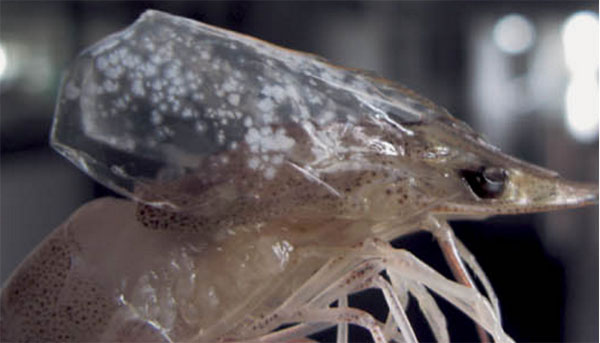
Proactively preventing disease throughout the farming process:
- Eradicate all crustaceans (crabs, wild shrimp) that may carry the white spot disease virus.
- Set up barriers to prevent crabs from entering the ponds and cover the entire pond with bird nets.
- Carefully manage the pond environment during the first 45 days. Most ponds that experience white spot disease have toxic gases present during the pond preparation stage, due to inadequate pond preparation, unstable algal development, dead bottom algae, and nutrient-poor ponds. Toxic gases (NH3, NO2, H2S) weaken the shrimp, making them more susceptible to disease. When the temperature drops below 28°C, white spot disease outbreaks occur. This is a difficult stage for shrimp as they transition from well-cared nursery tanks to grow-out ponds with many changes.
- During the farming process, limit frequent water changes in the pond. Use the initial water supplied, periodically add probiotics to the pond, and add treated water as needed.
- To avoid spreading pathogens between ponds, it is best not to use the same equipment for multiple ponds (nets, scoops, boats, etc.). If shared, the equipment must be disinfected and dried for one day. Additionally, after wading in a pond, farmers should wash thoroughly and avoid contact with feed or entering other ponds.
- When white spot disease occurs in other ponds on the farm or nearby ponds, farmers should temporarily stop the probiotic process and switch to using disinfectants to eliminate any pathogens that may have spread through water, crabs, birds, or shared equipment. Also, mix vitamin C into the feed to boost shrimp immunity and improve the environment (reduce toxic gases, stabilize alkalinity) during this period.
Ngày đăng : 24/07/2024
2195 View


Other Articles
Ca Mau, Can Tho and An Giang Play a Leading Role in Vietnam’s Shrimp Industry
Protecting rice-shrimp yields against environmental fluctuations caused by prolonged rain
AQUA MINA Turbo Blower: Quiet, Energy-Efficient Air Supply for Aquaculture Ponds
AQUA MINA has accompanied the experimental tank system project at Can Tho University from its very early days
AQUA MINA AMONG 20 OUTSTANDING PRESENTATIONS AT THE WORKSHOP ON APPLYING SCIENCE AND TECHNOLOGY TO IMPROVE THE QUALITY OF VIETNAM’S AQUATIC PRODUCTS
Vietnam’s Shrimp Farming Industry Enters the High-Tech Race
The U.S. market relies heavily on imported shrimp to bridge its domestic supply gap
The 2028 supply crisis: The shrimp industry is projected to face a 400,000-ton material shortage
High profits from high-tech shrimp farming come with persistent risks
Intensifying El Niño Effect: Climate Change Risks Threaten the Global Shrimp Supply Chain
Evaluating Gaps in the Circular Economy Value Chain of the Shrimp Industry
A Comprehensive Overview of the Vietnamese Shrimp Industry



.jpg)