

How to Decrease Water pH in Vannamei Shrimp Ponds
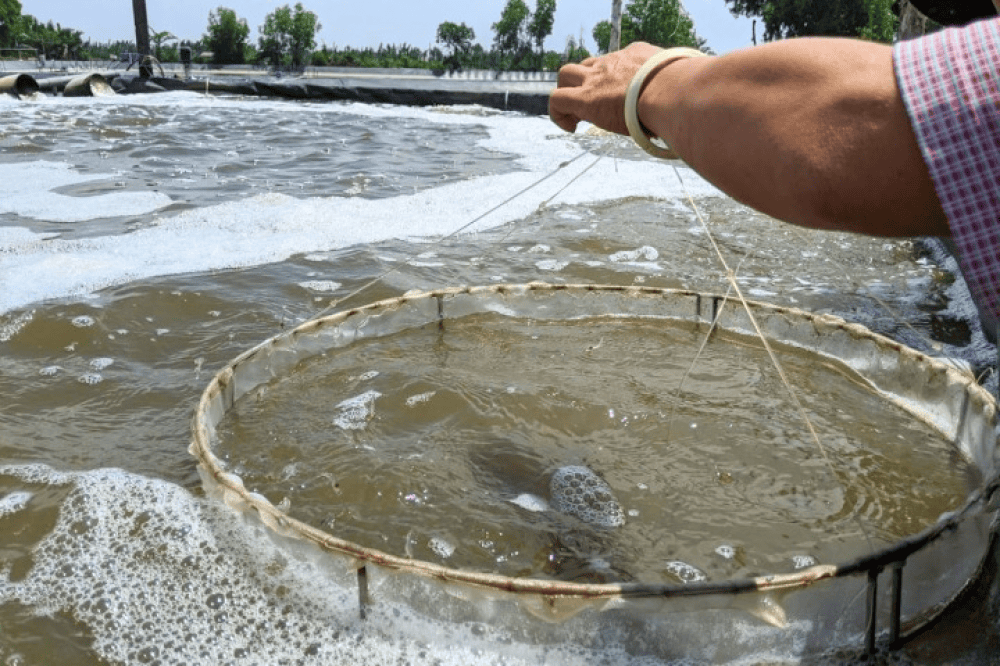
However, pH levels can become too high, exceeding the ideal range of 7.8-8.5 due to feed input and high phytoplankton density. An overly high pH, especially above 10, increases the toxicity of ammonia in water and triggers shrimp death. This also occurs during periods of extreme pH fluctuations, such as fluctuations above 0.5 in a day. To avoid this, farmers need to lower the pH of their pond water.
How to Decrease Pond Water pH
1. Changing the water
Changing the water should be done if the increase in daily pond water pH exceeds 0.5. Before adding water, sterilize it and conduct water quality measurements to ensure that the new water has fulfilled the required parameters. Then, homogenize it using paddle wheels and discard water from the bottom of the pond. The recommended water volume to change is 10%, but in cases where the pH is too high due to excessive ammonia, changing the water at a volume of 25-50% is advisable. Changing the water should be done gradually to avoid stress in shrimp.
2. ontrolling phytoplankton growth
An overly high phytoplankton population may cause changes in water quality due to their photosynthetic activity, which reduces water CO₂ levels and increases pH. One way to control phytoplankton population is by cleaning the bottom of the pond through siphoning, along with pond water circulation by discarding water in the morning and adding new water in the evening. Another step that can be done is treatment of Bacillus bacteria culture in the morning. Also, limit light intensity in the farm by installing a roof or black net over the pond if possible.
3. Avoiding overfeeding
Overfeeding or administering excessive feed can increase the accumulation of waste products such as ammonia, nitrite, and nitrate. These compounds increase pH and pose a danger to shrimp. Avoid overfeeding by giving feed according to the shrimp’s DoC and needs. Check feeding trays routinely to monitor shrimp appetite and determine feed doses accurately.
4. Giving probiotic treatments
Probiotics are beneficial bacteria in shrimp cultivation. One role of probiotics such as Nitrosomonas and Nitrobacter is breaking down compounds such as ammonia and nitrite, thereby controlling water pH. To give probiotic treatment, apply them by mixing in feed or water media.
5. Installing pond liners
This final step can be conducted if you are cultivating in earthen ponds. The mineral content in the soil can cause the water pH to rise too high, which can be mitigated by installing a liner.
Cre: jala.tech
Contact AQUA MINA for consultation and supply of aquaculture round tanks and aquaculture equipment for high-tech shrimp farming.
- Address: 685 National Highway 1A, Binh Hung Hoa Ward, Binh Tan District, Ho Chi Minh City
- Phone: 1800 6071 (Toll-free hotline)
- Email: sales@aquamina.com.vn or oversea@aquamina.com.vn
Aqua Mina's distributor in Japan: REX INDUSTRIES CO., LTD
- Address: 1-9-3 Hishiya-Higashi, Higashi-Osaka 578-0948 JAPAN
- Email: kimakubo@rexind.co.jp
- Phone: +81-(0)72-961-9893
- Website: http://www.rexind.co.jp/e/
WE WORK FOR YOUR SUCCESS!
Ngày đăng : 27/02/2025
3512 View


Other Articles
Ca Mau, Can Tho and An Giang Play a Leading Role in Vietnam’s Shrimp Industry
Protecting rice-shrimp yields against environmental fluctuations caused by prolonged rain
AQUA MINA Turbo Blower: Quiet, Energy-Efficient Air Supply for Aquaculture Ponds
AQUA MINA has accompanied the experimental tank system project at Can Tho University from its very early days
AQUA MINA AMONG 20 OUTSTANDING PRESENTATIONS AT THE WORKSHOP ON APPLYING SCIENCE AND TECHNOLOGY TO IMPROVE THE QUALITY OF VIETNAM’S AQUATIC PRODUCTS
Vietnam’s Shrimp Farming Industry Enters the High-Tech Race
The U.S. market relies heavily on imported shrimp to bridge its domestic supply gap
The 2028 supply crisis: The shrimp industry is projected to face a 400,000-ton material shortage
High profits from high-tech shrimp farming come with persistent risks
Intensifying El Niño Effect: Climate Change Risks Threaten the Global Shrimp Supply Chain
Evaluating Gaps in the Circular Economy Value Chain of the Shrimp Industry
A Comprehensive Overview of the Vietnamese Shrimp Industry


.jpg)