

Delayed salmon spawning produces low quality eggs
The natural spawning time for salmon is December, but in the farming industry, the spawning time is often manipulated so that eggs are guaranteed throughout the year. But how does the shift in spawning affect the egg quality of the salmon? Can the broodstock diet improve the quality of salmon eggs?
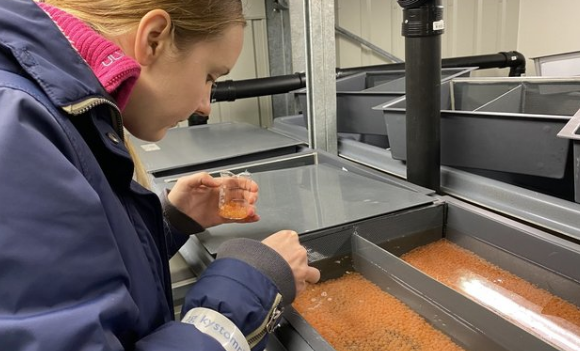
Marine researcher at the Norwegian Institute of Marine Research, Kristin Hamre, has been working on these questions in recent years. “We have had little knowledge of the nutritional needs of broodstock. It takes a lot of resources to research the nutritional needs of broodstock because the experiments take a long time and are done on large fish, Hamre said.
Hamre and his research colleagues divided the 1,600 fish into three groups with different spawning times. One group had the spawning postponed by one month - until November; another group had spawning postponed two months - to February; while the last group was allowed to spawn at the natural time - in December.
Researchers found big differences between the three groups. The group with delayed spawning in February had poor egg quality, fertilization and survival, said Hamre. The natural group had the best egg quality, while the group with earlier spawning was slightly worse than the natural group.
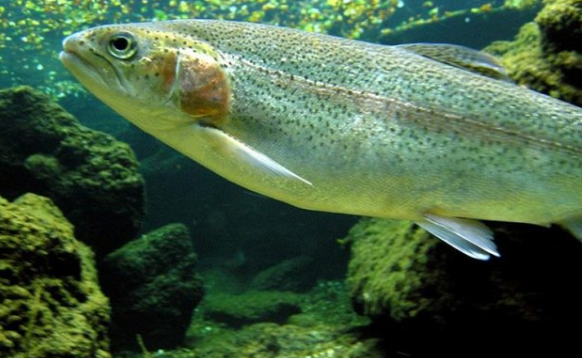
“We found that the nutrient content of eggs and fry was affected by the time of spawning and that this is linked to egg quality, said the researcher. Researchers wondered whether different ways of broodstock feeding could affect growth, the amount of eggs each fish spawns, and the quality of eggs and fry.
To find answers, compared broodstock feed and grow-out feed. A group of broostock was feed with broodstock feed for 17 months, while the other group was fed with grow-out feed for eight months and broodstock feed for nine months.
Researchers found that there was little difference between the two feeding regimes, therefore, nine months was enough.
Cre: Hatchery Feed Management
Ngày đăng : 21/02/2024
1869 View


Other Articles
Ca Mau, Can Tho and An Giang Play a Leading Role in Vietnam’s Shrimp Industry
Protecting rice-shrimp yields against environmental fluctuations caused by prolonged rain
AQUA MINA Turbo Blower: Quiet, Energy-Efficient Air Supply for Aquaculture Ponds
AQUA MINA has accompanied the experimental tank system project at Can Tho University from its very early days
AQUA MINA AMONG 20 OUTSTANDING PRESENTATIONS AT THE WORKSHOP ON APPLYING SCIENCE AND TECHNOLOGY TO IMPROVE THE QUALITY OF VIETNAM’S AQUATIC PRODUCTS
Vietnam’s Shrimp Farming Industry Enters the High-Tech Race
The U.S. market relies heavily on imported shrimp to bridge its domestic supply gap
The 2028 supply crisis: The shrimp industry is projected to face a 400,000-ton material shortage
High profits from high-tech shrimp farming come with persistent risks
Intensifying El Niño Effect: Climate Change Risks Threaten the Global Shrimp Supply Chain
Evaluating Gaps in the Circular Economy Value Chain of the Shrimp Industry
A Comprehensive Overview of the Vietnamese Shrimp Industry



.jpg)